Things I learnt from Highschool

Hey! Before I start this blog I think its important for me to introduce myself. My name is Anu, I’m 18 and just recently graduated from high school. And here are some of the lessons I learnt.

Now, I will be very honest here, and I think a lot of my fellow people will relate to me when I say this – high school is way too hyped. It is definitely not like those movies you see on the weekends in middle school and start fantasizing about. Its not all that glamour and glory and is mostly just like all your previous years of schooling except you probably have more work load (and if you’re like me then you probably don’t care about it)

Having said that, I don’t mean to bash those last few years of “fun” and “carefree” times. Despite all the trauma that high school gave me (that’s a topic for another time) I’m still grateful for some of the lessons that I learnt.

Not education based lessons though, cause all that I learnt in high school was trash. That’s right, I’m not actually going to dissect a flower or use integration in real life. I’m going to be very honest when I say this – I didn’t actually pay too much attention to my lessons, obviously I passed with half decent grades, but I don’t find my life much different from when I was the “top of the class” student. But I’ve digressed here.

The matter of fact is – no matter how unbearable highschool was, it taught me a lot of things I will actually cherish my entire life.

The first and I think most important that I’ve learnt is how to build networks and connect with people. I, like many people, did not have too many friends – only a handful of people that I could call friends, but, I did however, make acquaintances and also learnt the art of building a network and being able to form instant connections with people which, safe to say, has helped the professional side of my life.

My parents had always pushed me to take part in almost every co-curricular activity, that definitely helped me learn a handful of talents and also hone some skills but more importantly, I never had the fear of trying new things or being in uncomfortable situations and stepping out of my comfort zone. Also helps that I experienced stage fright and performance anxiety at a very early age and have gotten very accustomed to that nerve recking feeling.

Also, can we be honest here, the best part about high school had to be the rigidity and stability it gave to our day to day lives. I can truthfully say that I have not had a fixed schedule or work plan since I’ve graduated and that has really messed up my time management.

Speaking of which, I think the pressure of finishing a test/exam in a really short period of time actually made me better at getting things done in record time and also helped me actually think with a clear head even under massive pressure. (God bless exam season)

And lastly, I think the main thing that I have to give credit to high school (and my procrastination) for is this blog. Whenever I got a task/assignment from school that I felt was a “waste of my life” (which was almost all of them), I would procrastinate and instead write, some of which I then posted here (and some on my other site too) and now you’re reading them. So I guess I owe thanks to high school (and to you too…you’re awesome <3)

Having said all of this, I know that it is an absolute privilege to even go to school and receive education and I am really grateful for that. I also encourage everyone to stay in school – it will be worth it in the end. Also, never stop learning, it is one of the most beautiful experiences of life.

One Love
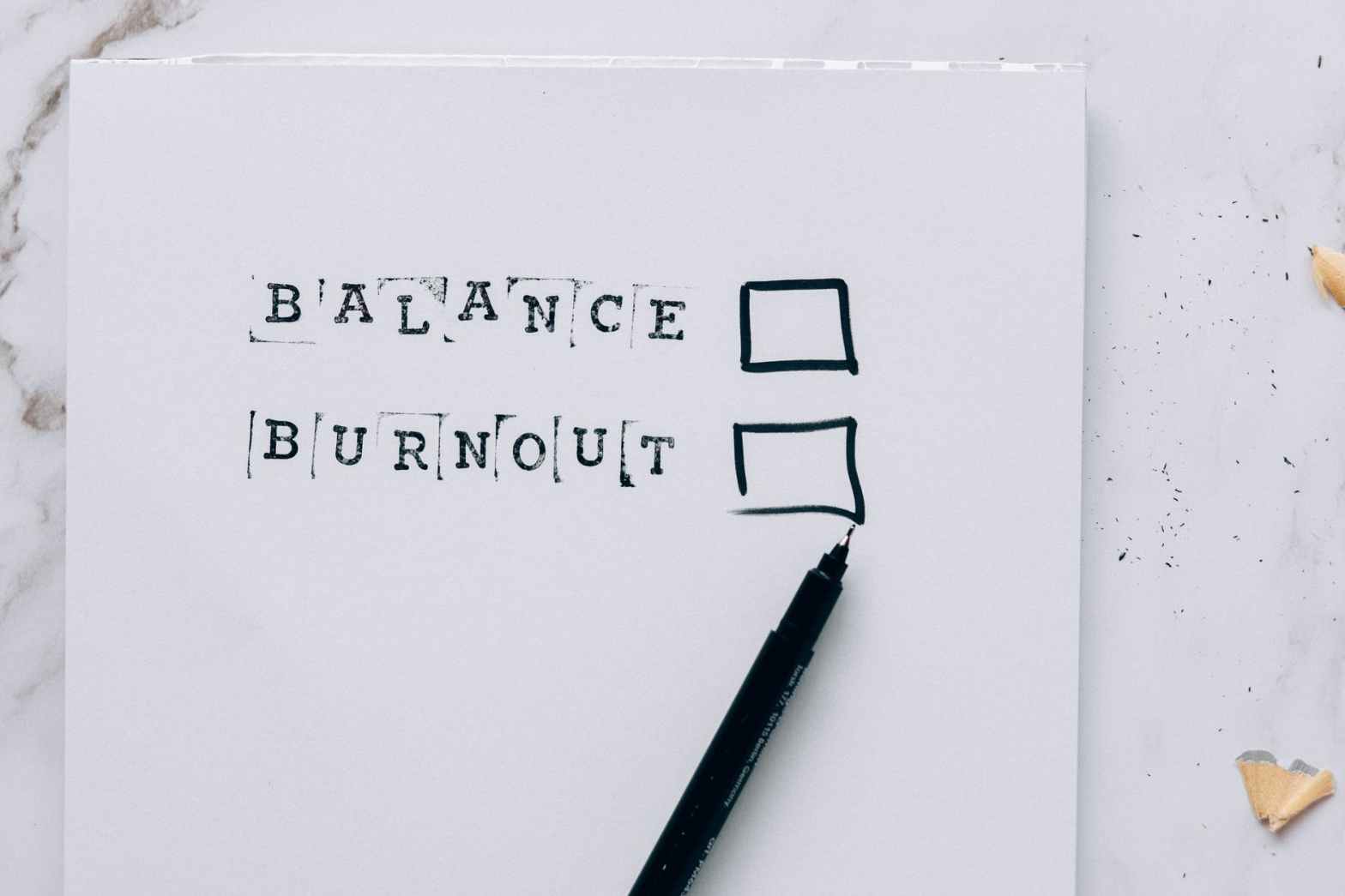
Work-Life Balance?

The concept of work life balance basically views work and life as 2 separate parts of our life that need to be maintained equally.

In a much broader sense, it means to utilise more time for leisure things, family time or simply self care. It is something which many youths, including myself, struggle with. It’s difficult to find a space that is just the right balance of work and leisure.

About work-life balance

The reason why work-life balance has become such a growing topic in discussions among the self-help and self-care community is because the “constant hustle” cultre has fixed the idea of constantly being on the go, working and being productive into the workforce and has made it the norm.
This has built the toxic idea in most workplace employees that they should be constantly on the go and hustling, being productive instead of taking time off for themselves and doing things that they love.

Even if you love your job and are motivated to work, overworking yourself without taking breaks will eventually lead to some resentment – either towards yourself, your colleagues or even your job.

Constantly being on the run, working even on the weekends will lead to eventual burnout – be it mentally or physically – this is what leads to resentment and negative feelings which is your mind and body’s indication to needing a break.

Also, assuming that if you work extra hard, harder than others will lead you to great success in your career is wrong. Yes, it might help to get ahead, but at the cost of your own well being. (Definitely not worth it!)


It’s important to learn to develop healthy work-life balance.

Tips to maintain work-life balance

  • Define

Before going into work-life balance, you need to know what is ‘balance’ for you.
Write down the things in your life that are priorities, then analyse your life daily life and try to make an estimate on how much time you’re able to allot to each priority.

Then take a moment to reflect on that.
Are you happy with that? What would you like to change? How much of a change do you want? How will that change your life?

  • Set Schedules

When you realise how you want your day-to-day life to be organized it becomes easier to schedule your day accordingly.
Set a fixed schedule for workdays with fixed times for work and fun things that you enjoy .

When you have a fixed schedule, especially one that is more or less consistent throughout all workdays, it becomes much easier to get into that ‘flow’ state of work and enjoy uninterrupted work times. Also helps you detangle yourself from work after a specific time and just enjoy other things.

Now, it might seem easy to fix a schedule and plan out your entire day, but the difficult part is sticking to that workplan and being consistent with it.
Especially as someone like me who doesn’t fit well with schedules and hates being routine, it gets boring.

Something that I have been trying is to set timers and little rewards for myself for successfully going through a schedule. 
But somedays, even that doesn't motivate me enough, those days you just have to force yourself, sometimes you have to push through without motivation.
  • Turn Off

Turn off work mode – both, from your devices and your head.
Turn off work and email notifications. If possible, turn off devices and spend time doing the things that make you happy or spend time with people that make you happy.
It’s important to not let work distract you during times that are supposed to be your ‘off’ times.

Obviously this won’t work for you if you have a job that requires you to be on alert most of the times.
But for a student plus writer like me, it’s easy to shut off my phone and go out on a walk or read or study my favourite subjects.

  • Make Boundaries

When you have a schedule and fixed times for everything, there is only that limited time for you to work and to relax.
It’s important to learn to maintain that boundary between your work and your personal life.

Learn to not bring your work into your personal space, to give time to people outside of the work environment and maintain balance.
The way to achieve this balance is from within, it is a resultant of your own choices and it’s important for you to make wise decisions and respect the boundary that you have created for yourself.

If you are someone like me who finds it difficult to work within boundaries,it’s going to be a difficult task to navigate through them and be disciplined, but the only way to have successful work-life balance is by execution- simply learn to work within boundaries and stick to your routine.

  • Reflect

After atleast a month of following through, go back to analysing your daily life. Ask yourself the same questions you asked yourself in the first step.

Are your answers different now? Do you feel more happy/content with the way your work-life balance is now?
Observe and reflect on your emotions before and after and see if things have changed.

Even though work life balance is a widely discussed topic, not everything said about it is positive.

Cons to work-life balance

Work-life balance is based on the idea that work and life are 2 different parts of our life that need to be maintained equally. It creates this barrier between work and life and puts a pressure on people to be able to manage both equally and successfully.

But the reality of the situation is that work and life can never be equally balanced in life.

There will be times when you will have to make certain decisions based off of your professional life and that takes priority in your everyday life.
There will also be times when your personal life will take the spotlight and you will set your work away to enjoy your life with people you love or just do things to keep yourself happy.

So when it is clear that having a perfect work-life balance isn’t possible and yet we pressurise ourselves to live that way, it is just like running a race but in the opposite direction to everyone else – you might feel like you’re winning when in reality you’re making decisions that will not benefit you.

It’s important to accept that the idea of perfect work-life balance is not correct. Accept that you cannot treat things as rigid blocks, sometimes things are just grey.

While studying about these ‘grey’ areas, I came across this really interesting concept.

Work-life integration

Work-life integration removes the idea of having a perfectly balanced equation between work and life and blends everything together.

To be precise, it removes the rigid boundaries between your personal and professional life and sets your day in such a way that work, health, family, self, everything is given appropriate attention but without the strict regimes and schedules.
It is a way of creating a collaboration between many areas of your life.

With the added flexibility to your life, it becomes easier to manage work and personal life and if you feel like adding more things to your life, you can easily do that.

It gives the opportunity to be professional while handling many things at the same time and still remain sane !

Tips to work-life integration

  • Create a schedule that focuses on all the main priorities in your life. Unlike schedules from work-life balance that dealt with ensuring ‘equlibrium’ between work and life on almost a daily basis, these schedules are based more on what you feel like and what you’re motivated to do
  • For example – one day I might be in the mood to study and write and instead of going out with friends i would just stay at home and read a book or draw.
    The next day I might not be in the mindset to study, so I could spend time with friends and family.
  • It’s a way to balance your life,but in a way that suits you.
  • The only thing to keep in mind is to make sure that your schedule distributes time to all your priorities in a more or less equal amount and fulfills you and the people most important to you.
  • Just like in work-life balance situations, it’s important to have boundaries here as well, but not as strict/rigid.
  • Here you don’t have to set times in your day reserved only for work and only for fun. You only have a brief blueprint of how much time you want to spend working and how much on leisure things.
  • You just need to try and not let the two (work and fun) overlap and keep them at a distance.

But just like incase of work-life balance, work-life integration also has some downsides.

Cons to work-life integration

  1. If you don’t spread your priorities out equally, you might end up spending most of your time either working or on leisure things.
  2. You may not be able to properly navigate through the blend of work and life and might lose the grip on maintaining balance between the two.
  3. You may have your mind constantly preoccupied with other things due to lack of proper scheduling of thoughts and work times.

Having read all of this – what do you feel suits your life and your goals to the best limit? Let us know!

Being A Nightowl

I have to confess… I am a nightowl! (Really dramatic, I know)

But what does that mean?
Basically, just like an owl has a much more clear sense of vision during the night, I have a much more clear sense of productivity during the night, or more specifically, after the sun sets.

So when the rest of the people are going to bed or even asleep, I’m wide awake doing work/studying. And when everyone else gets up from slumber, I’m only starting to doze off.

To some people, this might seem strange and even slightly concerning, but actually, it’s way more common than an average person might think.
Studies show that almost 30 to 40 percentage of the population find themselves the most productive after 11pm (or 2300hrs.)


And no, by productive I do not mean endlessly scrolling through social media or binge watching movies/shows for the whole night. I actually mean concentrating and getting some serious work done.

But

How does a person become a nightowl?

Well, firstly it isn’t exactly a lifestyle choice one can develop in a week or two.
According to some studies, our chronotype (which is largely influenced by genetics) determines what type of person – a nightowl or an early bird- one will be.

People with night time chronotype (or wolf chronotype) show more of nightowl tendencies (or ‘nocturnal’ tendencies)

So, it isn’t a choice for most people, sure, long exposure to this type of behavior and environment may change some people’s lifestyle. Or sometimes our chronotype might change as we grow older, but we can’t really change them ourselves.

For people who are genetically given these behaviours don’t really have a choice. They reach their maximum level of energy and productivity only after dark. They also find it difficult to focus and be active early in the morning.
According to studies, night owls show the most energy and activity (which is controlled by the cerebum) 4-10 hours after they wake up.

So if you find yourself constantly in a drowsy state during the day and super energetic and active during the night – then you might be a nightowl. (Welcome to the gang!)

Now, incase you are a nightowl (or just found out you’re one) and not very happy with the idea of being a nightowl, here are some

Pros to being a nightowl


• When you’re a nightowl and productive at night, you can actually get a lot of work done without even half of the distractions you might have during the day. (Nobody walking around you and disrupting your flow!)

• According to studies by numerous institutions, nightowls have shown to score more on IQ tests compared to early risers. Which basically means we’re smarter!

• People who are night owls tend to use lateral thinking more than early birds, to put it simply, we’re better at solving problems by using an indirect/creative approach and view such problems with a new light (Basically, we’re more creative).

Now that we have talked pros I guess it is only fair to talk about the cons as well.

Cons to being a nightowl

• Studies from many universities showed that people with morning chronotype were more physically active than compared to those with night chronotype and suggests that people who do stay up late and wake up late should try to keep themselves physically active.

• Even though night owls have an advantage when it comes to lateral thinking and intelligence, we’re also more likely to perform poorly in academics/work. This is because we have to function during our least functional hours i.e. typically an 8-4 or 9-5.

• Since nightowls are more creative, active and approachable during the night, they’re less so during the day, which is when a major part of society and our communities are up and about.
Trying to keep up with these people around us often leads to insufficient sleep, not to mention poor lifestyle habits and a general inability to adjust to ‘regular’ schedules. This can lead to a number of physical and mental health issues such as diabetes, obesity and even depression.

Now that we’ve covered that, how can you make your life a little easier as a nightowl?
So here are some tips, from one owl to another.

Top tips for nightowls

1) Accept yourself and set your routine such that it accomodates time for sleep. Atleast 5-6 hours. It might seem difficult, but with a little bit of planning you’ll be able to work all night and still get 7-8 hours of sleep.


2) Try to sneak in little naps between the day or even during your work sessions. Also, try to set a limit for yourself, tell yourself “I will not work past _”


3) While working at night , have a glass of water and some healthy snacks (like nuts and berries) next to you, it will stop you from eating junk and will kill the cravings.


4) Try to take atleast 5-10 minute breaks in between work to get up, stretch, fix your posture and just take a little walk around your walk area.


5) 20 minutes before your bed time/the time you set for yourself, stop all work. Read a relaxing book or listen to calming music, turn off all bright lights and all devices. Set the mood to calm yourself before going to sleep, that way you can ensure a peaceful few hours of sleep for yourself without waking up in the middle and having disturbed/rocky sleep.


6) If you generally have a 9-5 ‘routine’ and also work during the night, give yourself weekends or atleast one day of the week to get full rest and excercise. Also meet up with your friends and family to ensure your own physical and mental health.
Even during the day/night when you’re working,make it a point to take care of your health – physical and mental.


Having read all of this, know that it doesn’t matter if you’re a nightowl or an early bird or even if you have no idea of your strong and weak timespans , all that matters is you fit your work into your work whenever you’re the most productive and the most motivated to make changes.

TOP TIPS TO BE A GREAT LEADER

Being a leader is something which many people can do, but being a great leader, one who can lead the team to success while training all the members to become future great leaders is not a skill that everyone has.

According to some theories, great leaders are ‘born and not made’, i.e. certain people inherit certain qualities that make them great leaders, so, the people who are not born with these traits cannot be great leaders.
On the other hand, some theories suggest the opposite, that great leaders are ‘made not born’. That people learn to be great leaders and the traits required to be great leaders cannot be inherited, it is something people learn through experiences of life and observing other people.

I think a great leader is one who is the perfect balance of both theories.
To be a great leader, it is necessary to have a natural leadership instinct along with the traits that one can achieve only by experiences and learning from those experiences as well as other people, preferably other ‘great leaders’.

“A leader is he/she that creates more leaders.”

Ranveer Allahbadia


Here are some of the most important qualities a great leader should have (based on some of the amazing leaders I’ve seen and have been heavily inspired by)

Passion


A great leader is one who is passionate about the project/work, someone who’s energy can really inspire and pump up the passion in the other teammates. A leader should be driven by the passion and make it their purpose as well as have people with the similar passion in their team.

When leaders have set goals and are able to communicate it to the rest of the team effectively, they can bring the entire team together to reach the goal while growing as a team as well.

Empathy


A leader that has empathy towards their teammates is one who can understand the teammates to a deeper level and can connect with them emotionally.
Teammates also feel better working with a leader who understands and bonds with them.

Empathy also allows to get rid of any workplace tension and get straight to the root cause of the problem.

Confidence


A great leader is one who is secure with themselves and are self confident. You will rarely see them in self doubt.
Teammates can rely more on confident leaders who are trustworthy and also grow their self confidence.

However, keep in mind that confidence and arrogance are completely different things. A leader who is confident can help you build your self confidence, on the other hand, an arrogant leader will only focus on their own growth and doesn’t take the growth of their teammates seriously.

Conversationalist


A great team leader is also a great speaker, one who can use their words to inspire and push their team towards success/the end goal. Great leaders are clear with the message they convey to the team and in times of trouble they are able to solve the problems with their words.

Leaders are comfortable addressing big groups as well as having one on one conversations with their teammates.
Along with being great speakers, leaders are also great listners, which leads to amazing, innovative, insightful conversations.

Open minded


People that can easily adapt to situations and have an optimistic, open minded attitude towards even the most difficult situations excel as leaders. They also inspire those around them to adapt to changes surrounding them, the good and the bad.

Great leaders understand that people are the biggest assests and welcome all criticism and feedback from others as well as teammates and appreciate exchanging ideas and opinions with their teammates.

Motivational


Great leaders are the perfect role models for members of the team, in addition to that, they are great source of motivation for the team members, especially during difficult times – professionally and/or personally.
They know the important role of motivated team members in the growth of the entire team.

Great leaders can motivate and inspire their team members only if they are confident and optimistic and at the same time have a realistic look towards life. A motivational leader has a very big hand in the growth of each individual of the team.

“The best leaders know their teammates inside out, and know how to get the BEST out of each individual, individually!”

Ranveer Allahbadia

Selflessness


A great leader is the leader who gets happiness from seeing others being rewarded for their hardwork. Their leadership is not based on titles or position or power, their influence on people is not because of their money or power or connections.
They define their success on the basis of the positive influence they have on people and the impact their actions have on other people. They constantly show up in times of need and are reliable to the team, they always put their team first and take actions that help each member of the team grow.

A great leader brings out the true potential in others and helps them become great leaders of the future. They are not just concerned with getting the team to success as a whole, but also invest themselves in helping each member of the group reach their true potential.

Determination


Great leaders are always determined to accomplish what they set out to do. They don’t give up when things get tough. They see difficulties/problems as a challenge and see it as an opportunity to grow.

Such people are not afraid to think outside the box or take decisions/steps that are ‘uncomfortable’ or ‘difficult’, they constantly try to step out of their comfort zone and persuade their team to do the same.
“It is better to lead from behind and to put others in front, especially when you celebrate victory when nice things occur. You take the front line when there is danger. Then people will appreciate your leadership.” —Nelson Mandela

“It is better to lead from behind and to put others in front, especially when you celebrate victory when nice things occur. You take the front line when there is danger. Then people will appreciate your leadership.”

Nelson Mandela