A Little More On Procrastination

I’ve spoken about being a major procrastinator many times, but it’s time to go a little deeper into it and learn more. (If you’re a procrastinator like me and you’re reading this, chances are you’re procrastinating something right now, think about what it is.)

What does it mean to be a procrastinator?

To procrastinate means to delay something that needs to be done as soon as possible and actively finding ‘better’ things to do rather than doing the things that need to be done.
It’s knowing fully well, the consequences of delaying something yet doing it only to face trouble at the end – be it by rushing through work or a project or having to listen to long lectures from seniors.

Procrastinators are these exact people!
We tend to put everything till the very last moment knowing fully well the negative outcomes of it yet focusing our attention towards things that are less attention demanding and something that can distance us from the work that needs to be done in the present.
Procrastinators tend to have a much more optimistic idea of time and tend to push everything for later thinking they’ll ‘manage’ everything just fine. (Which is mostly just putting their luck to the test)

But then why is it that people tend to procrastinate?

(According to so many different sources)

It is commonly said that procrastinators only procrastinate to distract themselves from their fears of failure or inability to commit themselves to a particular work or continuously do it for a long span of time.
They tend to procrastinate only to have more control over their emotions.

According to some studies, procrastinators don’t really have control over their habit of procrastination, for them it is a response behaviour towards extreme authoritarian lifestyle one has had in the past or even in the present.

According to some other studies, procrastinators procrastinate because they tend to prefer the “now” and value how they spend it instead of planning or worrying about the future.
They prefer having fun and enjoying the present rather than waiting for it in the future.

Some studies also claim that most of the procrastination done by the average person is unconscious and can probably be avoided if people simply focus more on their everyday life and be more organized.

There is also the final group of people that think the people who procrastinate do so because they lack the motivation to actually work and are unaware of the powers of their own emotions – of the present and the future and the role these emotions can play in getting the motivation they need for getting things done.

But what is the actual reason for procrastination? Why is it that we feel so much better just pushing things to the side and instead focusing our attention to less important, more fun tasks?
The answer to this could be absolutely anything – it would differ from individual to individual, you will just have to look within yourself for this one.

Now if you do actually realise how or more importantly why you procrastinate – is there any way to stop procrastinating?
In the most honest way – no, there isn’t something you can do that will magically change you from master level procrastinator to the diligent, hardworking, good child.

You can’t change yourself just magically, but there are some things you could do to make procrastination better for yourself.

How to use procrastination better?

-> The first and maybe most important thing is to embrace procrastination as a part of yourself. Know that you can’t change everything about yourself, so instead of finding ways to change it and look for ways that you can be yourself and still get work done while being happy.

-> The most difficult step is putting aside distractions and getting to work. It’s really easy to say “Just do it” but real life application of that is a lot more difficult.
A few steps to consider before saying “Just do it” are
1) make a to do list – preferably with more easier tasks at first and the tasks getting progressively difficult.
2) making a mental (or physical) note of each thing you have to do and alloting time to it based on how long it will take you to do that specific task, and if you can, allot yourself some extra time just incase.
3) use deadlines to your advantage – while alloting yourself time to work on something keep the deadline in mind and allot yourself a timeline which ends earlier.
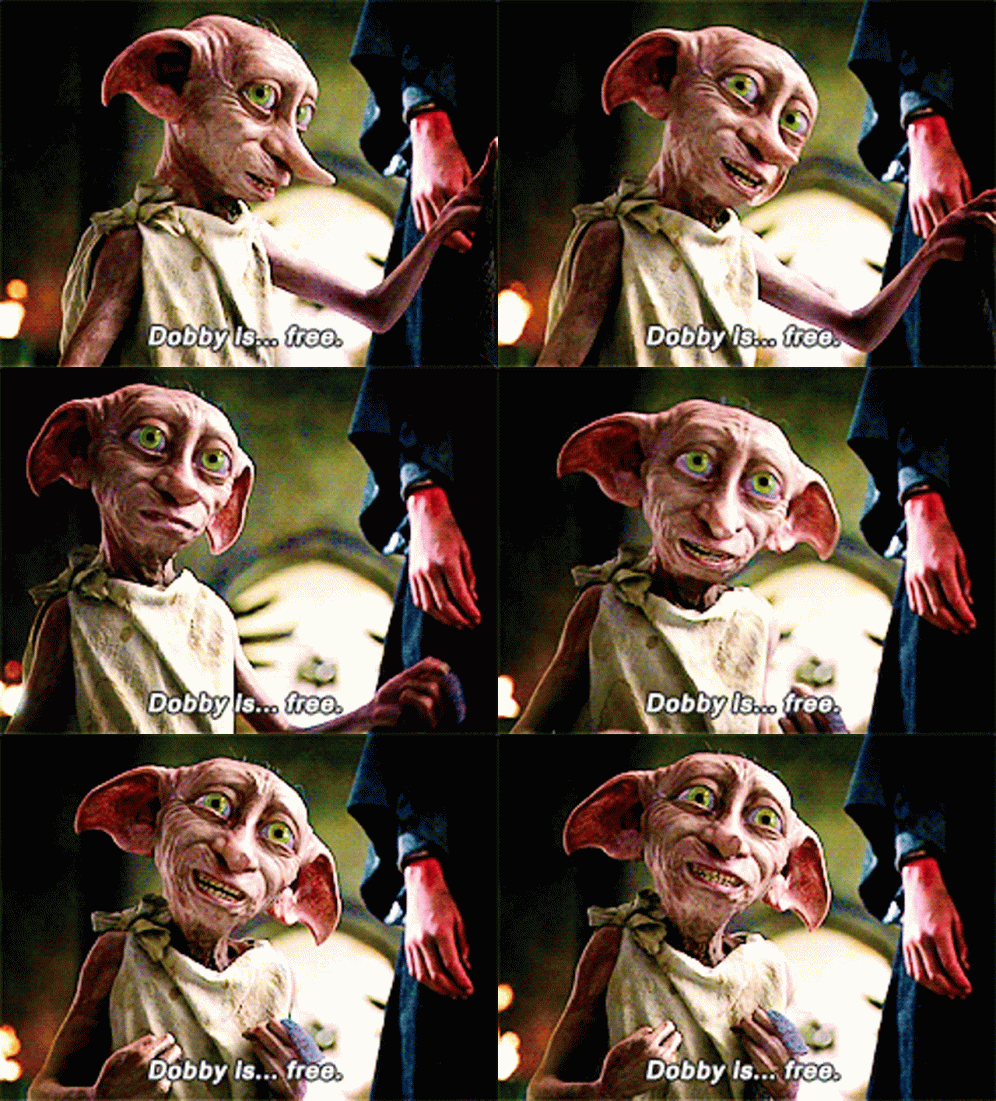
4) create “punishments” for yourself for work not done (no, don’t go beating yourself with a lamp like Dobby), make the punishments something that will test your self control, for example, something like no sugar for a whole week or not going on social media for a week.
5) control the distractions around you – as much as possible. It isn’t easy to turn everything off and live like a monk, and it probably isn’t the most wise thing for many people, but try to limit the distractions around you and try to hold yourself accountable for the things around you.

-> When setting up to get into the work zone know that it takes time to get into the rhythm of work and different types of tasks tend to have a different rhythm to it. So when you place work for yourself, try to group out similar tasks together to stay within the similar rhythm and not having to switch your mind from one type to another type of task.

-> When you get into the “Just do it” mindset, remember that it won’t necessarily last for hours. So whenever possible try to write down all the things you need to get done and the possibile steps to do it and the things to keep in mind – this will be your blueprint.
So the next time you feel even the smallest bit of energy, pass a glance at this blueprint and that will give you the idea and motivation to finish the task at hand.

-> Speaking of motivation – know that simply having an idea in your mind or a goal ahead of you won’t always motivate you to stop slacking and start working. Sure, it does help to have a visual idea of what you’re working towards, but sometimes feeling instead of simply seeing can be more help.

-> Lastly, learn that overcoming procrastination and using your bad habits for your own advantage will take some time and a lot of effort and relapsing back can be completely normal but you need to be able to overcome those hurdles and not fall back.

Being Busy Is Good?

In today’s time, we as a society have glorified the idea of being ‘busy‘. People that are seen constantly stressed, buried in their work are viewed as more accomplished than someone not swamped by work and worry.

Today’s hustle cultre views these so called ‘hard-workers‘ as the image of the ‘perfect employee‘ and holds this standard of being busy on a pedestal.

Is being busy actually bad?

No, it’s hard to say that everything about hustle cultre or being busy is bad. But it’s definitely a point to note that these do glorify the idea of constantly being on the go and working and have even made it the norm for today’s generation to constantly be working and measuring their own self worth by how much they’ve accomplished.

Think about it, how many times have you criticized yourself because you didn’t do ‘enough work‘ or you didn’t ‘work harder‘?
How many times have you actually been happy on a day off and been glad that you took care of yourself?
Have you ever felt miserable for taking the weekend to rejuvenate and work on things that make you happy instead of working extra?

According to the standards we’ve created for ourselves, anyone who isn’t busy and doesn’t spend every second immersed in work simply doesn’t stand up to these standards and is just termed as ‘not hard working‘ or simply ‘lazy‘.
This outlook of society makes us judge our own self worth by the amount of work we do and the labels society puts on us.

Glorifying the idea of always being busy tends to make us much more about self and can, in a sense, make our thoughts and actions even more selfish.
We tend to get more stuck in our own little world excessively brooding about our own work and our own problems which obviously have a negative strike to our mental health but also end up in us neglecting close friends and family.
Cancelling plans last minute, not being present for special occasions and being missing from important moments tends to become ‘normal‘ for busy people.

Now, once or twice these actions may be ignored or forgiven but constant occurances tend to leave cracks in relationships which might eventually leave you feeling lonely and distant, unable to maintain those relations.

The current idea of busyness doesn’t necessarily put in ‘quality of work’ as an important factor, instead, ‘quantity of work’ becomes the deciding factor.
When we place priorities in the wrong areas it does end up being counter-productive and instead of actually getting things done we might only be wasting precious time.
It’s necessary to keep track of how and what you spend your time. Know if the time you spend on doing something is actually for something ‘productive‘ or is it just being busy.

How to know if you’re actually productive or just busy?

Being ‘busy‘ isn’t something you’re forced to do, it’s a life choice – something you make and continue.
Know that being efficient isn’t about the number of hours you spend doing something that may or may not have a positive outcome. Efficiency is about the number of positive results you get on doing things.

Think about the things you do on a daily basis that you think are ‘productive‘ – does it actually give outcomes that help you grow? Does it help with things you’re struggling with/find difficult?

Being busy is just about passing time doing things that seem productive,while actually, using time for things that support growth is real productivity.

Answering emails is one such task that might seem and feel productive but it has more cons to pros. It doesn’t matter how many times a day you check your email, you can always expect more to be there eventually. It always makes you feel productive but in reality it just gives you that extra stress that hampers with actual productivity.
It’s often advised to check your emails only once or twice a day to allow some actual productivity instead of spending hours each day in ‘pseudo-productivity‘.

But why is it that we fixate ourselves in pseudo-productive work?

When we’re constantly under stress and lose work-life balance (which is a consequence of hustle cultre) we tend to mess with our attention span, and the constant pressure from work and personal life harms the cognitive bandwidth.
Even though having narrow cognitive bandwidth might help you hyperfocus on something, it also has its cons – popularly termed as Tunneling.
Tunneling, according to dictionary.apa.org is defined as

"a psychological state, typical of people concentrating on a demanding task or operating under conditions of stress, in which a single, narrowly defined category of information is attended to and processed. "

In the most simple terms, tunneling is being extra focused on things that are right infront of us that may not be so productive, which is caused by extreme stress in our lives.

A definite point of importance is that when we become so fixated in our own lives doing ‘productive’ work, we tend to have less time for things that actually matter, like our own physical and mental health.
We tend to have less time for decisions that affect us, instead we make impulsive decisions because taking cautious, calculative steps isn’t an option anymore.

So how can we get rid of busyness and make time for things that actually matter?

• It might make us feel important to be constantly busy and get that validation from society. But remember that the same busyness has long term effects on your health.
These long hours of stress and lack of sleep and completely ignoring self-health can lead to problems like headaches, insomnia, fatigue, seizures, etc. When you make changes in busyness, you will only have positive changes in your physical and mental health and will improve relationships with people you’ve been pushing away.

• Take a deep dive into the work you’re always busy doing – then think if spending all that time and resources is actually a wise decision. Spend time doing things that you actually find valuable – does it feel productive?

• Learn to ignore the voices, views and opinions of society that promotes hustle cultre and being busy. Keep in mind the actual goal you have, that which you strive for. (I know it’s so much more easier said than done, but give it a shot!) Challenge the idea of being busy and go for what you believe you want to do.

• Understand the importance of saying no to things that don’t serve purpose to your life, instead, spend that time on things that drive you and things you find yourself excited to do.

• Sometimes you can find true satisfaction in doing less. You could do hundreds of tasks a day but they won’t necessarily bring you happiness, but even doing one task that drives you can be the source of your happiness.

• Encourage yourself and people around you to get the image of being busy out of their mind and instead set being productive as the idealistic mindset.

Being A Nightowl

I have to confess… I am a nightowl! (Really dramatic, I know)

But what does that mean?
Basically, just like an owl has a much more clear sense of vision during the night, I have a much more clear sense of productivity during the night, or more specifically, after the sun sets.

So when the rest of the people are going to bed or even asleep, I’m wide awake doing work/studying. And when everyone else gets up from slumber, I’m only starting to doze off.

To some people, this might seem strange and even slightly concerning, but actually, it’s way more common than an average person might think.
Studies show that almost 30 to 40 percentage of the population find themselves the most productive after 11pm (or 2300hrs.)


And no, by productive I do not mean endlessly scrolling through social media or binge watching movies/shows for the whole night. I actually mean concentrating and getting some serious work done.

But

How does a person become a nightowl?

Well, firstly it isn’t exactly a lifestyle choice one can develop in a week or two.
According to some studies, our chronotype (which is largely influenced by genetics) determines what type of person – a nightowl or an early bird- one will be.

People with night time chronotype (or wolf chronotype) show more of nightowl tendencies (or ‘nocturnal’ tendencies)

So, it isn’t a choice for most people, sure, long exposure to this type of behavior and environment may change some people’s lifestyle. Or sometimes our chronotype might change as we grow older, but we can’t really change them ourselves.

For people who are genetically given these behaviours don’t really have a choice. They reach their maximum level of energy and productivity only after dark. They also find it difficult to focus and be active early in the morning.
According to studies, night owls show the most energy and activity (which is controlled by the cerebum) 4-10 hours after they wake up.

So if you find yourself constantly in a drowsy state during the day and super energetic and active during the night – then you might be a nightowl. (Welcome to the gang!)

Now, incase you are a nightowl (or just found out you’re one) and not very happy with the idea of being a nightowl, here are some

Pros to being a nightowl


• When you’re a nightowl and productive at night, you can actually get a lot of work done without even half of the distractions you might have during the day. (Nobody walking around you and disrupting your flow!)

• According to studies by numerous institutions, nightowls have shown to score more on IQ tests compared to early risers. Which basically means we’re smarter!

• People who are night owls tend to use lateral thinking more than early birds, to put it simply, we’re better at solving problems by using an indirect/creative approach and view such problems with a new light (Basically, we’re more creative).

Now that we have talked pros I guess it is only fair to talk about the cons as well.

Cons to being a nightowl

• Studies from many universities showed that people with morning chronotype were more physically active than compared to those with night chronotype and suggests that people who do stay up late and wake up late should try to keep themselves physically active.

• Even though night owls have an advantage when it comes to lateral thinking and intelligence, we’re also more likely to perform poorly in academics/work. This is because we have to function during our least functional hours i.e. typically an 8-4 or 9-5.

• Since nightowls are more creative, active and approachable during the night, they’re less so during the day, which is when a major part of society and our communities are up and about.
Trying to keep up with these people around us often leads to insufficient sleep, not to mention poor lifestyle habits and a general inability to adjust to ‘regular’ schedules. This can lead to a number of physical and mental health issues such as diabetes, obesity and even depression.

Now that we’ve covered that, how can you make your life a little easier as a nightowl?
So here are some tips, from one owl to another.

Top tips for nightowls

1) Accept yourself and set your routine such that it accomodates time for sleep. Atleast 5-6 hours. It might seem difficult, but with a little bit of planning you’ll be able to work all night and still get 7-8 hours of sleep.


2) Try to sneak in little naps between the day or even during your work sessions. Also, try to set a limit for yourself, tell yourself “I will not work past _”


3) While working at night , have a glass of water and some healthy snacks (like nuts and berries) next to you, it will stop you from eating junk and will kill the cravings.


4) Try to take atleast 5-10 minute breaks in between work to get up, stretch, fix your posture and just take a little walk around your walk area.


5) 20 minutes before your bed time/the time you set for yourself, stop all work. Read a relaxing book or listen to calming music, turn off all bright lights and all devices. Set the mood to calm yourself before going to sleep, that way you can ensure a peaceful few hours of sleep for yourself without waking up in the middle and having disturbed/rocky sleep.


6) If you generally have a 9-5 ‘routine’ and also work during the night, give yourself weekends or atleast one day of the week to get full rest and excercise. Also meet up with your friends and family to ensure your own physical and mental health.
Even during the day/night when you’re working,make it a point to take care of your health – physical and mental.


Having read all of this, know that it doesn’t matter if you’re a nightowl or an early bird or even if you have no idea of your strong and weak timespans , all that matters is you fit your work into your work whenever you’re the most productive and the most motivated to make changes.

What I Learnt From Harry Potter Characters

Welcome Potterheads! (If you’re not a Potterhead please go watch/read the entire series. K thanks!)

So, a few days ago, I re-watched the entire Harry Potter series, (why? Because why not!) after a very long time. The last time I saw it was almost 3 years ago. (Completely unforgivable, I know!)

As I was watching, I was actually watching it, the characters, and the whole concept from a very different perspective. Everything about it, I was understanding it in a whole different way, so here are some things I learnt from some people.

Hagrid

Funny, warm, kind, supportive, a little dumb and super loving! I think every fan will agree with me when I say – Rubeus Hagrid is like that one uncle or that one cousin who’s your best friend. Watching Hagrid with the trio always made me want to reach out to my friends and spend time with them. The character really puts forward the message of loving everyone and everything, even if it’s a gigantic, hairy spider with hundreds of kids or a three headed dog!

“I am what I am, an’ I’m not ashamed. ‘Never be ashamed,’ my ol’ dad used ter say, ‘there’s some who’ll hold it against you, but they’re not worth botherin’ with.’ An’ he was right.”

– Rubeus Hagrid

Snape

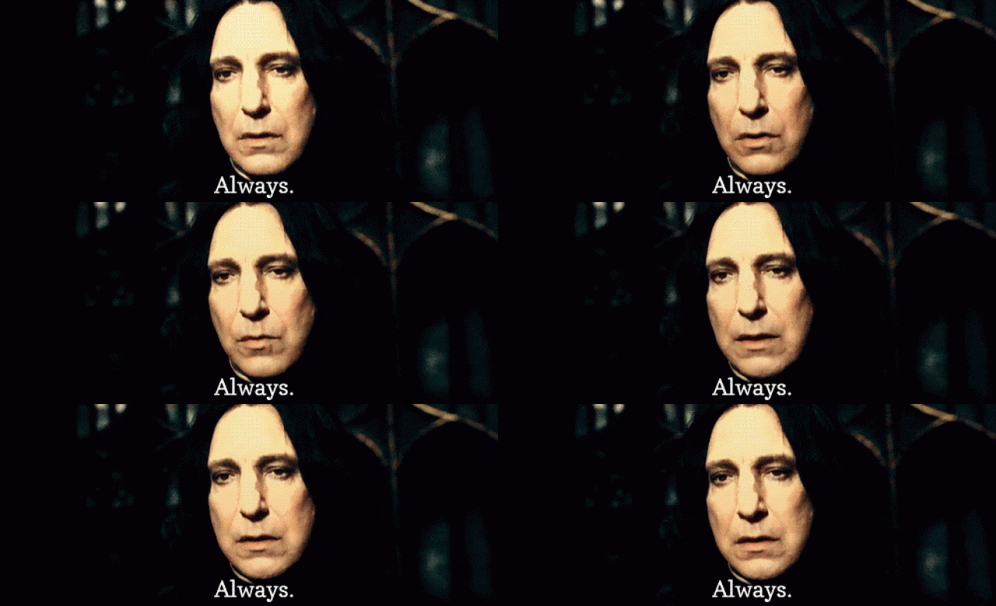
Possibly the most misunderstood character in the entire Hogwarts history. Till the very end he maintained the character of being a cold hearted, evil, Death Eater who was out to get his hands on Potter. Only at the end did his tears really reveal the love he had and carried in his hearts for all those years, never letting it come out, but hurting alone on the inside.

Imagine being in his shoes, never being able to express yourself and who you really are, having to live with the sad memory of holding your love for the very last time but having them in your heart till the very end. Imagine knowing those deep secrets, yet not being able to do anything about it and living with the pressure that no one understood. </3

“Well, it may have escaped your notice, but life isn’t fair.”

-Severus Snape

Dumbledore

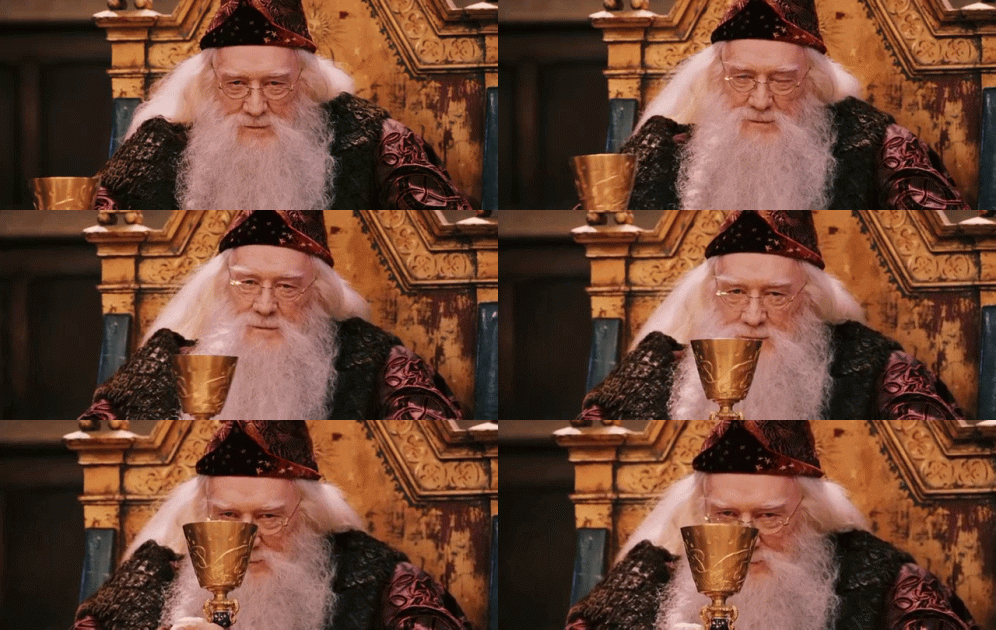
Probably one of the most controversial character who initially seemed to care a lot for Harry but at the end looked like the man who was just waiting for the right moment. (Still his death hurts) . He left forever teaching us to choose the path of right – no matter what , even if you have to die for it and at the same time, he taught me to be a leader.

“We must all face the choice between what is right, and what is easy.”

– Albus Percival Wulfric Brian Dumbledore

Harry Potter

Nerdy and awkward, yet so popular! (15 year old me relates!) When you take a look at his life, you really understand the importance of friends and loved ones. People who will sacrifice their life just to protect you, people who are willing to fall into dungeons and rescue you on flying cars, people who would literally become you and risk their life, just to save yours – such people are not easy to come by, and when you do come across them, keep them with you and cherish them. Not to mention the little bits of pep talks you can get from him every now and then.

“Working hard is important, but there’s something that matters even more: believing in Yourself.”

– Harry James Potter

Fred & George

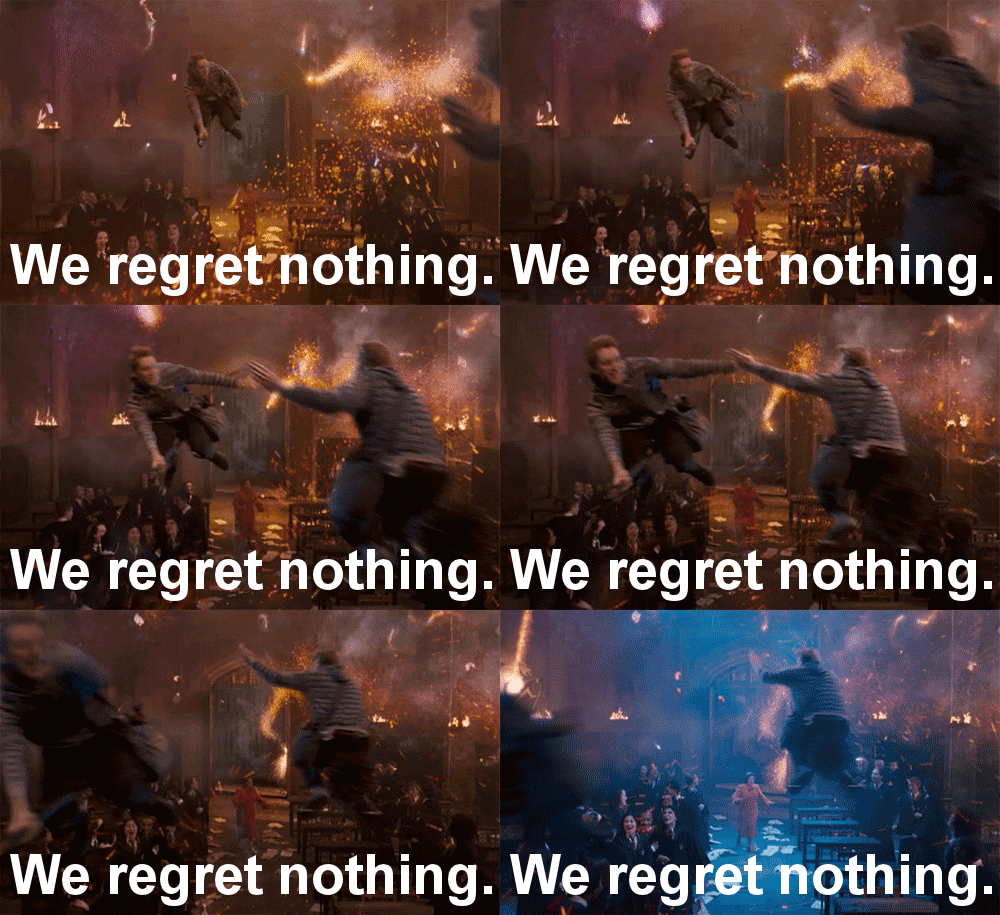
The most fun loving, crazy troublemakers Hogwarts had the opportunity to have. Born on April fool’s day, it was clear from the start , they were going to be the official pranksters of the school. Although really well known for being pranksters and goofs , thier bravery isn’t really spoken about much. Can you imagine flying into Umbridge’s classroom on brooms and lighting off fireworks disrupting the OWLs ,not to mention scaring Umbridge herself with the biggest fireworks – that has to take a lot of bravery – especially after being punished by those awful quills of hers!

The crazy duo really teach you to keep your best smile on and your humour high, no matter what the situation. To live your life with no regrets, to always be cheerful and joyful – even in the most darkest times, be it injury or even death. (We’ll miss you Fredd

“Well, none of us really fancy it, mate. Imagine if something went wrong, and we ended up a scrawny specky git forever. “

– Fred & George Weasley

Luna

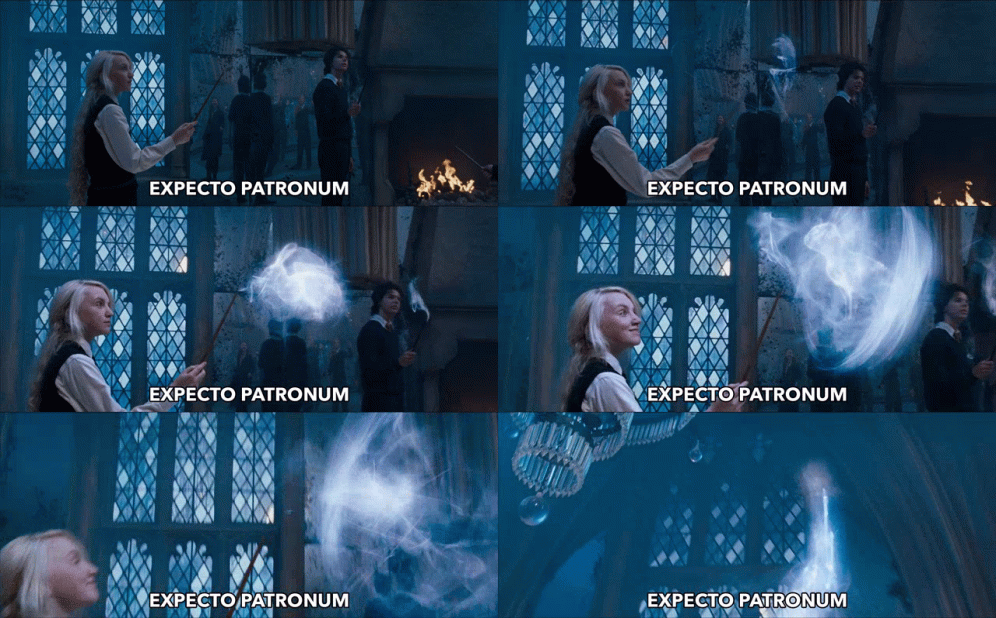
Weird and lost (and maybe a little bit looney), yet she was such a joy to look at. In a strange way, I felt myself relating more to her now as an awkward introvert. It’s not easy for me to make friends, but when I do, I will do anything for them, be it learning spells behind the cruel headmistress back or standing up against the Dark Lord himself. She really gives out the message that it’s okay being the ‘weirdo’, you’re still cool, especially if you can help find a horcrux!

“My mum always said things we lose have a way of coming back to us in the end. If not always in the way we expect”.

– Luna Elizabeth Lovegood

Dobby

Tiny, timid, scared, would be the 3 words I would use to describe this marvellous house-elf. The love and protectiveness this sweet one has for Harry is simply adorable. Sure, he’s got Harry in a few difficult situations, but all the while hoping to keep him away from danger. Not to mention, he was there, exactly whenever and wherever Harry needed him.

Although seeing this little fella pass away broke many people’s hearts, he did teach us, that sometimes we need to take some risks and break some rules (and even defy our master’s) just to protect those who mean a lot to us, even if,in that moment our actions might seem unreasonable.

“Such a beautiful place this is, to be with friends, Dobby feels joy for being with his friends, Harry Potter.”

– Dobby

Hermoine

Smart, kind, talented, cheeky and definitely a goddess, this little girl knew what she was stepping into, even before she knew what she was actually stepping into. Although born to muggles, she was better than even the pure bloods, which goes to show; it doesn’t matter where you’re born or to whom you’re born. Your real power and talent comes from yourself.

Being ambitious, kind and the bestest friend to Ron and Harry were clearly some traits highlighted, but something else that I learnt was ; people might not always accept you, and may even call you horrible things, but at the end if you keep your head held high and be proud of who you truly are, you might just be able to punch those same people in the face (literally &/or figuratively).

“Books! And cleverness! There are more important things! — Friendship! And Bravery!”

– Hermoine Jean Granger

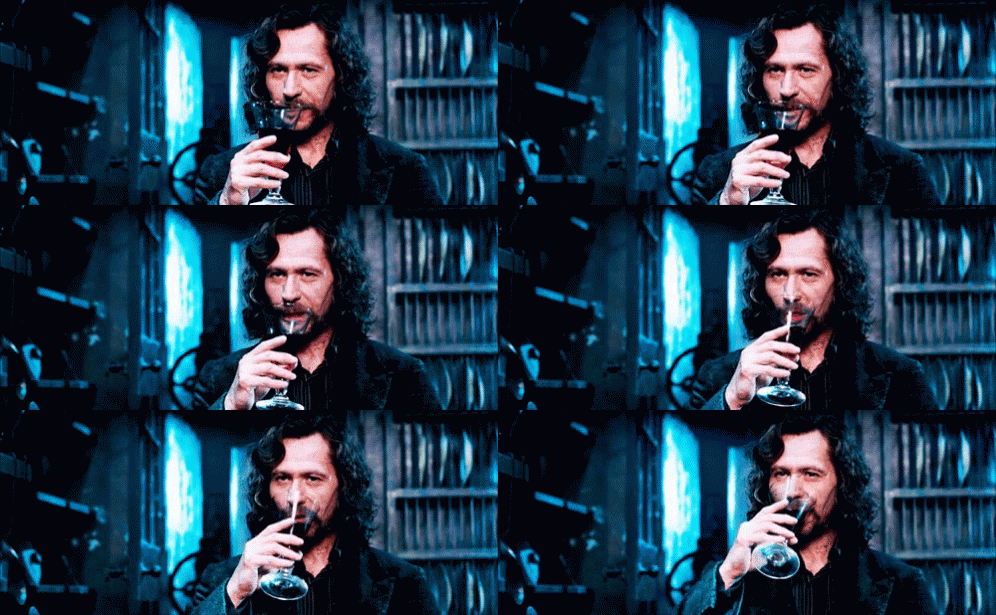
Sirius

First portrayed as the bad man and then revealing himself as the actual good guy, only to be killed, Black really brings the point home that sometimes, things are not how they really seem, sometimes, there’s more to the story. Also, never let go of hope, sure, you might have to spend 12 years in the most horrifying, dangerous prison ever, but eventually a time will come when you will be able to show yourself truly, if not to everyone, then atleast to those who mean everything to you. So if you’re going through difficult times, hang in there, eventually a time will come when you too will be able to fly off into the moonlight on a Hippogriff.

“We’ve all got both light and dark inside us. What matters is the part we choose to act on—that’s who we really are.”

– Sirius Black

Draco

Dark, mysterious, trouble-maker, bad boy, bully, I could go on and on about this fella but no words are enough to explain my love for this Slytherin king. Tough as a rock from the outside, perfectly mean to any and all muggles, but on the inside, the most sweetest kid with the weakest heart.

Although a little bit of a drama queen (okay ,maybe a little too much of a drama queen!) , he really makes you realise that what you see from the outside, isn’t necessarily what’s happening inside as well. So the next time someone is rude to you for no reason there might actually be a reason, maybe you just don’t understand them.

Draco as a character also makes you realise that sometimes you need to ask for help, or just accept help when someone offers it – even though you might feel like you’re completely fine on your own and have everything under control, actually having someone by your side can be a huge help.

“It comes and it goes. Still, I consider myself lucky. If it wasn’t for Madame Pomfrey, another minute or two and I could have lost my arm. Couldn’t possibly do any homework for weeks.”

– Draco Lucius Malfoy

Ron

Clumsy yet the cutest of the Weasley family, a character who surely stole everyone’s hearts right from platform 9¾. A clear indication that honest, real, unconditional love for our friends is so important. Someone who stayed by Harry’s side through everything, good and bad (although sometimes he can be a little annoying). Be it a broken wand or a broken arm, he knew to put his friends before himself. Want another reason to love Ron? – You can stuff your face around him, no judgements whatsoever, he might even join you XD, also, he has the most hilarious comebacks to some pretty unusual situations!. (How can you still not love him?!)

“Why spiders? Why couldn’t it be ‘follow the butterflies’?”

– Ronald Bilius Weasley

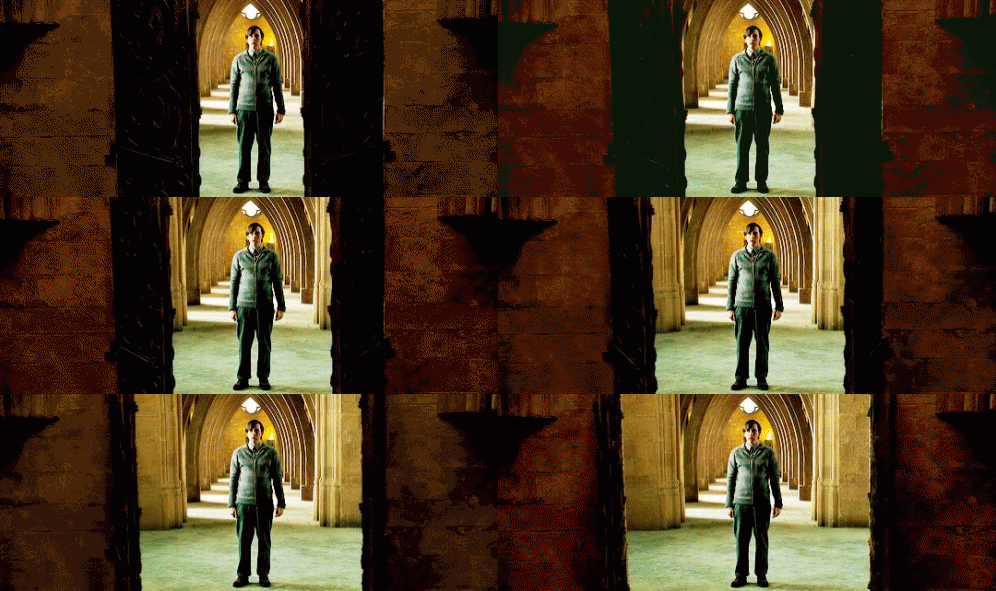
Neville

The shy little sweetheart who always only wished good for everyone. (Much like human version of Dobby, if you ask me) Mostly pushed off to the side, only to shine at the end when he wielded the sword of the true Gryffindor. Neville makes you feel like you belong, it doesn’t matter if you’re friends with the popular kids or not, it doesn’t matter if you’re part of the fancy sports teams or not, it doesn’t matter who you are, you will always belong – as long as you have goodness in your heart. If you’re good at heart you can fight the biggest snakes out there, just believe in yourself.

“I’ll join you when hell freezes over!”

– Neville Longbottom

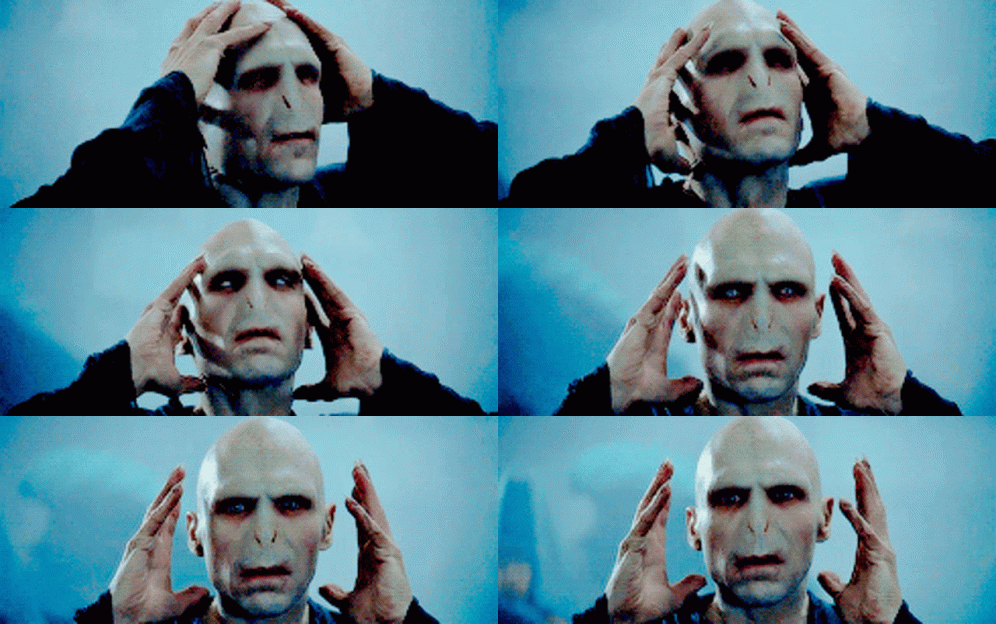
Voldemort

The Dark Lord himself. Powerful but vain (in my opinion). Although not the most loved character of the series, Tom faced a lot of hardships in his childhood and many people can see themselves in him. The feeling that you don’t belong has hurt one too many people (although not all of them turned out this evil ). Something which Voldemort’s story does tell is this – even if you feel like you don’t belong and people around you make you feel terrible about who you truly are, there will come a time when you will find your place in the world, be it between muggles, pure-bloods or even half-bloods.

“There is no good and evil. There is only power. And those too weak to seek it.”

– Tom Marvolo Riddle

TOP TIPS TO BE A GREAT LEADER

Being a leader is something which many people can do, but being a great leader, one who can lead the team to success while training all the members to become future great leaders is not a skill that everyone has.

According to some theories, great leaders are ‘born and not made’, i.e. certain people inherit certain qualities that make them great leaders, so, the people who are not born with these traits cannot be great leaders.
On the other hand, some theories suggest the opposite, that great leaders are ‘made not born’. That people learn to be great leaders and the traits required to be great leaders cannot be inherited, it is something people learn through experiences of life and observing other people.

I think a great leader is one who is the perfect balance of both theories.
To be a great leader, it is necessary to have a natural leadership instinct along with the traits that one can achieve only by experiences and learning from those experiences as well as other people, preferably other ‘great leaders’.

“A leader is he/she that creates more leaders.”

Ranveer Allahbadia


Here are some of the most important qualities a great leader should have (based on some of the amazing leaders I’ve seen and have been heavily inspired by)

Passion


A great leader is one who is passionate about the project/work, someone who’s energy can really inspire and pump up the passion in the other teammates. A leader should be driven by the passion and make it their purpose as well as have people with the similar passion in their team.

When leaders have set goals and are able to communicate it to the rest of the team effectively, they can bring the entire team together to reach the goal while growing as a team as well.

Empathy


A leader that has empathy towards their teammates is one who can understand the teammates to a deeper level and can connect with them emotionally.
Teammates also feel better working with a leader who understands and bonds with them.

Empathy also allows to get rid of any workplace tension and get straight to the root cause of the problem.

Confidence


A great leader is one who is secure with themselves and are self confident. You will rarely see them in self doubt.
Teammates can rely more on confident leaders who are trustworthy and also grow their self confidence.

However, keep in mind that confidence and arrogance are completely different things. A leader who is confident can help you build your self confidence, on the other hand, an arrogant leader will only focus on their own growth and doesn’t take the growth of their teammates seriously.

Conversationalist


A great team leader is also a great speaker, one who can use their words to inspire and push their team towards success/the end goal. Great leaders are clear with the message they convey to the team and in times of trouble they are able to solve the problems with their words.

Leaders are comfortable addressing big groups as well as having one on one conversations with their teammates.
Along with being great speakers, leaders are also great listners, which leads to amazing, innovative, insightful conversations.

Open minded


People that can easily adapt to situations and have an optimistic, open minded attitude towards even the most difficult situations excel as leaders. They also inspire those around them to adapt to changes surrounding them, the good and the bad.

Great leaders understand that people are the biggest assests and welcome all criticism and feedback from others as well as teammates and appreciate exchanging ideas and opinions with their teammates.

Motivational


Great leaders are the perfect role models for members of the team, in addition to that, they are great source of motivation for the team members, especially during difficult times – professionally and/or personally.
They know the important role of motivated team members in the growth of the entire team.

Great leaders can motivate and inspire their team members only if they are confident and optimistic and at the same time have a realistic look towards life. A motivational leader has a very big hand in the growth of each individual of the team.

“The best leaders know their teammates inside out, and know how to get the BEST out of each individual, individually!”

Ranveer Allahbadia

Selflessness


A great leader is the leader who gets happiness from seeing others being rewarded for their hardwork. Their leadership is not based on titles or position or power, their influence on people is not because of their money or power or connections.
They define their success on the basis of the positive influence they have on people and the impact their actions have on other people. They constantly show up in times of need and are reliable to the team, they always put their team first and take actions that help each member of the team grow.

A great leader brings out the true potential in others and helps them become great leaders of the future. They are not just concerned with getting the team to success as a whole, but also invest themselves in helping each member of the group reach their true potential.

Determination


Great leaders are always determined to accomplish what they set out to do. They don’t give up when things get tough. They see difficulties/problems as a challenge and see it as an opportunity to grow.

Such people are not afraid to think outside the box or take decisions/steps that are ‘uncomfortable’ or ‘difficult’, they constantly try to step out of their comfort zone and persuade their team to do the same.
“It is better to lead from behind and to put others in front, especially when you celebrate victory when nice things occur. You take the front line when there is danger. Then people will appreciate your leadership.” —Nelson Mandela

“It is better to lead from behind and to put others in front, especially when you celebrate victory when nice things occur. You take the front line when there is danger. Then people will appreciate your leadership.”

Nelson Mandela