Writing as Work and Hobby

Daily writing prompt
What do you enjoy most about writing?

How did I get into writing? I’m sure that every great (and even the not so great writer) started as a complete bookworm. As did I. The first ever novel that I read was The Famous Five by Enid Blyton, of course before that I had been held captive by countless other comic books and children’s magazines. But I distinctly remember the exact day that I finished reading The Five go to Finniston Farm, I put down the book and opened up my little diary and attempted to write a story just like the one I had read. Two chapters later the diary lay in the corner and the papers were shredded to bits. I hit writers block a little too early. I cant remember the exact day I actually started writing, but I have some pretty old memories of coming up with stories of talking dogs and girls with long brown hair connecting with their roots and finding out they had superpowers!

According to my mom I used to make up all these stories even before that, when I was just a baby I used to make all kinds of stories and characters to keep myself entertained (and also anybody else who wanted to listen).

Following that came the tween phase where I attempted my hand at journaling and making diary entries (completely inspired by Anne Frank) , but since consistency wasn’t my strongest traits, they all ended up in the trash eventually. It was also during this period of my life that I discovered the word of E-books and that just led me into a whole new world.

I will admit, I found a little too much comfort in the world of fiction, and yes, it was a pretty huge distraction from my studies and my parents were not as happy as I was. Despite the fact, I went through book after book, finding new genres every week and falling in love with the styles of so many authors.

My early teens were pretty much filled with Blake Pierce and W L Knightly (still would binge read all their books). Following that came the second attempt at writing a novel. And as much as I cringe thinking of that “horror” novel, to that version of me it was a masterpiece.

That began my pursuit of creating the best works that I could. I spent as much time as I could (keep in mind that in a brown household studies take first priority) devoted to thinking and re-thinking plots and characters visualizing different narratives, subconsciously dealing with some of my own personal life problems through these characters lives.

And that phase of my life led me to start this blog and post some of my own works (PS – I also have a second blog where I post my own short stories and novels) .

After a pretty long run of consistency and regular uploads I hit dead end. I had nothing good to put out into the creative spaces of the internet and even the smallest of works ended up in a pile of trash under my desk until I gave up all hope. I’m not proud of admitting this but I almost gave up all hopes of ever becoming anything more than a regular teenager with a couple blogs on the vast internet. Obviously a part of me hated that but it was just so easy, I had school and college and a whole bunch of extracurriculars that required my attention more than some stupid hobby.

A part of me hated to believe that the one thing I enjoyed so much was just going to be left in the past. But what was I to do? Writing was too difficult, much less writing everyday and as a profession, it just wasn’t for me. I wanted myself to believe that not every hobby is meant to turn into a money making machine. And for a while I believed that, I let go of the idea that I would ever become a writer and just tried to move on with my life.

Every once in a while I did try to come up with something even moderately close to amazing, but the lack of consistency translated into the algorithm not really pushing any of my works, and that translated into me being more and more disheartened and push aside the pen.

But the past few months have been a time of new growth and new experiences for me. I recently moved to a new state and officially decided to drop a year before college. Now, although these are not too major changes for my life (I’ve spent my whole life travelling around), I realized with all these new changes in life there is one more thing that I need to change- my mindset. I’ve spent the last few weeks thinking and re-thinking my life and career, and my choices right now.

I realised that I’m very young, (no seriously, I’m just 18) I’m still living with my parents and I’m not even in college. I have practically my whole life infront of me and its way too early to make a solid decision like pursuing writing as a complete career, let alone making this blog into a full time thing.

While there is nothing wrong with choosing a career and working towards it from an early stage, it is also wrong to lead every young adult into believing that they need to have their whole life figured out and be set into it from the time they turn into an adult.

I let myself believe that my worth was set on how well I could work rather than the worth of my work. I’ve been trying to grow and in that process also realise that growth takes a lot of time and trial and error. There is nothing wrong with me trying to take my time and give myself room to learn and breath and take everything in, and most of all enjoy the process. I forgot that writing started out as a hobby, something that I was supposed to enjoy, that brought me peace, instead it had turned into another task throughout the day that I had started to despise and roll my eyes at.

But that changes now. I’m reaching a new phase of my life, where I learn and grow as a person, and that will reflect in what I write, it might not be consistent and it might not please the algorithm gods, but that is what true growth is. Its not to appease the masses, but to please oneself. And that begins now.

Love, Anu.

Things I learnt from Highschool

Hey! Before I start this blog I think its important for me to introduce myself. My name is Anu, I’m 18 and just recently graduated from high school. And here are some of the lessons I learnt.

Now, I will be very honest here, and I think a lot of my fellow people will relate to me when I say this – high school is way too hyped. It is definitely not like those movies you see on the weekends in middle school and start fantasizing about. Its not all that glamour and glory and is mostly just like all your previous years of schooling except you probably have more work load (and if you’re like me then you probably don’t care about it)

Having said that, I don’t mean to bash those last few years of “fun” and “carefree” times. Despite all the trauma that high school gave me (that’s a topic for another time) I’m still grateful for some of the lessons that I learnt.

Not education based lessons though, cause all that I learnt in high school was trash. That’s right, I’m not actually going to dissect a flower or use integration in real life. I’m going to be very honest when I say this – I didn’t actually pay too much attention to my lessons, obviously I passed with half decent grades, but I don’t find my life much different from when I was the “top of the class” student. But I’ve digressed here.

The matter of fact is – no matter how unbearable highschool was, it taught me a lot of things I will actually cherish my entire life.

The first and I think most important that I’ve learnt is how to build networks and connect with people. I, like many people, did not have too many friends – only a handful of people that I could call friends, but, I did however, make acquaintances and also learnt the art of building a network and being able to form instant connections with people which, safe to say, has helped the professional side of my life.

My parents had always pushed me to take part in almost every co-curricular activity, that definitely helped me learn a handful of talents and also hone some skills but more importantly, I never had the fear of trying new things or being in uncomfortable situations and stepping out of my comfort zone. Also helps that I experienced stage fright and performance anxiety at a very early age and have gotten very accustomed to that nerve recking feeling.

Also, can we be honest here, the best part about high school had to be the rigidity and stability it gave to our day to day lives. I can truthfully say that I have not had a fixed schedule or work plan since I’ve graduated and that has really messed up my time management.

Speaking of which, I think the pressure of finishing a test/exam in a really short period of time actually made me better at getting things done in record time and also helped me actually think with a clear head even under massive pressure. (God bless exam season)

And lastly, I think the main thing that I have to give credit to high school (and my procrastination) for is this blog. Whenever I got a task/assignment from school that I felt was a “waste of my life” (which was almost all of them), I would procrastinate and instead write, some of which I then posted here (and some on my other site too) and now you’re reading them. So I guess I owe thanks to high school (and to you too…you’re awesome <3)

Having said all of this, I know that it is an absolute privilege to even go to school and receive education and I am really grateful for that. I also encourage everyone to stay in school – it will be worth it in the end. Also, never stop learning, it is one of the most beautiful experiences of life.

One Love

On Creativity

A ‘creative head‘ is how I’ve described myself to people for many years, since I’ve always thought of myself as someone who has a creative vision and can find odd ways of turning one thing into another and seeing things in ways which others don’t always notice or even care to look at.
But recently I’ve gotten more into asking questions about it – what does creativity mean and does it mean differently to different people? What is ‘creative vision’? And what is creativity even about?

I’ve gotten a lot into thinking about creativity and that’s what I want to talk about – let’s talk about creativity.

What does it mean to be creative?

To be creative, in the most simplest sense, means to use one’s imagination to create something. When we speak of ‘creating something’ it is often thought as creating something new and original, something that has never been made, something truly mind boggling and innovative. While all this might be true in some instances, it is not true for all creatives out there. Most creative ideas are about making new connections between old ideas in order to creating something different.

Creativity is about using old methods in newer ways to find solutions for problems or making things using new connections between old ideas.

With the ever consistent change in reality, new and improvised creative ideas are more and more welcome and we tend to see a lot of these in mainstream media too. All those ‘gadgets’ and ‘hacks’ we see around us that are bound to make life easier are all a result of somebody’s creative thoughts.
While some of these hacks and gadgets seem silly and a waste of time to most (*ahem* 5 minute crafts *ahem*), some of these do actually work – and when you do find any such hack that might actually change your life, you can thank someone’s creativity for that.

And if you’re wondering the same thing as I am..

What do I need to be creative?

It is often said that creative people are born as such and that it us something inherited. While it may hold true , there is a certain level of creativity that everyone is born with, it just needs the right push to come out fierce and strong. For each individual to show off their creative side all they need is the right guidance and the proper environment to raise that creativity to reach their true creative potential.

Know that almost everybody’s hidden creative side can be pulled out to shine in it’s own unique ways and that creativity is different for all – it comes in all different ways, shapes, sizes, qualities and quantities.

Scientifically speaking, there are a few cognitive skills that you’ll need to develop in order to have the most efficient creative thinking.

  • The ability to generate new ideas – be it original or from combining old ideas to create something better.
  • The ability to retain things in memory and easily go back to things in memory. To reach back to stored or old information – at the right place and time.
  • The ability to interpret ideas from one’s own experiences and associations by being attentive and present in each moment.
  • The ability to easily snap out of generic routines and accepting sudden change.

Now, after reading that, if you think that you have what it takes to be creative, then you might ask yourself…

Why do I need to be creative/what does creativity bring to my life?

In the most simplest way – creativity brings 2 main benefits to our lives

  • with the everyday stresses and troubles of life creativity is like a gateway to mini paradise. A place where you can be away from your problems and create things that make you happy. It allows one to step away from existing train of thought, do something different and come back to the problem with a clear head.
  • creativity allows one to look within themselves – it provides a window to peek within ourselves and find out exactly what we want and don’t want in life. It’s the best way to learn ourselves and develop a better relationship with ourselves.

Now, have I sold you on being creative? I hope I have! And if so, then allow me to introduce you to some tips on

How to be Creative

1) stop judging your own creative ideas. Give yourself the permission to do what you love and laugh off the mistakes you make along the way.

2) instead of simply brainstorming, thinking and planning your creative visions, actually make something! Put the fear of uncertainty behind you and get to work – create!

3) give yourself enough time to create something, but stick to a schedule. Letting yourself too much time for something will only lead to procrastination and delay.

4) churn out as many ideas as you can. It doesn’t matter if they’re good or bad – think of new things and don’t hesitate to put it out. Remember, the best ideas often hide between the most mediocre ones.

5) put your ideas out infront of people. It may feel daunting and scary to take that stand but showing your work infront of people holds you accountable for it and helps gain new perspective.

Besides this, there are some more things you should know as a creative.

Inspiration – You won’t always get hit by a lightning bolt and get the Eureka moment that will lead to crazy breakthroughs. Sometimes inspiration won’t hit you in the most magnificent ways, instead, it can be something as small as a ladybug on a blade of grass. You need to be able to have a broad mindset and see things differently.

Getting in flow – Creativity is not something you can randomly pick up whenever you want and drop whenever you feel like. To excel at creativity and reaching to your level best, you need to be consistent. Creativity is about constantly coming up with new ideas, improvising and re- building things. To reach a “flow” state in creativity you will have to be consistent.

Solo or team – Creativity requires the best minds and the best of minds. While being a creative does mean that collaborating with the best minds around you is essential, allowing the best of your own mind to come forward is also of equal importance. Bringing out the best in you will require solitude and being alone with your own thoughts and ideas. Remember, the best creative minds tend to be introverts and spend their time with themselves while also valuing the response and ideas from the people around them.

“Creativity involves breaking out of expected patterns in order to look at things in a different way.”

~ Edward de Bono

A Little More On Procrastination

I’ve spoken about being a major procrastinator many times, but it’s time to go a little deeper into it and learn more. (If you’re a procrastinator like me and you’re reading this, chances are you’re procrastinating something right now, think about what it is.)

What does it mean to be a procrastinator?

To procrastinate means to delay something that needs to be done as soon as possible and actively finding ‘better’ things to do rather than doing the things that need to be done.
It’s knowing fully well, the consequences of delaying something yet doing it only to face trouble at the end – be it by rushing through work or a project or having to listen to long lectures from seniors.

Procrastinators are these exact people!
We tend to put everything till the very last moment knowing fully well the negative outcomes of it yet focusing our attention towards things that are less attention demanding and something that can distance us from the work that needs to be done in the present.
Procrastinators tend to have a much more optimistic idea of time and tend to push everything for later thinking they’ll ‘manage’ everything just fine. (Which is mostly just putting their luck to the test)

But then why is it that people tend to procrastinate?

(According to so many different sources)

It is commonly said that procrastinators only procrastinate to distract themselves from their fears of failure or inability to commit themselves to a particular work or continuously do it for a long span of time.
They tend to procrastinate only to have more control over their emotions.

According to some studies, procrastinators don’t really have control over their habit of procrastination, for them it is a response behaviour towards extreme authoritarian lifestyle one has had in the past or even in the present.

According to some other studies, procrastinators procrastinate because they tend to prefer the “now” and value how they spend it instead of planning or worrying about the future.
They prefer having fun and enjoying the present rather than waiting for it in the future.

Some studies also claim that most of the procrastination done by the average person is unconscious and can probably be avoided if people simply focus more on their everyday life and be more organized.

There is also the final group of people that think the people who procrastinate do so because they lack the motivation to actually work and are unaware of the powers of their own emotions – of the present and the future and the role these emotions can play in getting the motivation they need for getting things done.

But what is the actual reason for procrastination? Why is it that we feel so much better just pushing things to the side and instead focusing our attention to less important, more fun tasks?
The answer to this could be absolutely anything – it would differ from individual to individual, you will just have to look within yourself for this one.

Now if you do actually realise how or more importantly why you procrastinate – is there any way to stop procrastinating?
In the most honest way – no, there isn’t something you can do that will magically change you from master level procrastinator to the diligent, hardworking, good child.

You can’t change yourself just magically, but there are some things you could do to make procrastination better for yourself.

How to use procrastination better?

-> The first and maybe most important thing is to embrace procrastination as a part of yourself. Know that you can’t change everything about yourself, so instead of finding ways to change it and look for ways that you can be yourself and still get work done while being happy.

-> The most difficult step is putting aside distractions and getting to work. It’s really easy to say “Just do it” but real life application of that is a lot more difficult.
A few steps to consider before saying “Just do it” are
1) make a to do list – preferably with more easier tasks at first and the tasks getting progressively difficult.
2) making a mental (or physical) note of each thing you have to do and alloting time to it based on how long it will take you to do that specific task, and if you can, allot yourself some extra time just incase.
3) use deadlines to your advantage – while alloting yourself time to work on something keep the deadline in mind and allot yourself a timeline which ends earlier.
4) create “punishments” for yourself for work not done (no, don’t go beating yourself with a lamp like Dobby), make the punishments something that will test your self control, for example, something like no sugar for a whole week or not going on social media for a week.
5) control the distractions around you – as much as possible. It isn’t easy to turn everything off and live like a monk, and it probably isn’t the most wise thing for many people, but try to limit the distractions around you and try to hold yourself accountable for the things around you.

-> When setting up to get into the work zone know that it takes time to get into the rhythm of work and different types of tasks tend to have a different rhythm to it. So when you place work for yourself, try to group out similar tasks together to stay within the similar rhythm and not having to switch your mind from one type to another type of task.

-> When you get into the “Just do it” mindset, remember that it won’t necessarily last for hours. So whenever possible try to write down all the things you need to get done and the possibile steps to do it and the things to keep in mind – this will be your blueprint.
So the next time you feel even the smallest bit of energy, pass a glance at this blueprint and that will give you the idea and motivation to finish the task at hand.

-> Speaking of motivation – know that simply having an idea in your mind or a goal ahead of you won’t always motivate you to stop slacking and start working. Sure, it does help to have a visual idea of what you’re working towards, but sometimes feeling instead of simply seeing can be more help.

-> Lastly, learn that overcoming procrastination and using your bad habits for your own advantage will take some time and a lot of effort and relapsing back can be completely normal but you need to be able to overcome those hurdles and not fall back.

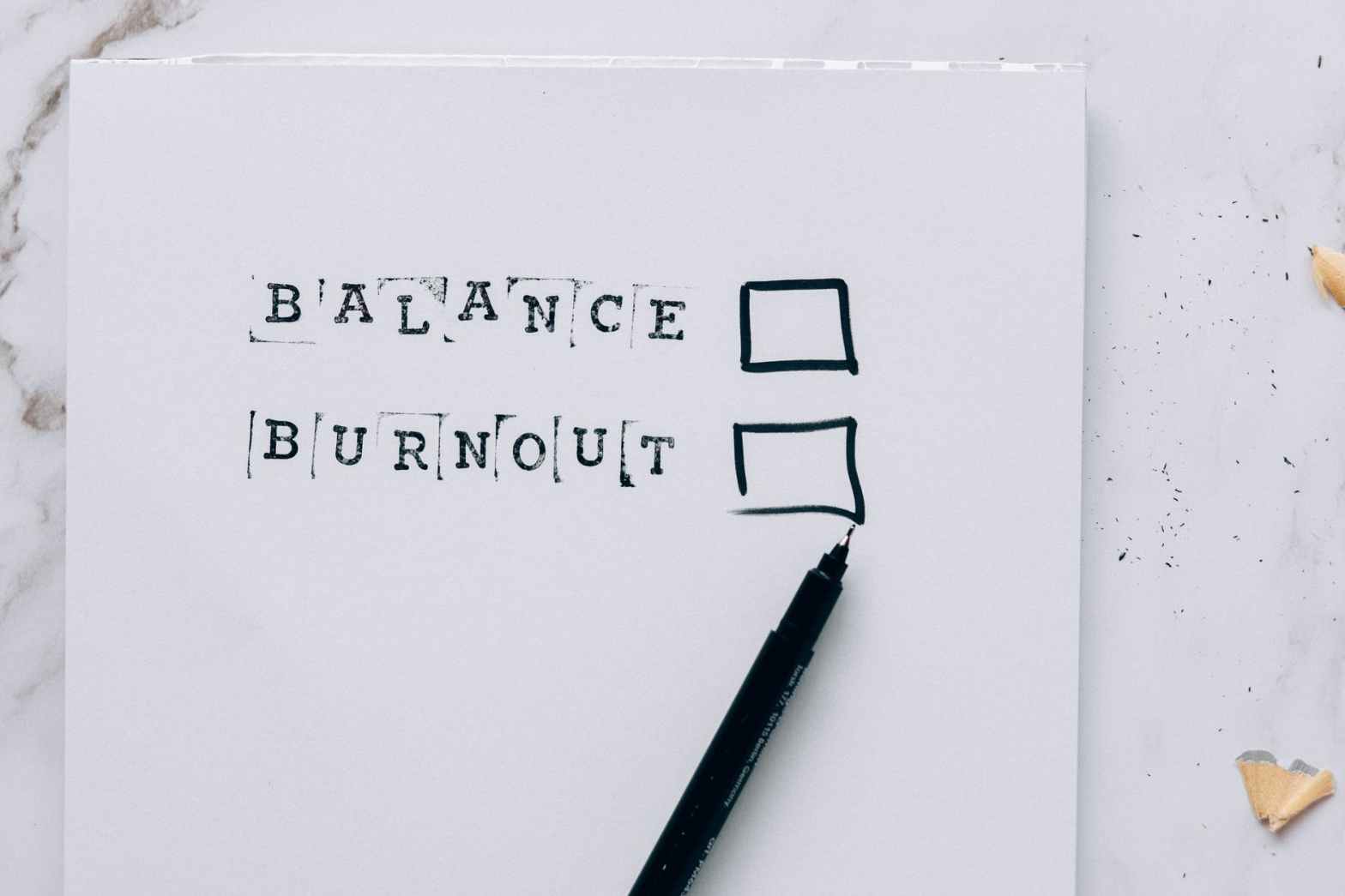
Work-Life Balance?

The concept of work life balance basically views work and life as 2 separate parts of our life that need to be maintained equally.

In a much broader sense, it means to utilise more time for leisure things, family time or simply self care. It is something which many youths, including myself, struggle with. It’s difficult to find a space that is just the right balance of work and leisure.

About work-life balance

The reason why work-life balance has become such a growing topic in discussions among the self-help and self-care community is because the “constant hustle” cultre has fixed the idea of constantly being on the go, working and being productive into the workforce and has made it the norm.
This has built the toxic idea in most workplace employees that they should be constantly on the go and hustling, being productive instead of taking time off for themselves and doing things that they love.

Even if you love your job and are motivated to work, overworking yourself without taking breaks will eventually lead to some resentment – either towards yourself, your colleagues or even your job.

Constantly being on the run, working even on the weekends will lead to eventual burnout – be it mentally or physically – this is what leads to resentment and negative feelings which is your mind and body’s indication to needing a break.

Also, assuming that if you work extra hard, harder than others will lead you to great success in your career is wrong. Yes, it might help to get ahead, but at the cost of your own well being. (Definitely not worth it!)


It’s important to learn to develop healthy work-life balance.

Tips to maintain work-life balance

  • Define

Before going into work-life balance, you need to know what is ‘balance’ for you.
Write down the things in your life that are priorities, then analyse your life daily life and try to make an estimate on how much time you’re able to allot to each priority.

Then take a moment to reflect on that.
Are you happy with that? What would you like to change? How much of a change do you want? How will that change your life?

  • Set Schedules

When you realise how you want your day-to-day life to be organized it becomes easier to schedule your day accordingly.
Set a fixed schedule for workdays with fixed times for work and fun things that you enjoy .

When you have a fixed schedule, especially one that is more or less consistent throughout all workdays, it becomes much easier to get into that ‘flow’ state of work and enjoy uninterrupted work times. Also helps you detangle yourself from work after a specific time and just enjoy other things.

Now, it might seem easy to fix a schedule and plan out your entire day, but the difficult part is sticking to that workplan and being consistent with it.
Especially as someone like me who doesn’t fit well with schedules and hates being routine, it gets boring.

Something that I have been trying is to set timers and little rewards for myself for successfully going through a schedule. 
But somedays, even that doesn't motivate me enough, those days you just have to force yourself, sometimes you have to push through without motivation.
  • Turn Off

Turn off work mode – both, from your devices and your head.
Turn off work and email notifications. If possible, turn off devices and spend time doing the things that make you happy or spend time with people that make you happy.
It’s important to not let work distract you during times that are supposed to be your ‘off’ times.

Obviously this won’t work for you if you have a job that requires you to be on alert most of the times.
But for a student plus writer like me, it’s easy to shut off my phone and go out on a walk or read or study my favourite subjects.

  • Make Boundaries

When you have a schedule and fixed times for everything, there is only that limited time for you to work and to relax.
It’s important to learn to maintain that boundary between your work and your personal life.

Learn to not bring your work into your personal space, to give time to people outside of the work environment and maintain balance.
The way to achieve this balance is from within, it is a resultant of your own choices and it’s important for you to make wise decisions and respect the boundary that you have created for yourself.

If you are someone like me who finds it difficult to work within boundaries,it’s going to be a difficult task to navigate through them and be disciplined, but the only way to have successful work-life balance is by execution- simply learn to work within boundaries and stick to your routine.

  • Reflect

After atleast a month of following through, go back to analysing your daily life. Ask yourself the same questions you asked yourself in the first step.

Are your answers different now? Do you feel more happy/content with the way your work-life balance is now?
Observe and reflect on your emotions before and after and see if things have changed.

Even though work life balance is a widely discussed topic, not everything said about it is positive.

Cons to work-life balance

Work-life balance is based on the idea that work and life are 2 different parts of our life that need to be maintained equally. It creates this barrier between work and life and puts a pressure on people to be able to manage both equally and successfully.

But the reality of the situation is that work and life can never be equally balanced in life.

There will be times when you will have to make certain decisions based off of your professional life and that takes priority in your everyday life.
There will also be times when your personal life will take the spotlight and you will set your work away to enjoy your life with people you love or just do things to keep yourself happy.

So when it is clear that having a perfect work-life balance isn’t possible and yet we pressurise ourselves to live that way, it is just like running a race but in the opposite direction to everyone else – you might feel like you’re winning when in reality you’re making decisions that will not benefit you.

It’s important to accept that the idea of perfect work-life balance is not correct. Accept that you cannot treat things as rigid blocks, sometimes things are just grey.

While studying about these ‘grey’ areas, I came across this really interesting concept.

Work-life integration

Work-life integration removes the idea of having a perfectly balanced equation between work and life and blends everything together.

To be precise, it removes the rigid boundaries between your personal and professional life and sets your day in such a way that work, health, family, self, everything is given appropriate attention but without the strict regimes and schedules.
It is a way of creating a collaboration between many areas of your life.

With the added flexibility to your life, it becomes easier to manage work and personal life and if you feel like adding more things to your life, you can easily do that.

It gives the opportunity to be professional while handling many things at the same time and still remain sane !

Tips to work-life integration

  • Create a schedule that focuses on all the main priorities in your life. Unlike schedules from work-life balance that dealt with ensuring ‘equlibrium’ between work and life on almost a daily basis, these schedules are based more on what you feel like and what you’re motivated to do
  • For example – one day I might be in the mood to study and write and instead of going out with friends i would just stay at home and read a book or draw.
    The next day I might not be in the mindset to study, so I could spend time with friends and family.
  • It’s a way to balance your life,but in a way that suits you.
  • The only thing to keep in mind is to make sure that your schedule distributes time to all your priorities in a more or less equal amount and fulfills you and the people most important to you.
  • Just like in work-life balance situations, it’s important to have boundaries here as well, but not as strict/rigid.
  • Here you don’t have to set times in your day reserved only for work and only for fun. You only have a brief blueprint of how much time you want to spend working and how much on leisure things.
  • You just need to try and not let the two (work and fun) overlap and keep them at a distance.

But just like incase of work-life balance, work-life integration also has some downsides.

Cons to work-life integration

  1. If you don’t spread your priorities out equally, you might end up spending most of your time either working or on leisure things.
  2. You may not be able to properly navigate through the blend of work and life and might lose the grip on maintaining balance between the two.
  3. You may have your mind constantly preoccupied with other things due to lack of proper scheduling of thoughts and work times.

Having read all of this – what do you feel suits your life and your goals to the best limit? Let us know!

Play Of Colours In Productivity

Believe it or not, colours actually play a large role in controlling your energy and inturn, control your everyday productivity.
They have the power to have an effect on your physical, emotional and intellectual state of mind.

Different people might asses different colours in different ways. Even though people perceive colours in different ways, they have more or less of a similar effect on most people.

In general, colours can either have a positive or a negative effect on you and your work flow. So it’s important to have the right type of colours in your workspace to release the right kind of energy from that space.

It’s interesting to note that the influence of colours in our energies is largely based on our own inner nature and the extent to which the colours can affect us is based on some of the most prominent emotions within us.
Another interesting fact; it is not only the colours that have an effect on us but also the shade of the colour can have a positive or negative affect on us.

Let’s look at the 5 most prominent colours around us and how they affect our energies and productivity.


Red

This strong colour wakes up the physical aspect of the workspace and even has physical effects on the people in the workspace.
Often known as the ‘stimulating colour’, red can get your heart beating and your pulse rising.
If you’re someone who needs just a little extra push to get you working, this warm colour is the way to exert that pressure on yourself.

Keep in mind: Often times, too much red or too much of a flashy tone of red can become overwhelming and might not affect your work environment in the most positive way.
Also, having too much red and getting your pulse a little too high might even evoke your inner ‘fight-or-flight’ response and even make you agressive – definitely not good for a work environment.


Yellow

While red plays a large role in physical affects, yellow dives move towards the emotional energy.
Just like red, yellow is also very energizing to have in workspaces and is an excellent colour for when you need a little productivity push.

A colour that radiates positivity and has a large role in lifting emotional confidence levels and lifting your spirit when you’re down. (Which is why sunshine is associated with yellow-warm and relaxing.)

According to colour psychologist Angela Wright, it is the strongest colour to stimulate creativity and every time you’re stuck with a creative project/idea, yellow is just the colour that can get your creative wheels turning and if you’re not completely sure about your work,it is great for comfort and can make you feel more optimistic about your work and yourself.

Keep in mind: Although yellow mostly affects your emotional health positively, sometimes too much yellow or the wrong tone can become, well, a little too much and even raise anxiety levels in some people, so try not to overdo it.


Orange

When red controls the physical aspect of productivity and yellow controls the emotional aspect, it’s obvious that a mixture of both these colours will affect both of these aspects.

Orange stimulates both, the mind and the body and raises you to a more productive level.
Considered a ‘fun colour‘ by colour psychologists, orange symbolises happiness and determination.

Keep in mind : Even though a fun colour, orange can be a little too overwhelming and might even be counterproductive to incorporate too much orange into your workspace.
Instead of making it the main theme, pair it up with other colours which compliment each other well or as a slight “pop” in colour. This will create a comfortable energy flow with an element of fun and confidence.


Green

The complete opposite of red, green gives out a sense of calmness and gives out a reassuring energy.
As a harmonizing colour , it helps maintain a well kept balance between all the colours and different textures in a workspace.

Green works best in a calm working environment or keeping a workspace calm and collected, maintaining balance between everything.
If you’re someone who constantly finds yourself overwhelmed by the gazillion tasks at hand, try placing more green to your work area to put yourself in a more calm place.

Keep in mind : It’s important to choose the right tone of green to get the best results. A shade too bright might end up clashing with everything and make things more chaotic, while a shade too light might make everything seem bland.


Blue

Seen as a soothing colour, blue helps in concentration and keeping your mind calm.

Popular for use in office spaces, colour psychologists believe blue can help in clear communication, as it helps stimulate thoughts, and is the choice for completing administrative tasks and projects that require deep focus.

Keep in mind: Certain people might perceive blue as ‘cold‘ and ‘unemotional‘. It is adviced to pair it up with colours like orange having a little pop in order to keep things more lively and warm.


Mastering Self Discipline

All of us have a goal, it could be something like owning your own business/company or something as simple as getting up early – big or small, it doesn’t matter, we’re all aiming towards something.
The first step towards achieving the goals we set for ourselves is to master discipline or more importantly, make ourselves more disciplined.

What Is Self Discipline?

When you wake up in the morning, a little voice in your head might tell you to lie back down. “Just for 5 more minutes.”,i t might say. The ability to push away that temptation and actually getting up and doing something productive – that is self discipline!

Discipline is about putting your future self and prioritising it above your present, it about making changes and sacrificing some pleasures.

The most important and also one of the most difficult life skill to develop in life, which will surely, in the long run help you reach that ultimate goal.

To be disciplined is to sit down and work,to work on and towards the goals you set. For yourself, to do that work no matter how tedious it is,no matter how demotivated you are. It is to fight through and hustle regardless of your current situation.

Why To Be Disciplined?

Discipline is about resisting/overcoming short term temptations to put all our effort and hard work into the long term goals that actually matter. When you develop the ability to resist those feelings, you provide yourself with a sense of fulfillment and happiness, something that will continuously repeat as you keep on developing your skills.

When you have a goal oriented attitude and discipline to back you up, you can reach great lengths in life, you only need to learn how to combine both of them!

As someone who has been (trying to) developing the habit of self discipline

Here Are Some Tips

1) Accepting weaknesses

Just like every self improvement skill, it is important to acknowledge and accept your shortcomings.
When you accept within yourself that you need to make changes, it motivates your mind into doing better and pushing yourself further outside your comfort zone.

While looking over your shortcomings, try to look at yourself not from a negative light. There is always scope for improvement – but going for an unrealistic image of perfect will not help.
Know yourself as who you are, accept yourself and love yourself, then make slow steady changes.


2) Get rid of temptations

When you resist temptations around you, you build a stronger willpower. But expecting yourself to have a strong goal oriented vision within 2 days is unrealistic. Having that level of self control is a skill that is honed with a lot of training over a long time.

Developing self discipline is a long process, that will take some time for sure. To build up discipline, learn to push off temptations.

As a beginner, it is always good to actually remove them from around you.
• When you go to bed, keep away devices that will keep you in bed in the morning. Instead of setting an alarm on your phone,get an actual alarm clock.
• While studying/working, keep away from distractions, turn everything off except for what you’re actually working on.

Having distractions away from your general sight/area of vision gives the little boost you need.


3) Map it out

Sometimes, simply having a goal in mind doesn’t help. At times, it’s important to have a step by step plan of the grand map towards your goal.

Having a step by step execution plan not only helps you know exactly what to do and how to do it, but at the same time, it gives that push and motivation you might need on a gloomy day.

Whether you actually write down each step of the map or simply store it in one corner of your brain, it is important to have a plan of action and also a backup plan for the times when things might not go your way.
It’s good to be optimistic about the future,but at times being prepared for the harsh conditions life throws at you can really help, especially when it comes to big life decisions.

Not having an alternate plan can sometimes demotivate you and push you to throw in the towel, but when you have an idea of what to do in the ‘what if’ situations, that might just pump you up to go for round 2!


4) Building blocks to building you

Just like little kids use building blocks to build a toy or a puzzle, you build a better version of yourself by replacing building blocks with discipline.

Making discipline a habit, and developing self discipline via daily habits is the most easiest way to master it.
Instead of making it an option, make it a part of your daily habits and everyday life.

Take those steps and press it into your daily life. When you make it an everyday thing your subconscious self will not allow you to push it off for some other time.

A point to note is that the hardest part of having a routine is actually following through with it, every single day. So instead of adding new things to your daily life, try to change the old habits you had.
Making small subtle changes won’t affect your daily life too tragically but at the same time it will help you get on track to make more impactful changes.

Don’t let yourself slack off. The urge to slack off comes when you’re unable to have a strong hold on your discipline. But know that it is not an overnight skill, you need to learn to push off urges to relax and laze.

Self discipline is about acting on your thoughts, do not let your feelings get in the way.
If you feel like slacking off and doing less work, push off that feeling and get to work!

Sometimes it’s important to not be dependent on motivation – sometimes you just have to push through.

At the same time, it’s important to learn to distinguish between pushing through and overworking yourself.
Don’t let yourself fall down the path that eventually you start hating what you’re doing. You should still be able to enjoy what you do and it should bring you some form of happiness.

5) Rewards are okay!

Once in a while, reward yourself. When you complete an exceptionally difficult task, when you push yourself a little harder than other days, when you let go of comfort and work instead. Reward yourself to thank yourself for being a better person.
Reward yourself to remind yourself of the love you have for yourself (try saying that 3 times).

Know that occasionally rewarding yourself is okay and you shouldn’t have to feel bad about showing yourself some kindness and love.
Also, learn that it’s okay to make mistakes, to trip and fall every once in a while. Try not to beat yourself up over every small thing.

Learn that it is only human nature to make mistakes. Learn from these mistakes and move on, don’t let it stick to you.

Winners embrace hard work. They love the discipline of it, the trade-off they’re making to win. Losers, on the other hand, see it as punishment. And that’s the difference.

– Lou Holtz

FACING OUR FEARS

With the new year many of us are making new year resolutions- eating healthy, working out, developing new hobbies, practicing self-love are some of the many that I’ve heard from people around me.
But here’s one that I’ve not heard from anyone that I think everyone should persue (or atleast try to) and that is – facing our fears and growing from them.

A question that came to my mind was,

Why face our fears?


Isn’t it much more easier to just let things be as they are?

Well, yes. It would be, but think about it, the last few years (2020 & 2021) have been pretty tough, how much worse can it get?
Might as well take the risks and see how it goes. Because life is all about taking risks and overcoming fear. If you don’t take that leap today, you’ll never know what you’re capable of.

If we embrace our fears and work on them, we can break the biggest ceiling – our own mind. Once we do that, everything will be limitless! When we work on the things that we fear, or even simply acknowledge it and put some thought into it – we take away its power to control us.

If you don’t work on that one thing that is constantly at the back of your head, that one thing that makes you stay up at night and worries you throughout the day, it will consume your mind entirely and will not let you reach the success that you’re aiming for.

We all need to face our fears and challenge ourselves to acknowledge these fears in order to rid our mind of the emotional baggage that these fears bring into our lives.

But let’s be honest , it’s all easier said than done.
So the biggest question,

How do we face said fears and grow?


1) The first thing to do is to realise that being afraid of things is common human nature. We’re all humans and we’re all afraid of something. It’s not about not being afraid, it’s about how you handle those fears and how you grow from them. Know that fear is mostly an uneasiness our mind feels over things that we don’t know about, or we’re unsure about.

2) The second – and maybe the most important thing, is to know what you’re afraid of and to what extent. It may sound strange but many people (including myself) aren’t exactly sure of what they’re afraid of.
Take some time off and sit down and think about the things that bother you/worry you.
When you know exactly what to work on you can actually focus in that direction instead of feeling stuck . When you know exactly what to work on things become more manageable and less scary.

3) Try to identify exactly what triggers fear and worry into your head. Sit down with yourself and just think about those things and the emotions they bring up inside you without actually feeling those emotions or letting those emotions control your mind.
It might seem difficult at first, but slowly ease yourself into the process, eventually, you’ll be able to process those thoughts and emotions without really feeling much of them.

4) Like I said before, fear is (to some extent) an uneasiness in our mind about things that we don’t know about, or things that are ‘the unknown’. So gather as much information as you can, the more you know about it, the less scary it will be, and you might even find it interesting!
Also, telling someone about your fears can be a great way to elevate some of the stress and can help you think more clearly. Writing those fears down can also be a great way to acknowledge them, it will help your mind to come up with solutions much more easily.

5) Use your imagination to think of the worst case scenario that could happen if you go forward with chasing these fears – and maybe even conquering them.
Then, make a plan of what you could do if such a thing was to happen.
Once you acknowledge the worst case scenario and find out ways to come out of it, it becomes way more easier to deal with them. It will help you take your mind off the problem and you can actually put in your energy to working towards the goal.


With all this said, you need to know a few more things before going into this journey.

When you start off, there will be times when you would feel overwhelmed, you might feel like you’re not getting anywhere and all of this is just a waste of time. At times like this, reflect back to what things were like before and how far you’ve come.

Know that all the hard work and unhappiness you’re feeling now is for something far more greater.
Whenever you’re feeling emotionally burnt out and frustrated, take a break, listen to soothing music and process what’s happening around you, only then will you be able to move forward.

At the end, always remember that there is no greater feeling than overcoming fears and barriers, the feeling of coming out of it as a better person on the other side is simply irreplaceable.

THE IDEA OF PERFECTION

What, according to you, is perfect?
Is it that character you saw in a movie or that lead in your favourite book? Is it that one person in your class/at work whom everyone looks up to.

The idea of perfection varies from person to person and time to time. It’s a lot like coffee.


Different people have different preferences when it comes to coffee and some don’t like coffee, it just goes with what you’re in the mood for.
Perfection is just like that, everyone’s idea of ‘perfect’ is different, and it changes from place to place and time to time.


When you’re in school it might be that person who has the most friends and hangs out with the popular crowd, when you grow older it might become the people that have a well paying job and are respected in the community.


The thing to note is that ‘perfect’ is not the same for everyone, all of us feel that perfect is different, better and something unlike us.
Everyone has, atleast once in their life, compared themselves to their idea of ‘perfect’.


But the question that arises is, “Why are some things considered to be perfect, while others are not?”

The idea of perfection is very different for different people but the reality of the situation is – nothing and no one is perfect!


We all have this idea of perfect in our head that we have put up on a pedestal and look up to and aspire to be and many times force ourselves to be.
We do the most absurd things to fit the idea of ‘perfect’. We put ourselves on diets and trainings and all sorts of things that we might not even want to do but we do it, just to fit this idea of perfect, which we’ve made up in our head!


Hear me out, there is nothing wrong with following a healthy lifestyle and doing things that keep you healthy and fit, but putting yourself through things that you don’t even want to do or are unhealthy for you, just to fit this image of ‘perfect body’ is wrong.
The same way, there’s nothing wrong with having a good job that pays well and gives you a high position in society, but doing that while pushing away your passion and happiness, just to match your parents idea of ‘the perfect child’ or society’s idea of ‘the perfect match’ is wrong.

There are so many other instances when we push away our own happiness and peace of mind just to fit the idea of perfect, something that will never be able to bring us true happiness.


Have you ever admired someone? Thought them to be the living version of perfect? Idolised them to such a level that you dreamt and aspired to be them?
Well, I have, and I had to learn it the hard way thay nothing and no one is perfect. Everyone has their good and bad side, everyone has their own shortcomings and everyone has days that are good and that are bad.
Putting someone on that pedestal and expecting them to fit your idea of perfect is not right. Accepting someone for who they are, good and bad, is the way to show true admiration and letting someone know that you actually care about them.


There’s nothing wrong with helping someone become better and improve but it’s always important to know our limits and not push ourselves and at the same time remind others to be careful and not push themselves too hard.


I don’t know about you, but I grew up watching people that had the perfect hair, the perfect body, the perfect laugh, everything that fit society’s idea of ‘perfect’ and that shaped my idea of perfect, which made me push myself in that direction, in a direction that seemed so wonderful, but was so dark and did not give me any happiness.

In the end, I don’t fit the idea of perfect! I don’t have the perfect smile, the perfect grades or the perfect behaviour. I’m not that and the first time I accepted that, it scared me, I was not what everyone wanted me to be and I might never become that, but now I’ve learnt to accept myself as that, as that imperfect, silly little girl, that might never make anyone proud, but atleast I’m happy.

I’m happy and I’m comfortable in my own skin… actually that’s not true, I’m not completely comfortable, I have days when I’m so bold and comfortable and feel so grand , and then I have days when I’m insecure, self conscious and scared and that is completely okay!
It’s a long hard journey and I’m going to make it, one day at a time. Baby steps.


And I want to encourage everyone reading this, take a moment and analyse yourself, what about you do you think is imperfect or doesn’t fit your version of ‘perfect’? What do you think is perfect? More importantly, why do you think it’s perfect? Why not put yourself into the idea of imperfect and love that?
There is so much beauty in imperfections – in all our imperfections, it’s high time that we stop praising the idea of perfect and learn to love ourselves a little more each day and grow each day.


Let’s learn to surround ourselves with people and things that help us develop self love, that help us love us for who we are and help us become better and happier.

There could be a hundred things that could make us upset, make us feel bad, about ourselves and the world around us, so it’s important to find love in ourselves, only then can we find love for the world outside.
And one of the best ways to love ourselves is to rid ourselves from the idea of perfect, to fall in love with our own imperfections.


It’s great if you can make yourself a better version of you and it’s great to try to be a better version of yourself every day, but it’s important to love yourself, regardless of who you could be, it’s about loving yourself as who you are, because there is so much to love about yourself…

To love yourself is the path to loving the world & to love the world is to spread love, peace and happiness

TAKING CRITICISM

Criticism – it’s something we all hear, some people even hear it on a daily basis.
Friends, teachers, parents, co-workers, siblings and sometimes- even strangers criticise us for almost everything we do whether good or bad, big or small.

Let’s go deeper and take a dive into the world of criticism and try to understand (almost) everything about it.

As we all may (or may not) know, criticism is important for us! To grow and be better at what we do and even to be better people, we need outside criticism to guide us.
But most of the time, we tend to take criticism in the negative way.

We feel hurt and attacked by most criticism that we recieve, and in some cases it is true that the criticism comes from a place of hatred and negativity rather than from positivity and well-wishes.
But sometimes we feel hurt by even the positive criticism that wasn’t meant to be negative, instead it was meant to be taken positively and for our own growth.

It’s important to keep in mind that while taking criticism, try to keep an open mind and keeping your emotions out.
Do not react to it or take it personally, instead take a deep breath and look at it from the other side, find out what are your weak points and what can you do to make yourself better.
Constructive criticism is the way to know our weaknesses and improve by working on them. But if we get defensive and try to prove the critique wrong, it won’t help us truly understand the message being delivered and won’t let us improve.

We shouldn’t be afraid of criticism or be hurt by it, rather, we should use it as fuel to do better and learn from them.

Criticism may not be agreeable, but it is necessary. It fulfills the same function as pain in the human body. It calls attention to an unhealthy state of things.

Winston Churchill

Criticism helps you learn and understand your shortcomings and helps you make better decisions in the future to make better changes in yourself and in your work.
It can show you the spots that you’ve been missing and more often, gives you a helping hand that will support you and guide you.

As humans, we react to different criticism in different ways. The way we react to each critique will determine how it will affect us and our work.

If you pay too much attention to negative, hurtful and bashing criticism, then you’ll just end up hurting yourself and your confidence.
On the other hand, if you dismiss every single piece of advice and criticism that you recieve, you won’t grow.
If you pay attention to criticism without letting your emotions get in the way, you can properly understand the criticism. You can then analyse it and take what is useful for you and can help you grow.

If you find something hurtful, meaningless and bitter, shrug it off and don’t let it break your confidence.

You have to take criticism with a grain of salt because you’re never going to please everybody.

Yolanda Adams

It’s important to know where you take criticism from. Know that you cannot please everybody, which also means that you do not have to pay attention to everybody’s opinion of you or your work.

Be mindful of the people that criticise you and before paying attention to them or letting their words get to you, ask yourself, does this person know what you’re going through? Have they been in the same field of work/the same situation? Does this person genuinely want you to grow and become better or are the words coming from a place of hatered and/or negativity?

Ask yourself if it is even worth letting the harsh words of this person take up your valuable time, energy and mental as well as emotional happiness and strength.

You need to remember that everyone that criticises you doesn’t necessarily mean the best for you.

If the person offering you advice/criticism is from the same field of work or has similar experiences in life and they actually wish you to be happy and want the best for you, treat their advice as gold, but if anyone with a bad intention decides to let you know their opinion on your life, push them away (maybe not literally!)

Criticism, like rain, should be gentle enough to nourish a man’s growth without destroying his roots.

Frank A Clark.