What I Learnt From Harry Potter Characters

Welcome Potterheads! (If you’re not a Potterhead please go watch/read the entire series. K thanks!)

So, a few days ago, I re-watched the entire Harry Potter series, (why? Because why not!) after a very long time. The last time I saw it was almost 3 years ago. (Completely unforgivable, I know!)

As I was watching, I was actually watching it, the characters, and the whole concept from a very different perspective. Everything about it, I was understanding it in a whole different way, so here are some things I learnt from some people.

Hagrid
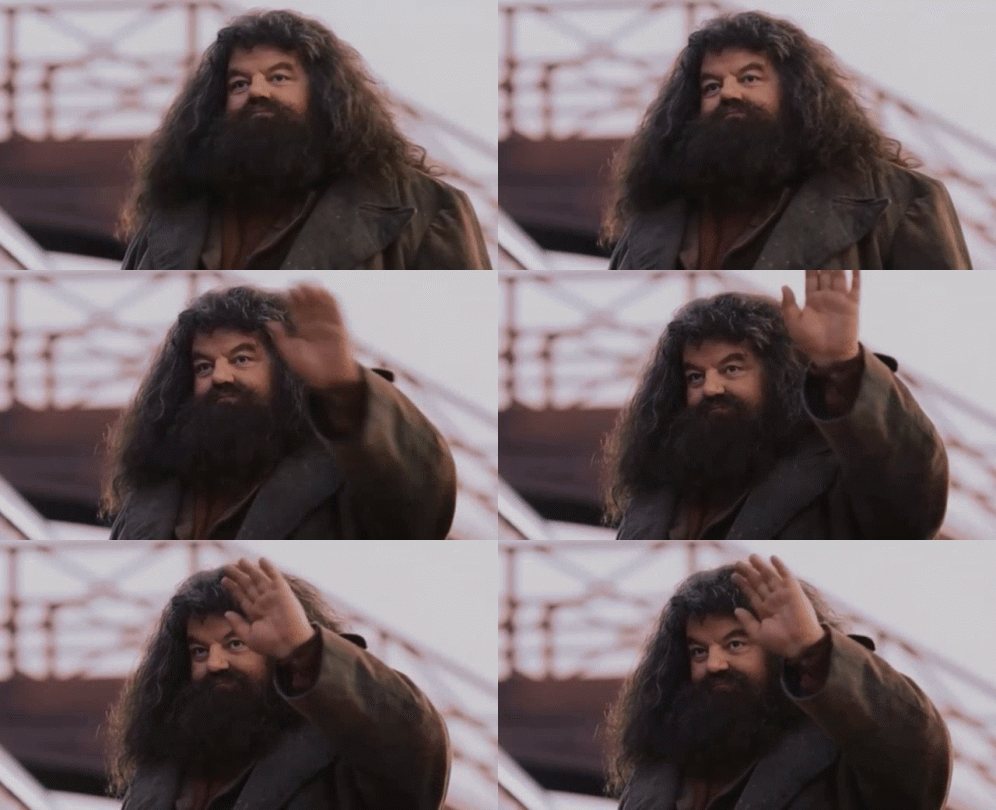
Funny, warm, kind, supportive, a little dumb and super loving! I think every fan will agree with me when I say – Rubeus Hagrid is like that one uncle or that one cousin who’s your best friend. Watching Hagrid with the trio always made me want to reach out to my friends and spend time with them. The character really puts forward the message of loving everyone and everything, even if it’s a gigantic, hairy spider with hundreds of kids or a three headed dog!

“I am what I am, an’ I’m not ashamed. ‘Never be ashamed,’ my ol’ dad used ter say, ‘there’s some who’ll hold it against you, but they’re not worth botherin’ with.’ An’ he was right.”

– Rubeus Hagrid

Snape

Possibly the most misunderstood character in the entire Hogwarts history. Till the very end he maintained the character of being a cold hearted, evil, Death Eater who was out to get his hands on Potter. Only at the end did his tears really reveal the love he had and carried in his hearts for all those years, never letting it come out, but hurting alone on the inside.

Imagine being in his shoes, never being able to express yourself and who you really are, having to live with the sad memory of holding your love for the very last time but having them in your heart till the very end. Imagine knowing those deep secrets, yet not being able to do anything about it and living with the pressure that no one understood. </3

“Well, it may have escaped your notice, but life isn’t fair.”

-Severus Snape

Dumbledore

Probably one of the most controversial character who initially seemed to care a lot for Harry but at the end looked like the man who was just waiting for the right moment. (Still his death hurts) . He left forever teaching us to choose the path of right – no matter what , even if you have to die for it and at the same time, he taught me to be a leader.

“We must all face the choice between what is right, and what is easy.”

– Albus Percival Wulfric Brian Dumbledore

Harry Potter

Nerdy and awkward, yet so popular! (15 year old me relates!) When you take a look at his life, you really understand the importance of friends and loved ones. People who will sacrifice their life just to protect you, people who are willing to fall into dungeons and rescue you on flying cars, people who would literally become you and risk their life, just to save yours – such people are not easy to come by, and when you do come across them, keep them with you and cherish them. Not to mention the little bits of pep talks you can get from him every now and then.

“Working hard is important, but there’s something that matters even more: believing in Yourself.”

– Harry James Potter

Fred & George
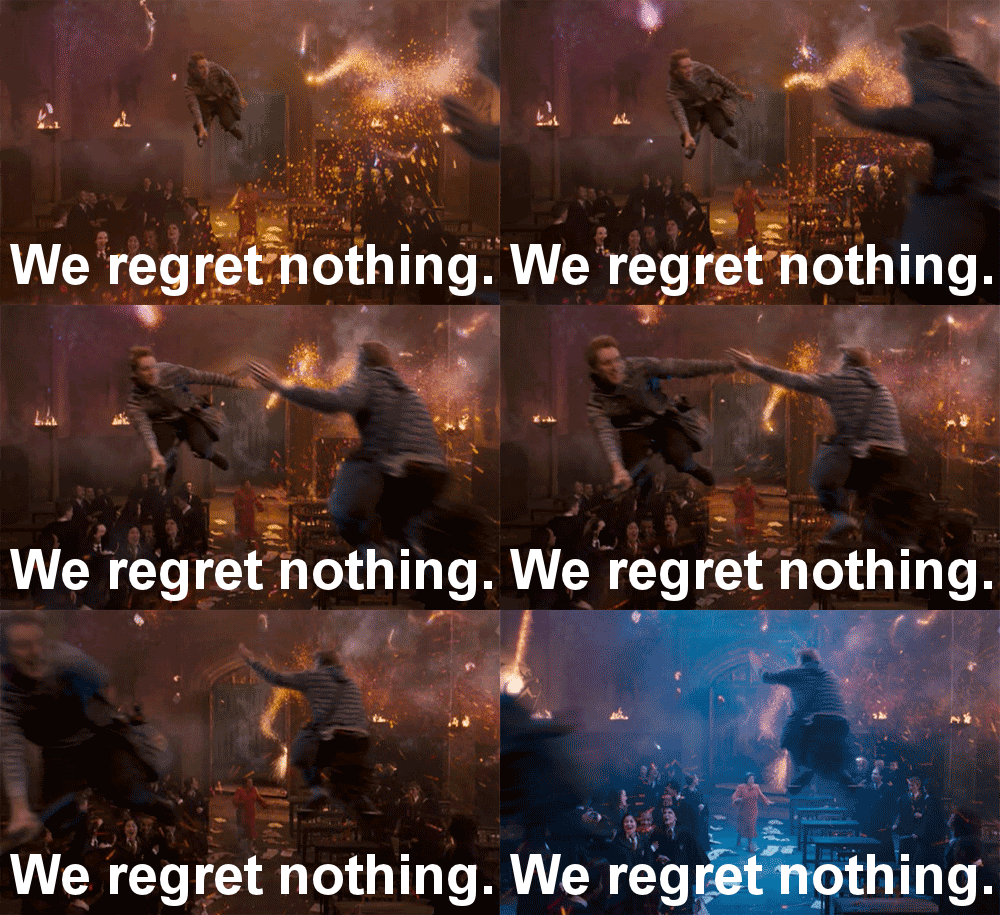
The most fun loving, crazy troublemakers Hogwarts had the opportunity to have. Born on April fool’s day, it was clear from the start , they were going to be the official pranksters of the school. Although really well known for being pranksters and goofs , thier bravery isn’t really spoken about much. Can you imagine flying into Umbridge’s classroom on brooms and lighting off fireworks disrupting the OWLs ,not to mention scaring Umbridge herself with the biggest fireworks – that has to take a lot of bravery – especially after being punished by those awful quills of hers!

The crazy duo really teach you to keep your best smile on and your humour high, no matter what the situation. To live your life with no regrets, to always be cheerful and joyful – even in the most darkest times, be it injury or even death. (We’ll miss you Fredd

“Well, none of us really fancy it, mate. Imagine if something went wrong, and we ended up a scrawny specky git forever. “

– Fred & George Weasley

Luna
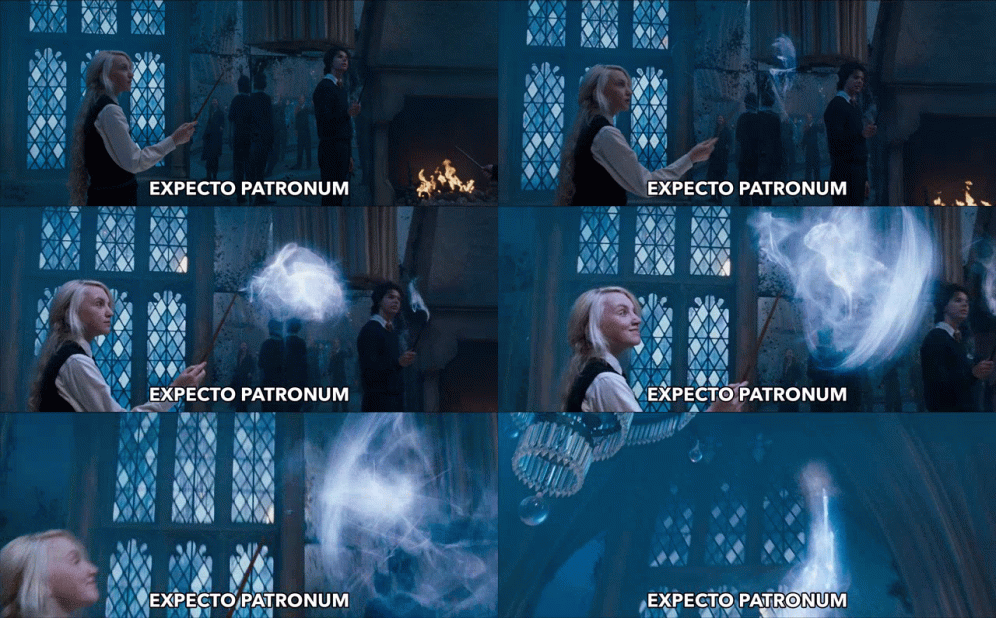
Weird and lost (and maybe a little bit looney), yet she was such a joy to look at. In a strange way, I felt myself relating more to her now as an awkward introvert. It’s not easy for me to make friends, but when I do, I will do anything for them, be it learning spells behind the cruel headmistress back or standing up against the Dark Lord himself. She really gives out the message that it’s okay being the ‘weirdo’, you’re still cool, especially if you can help find a horcrux!

“My mum always said things we lose have a way of coming back to us in the end. If not always in the way we expect”.

– Luna Elizabeth Lovegood

Dobby
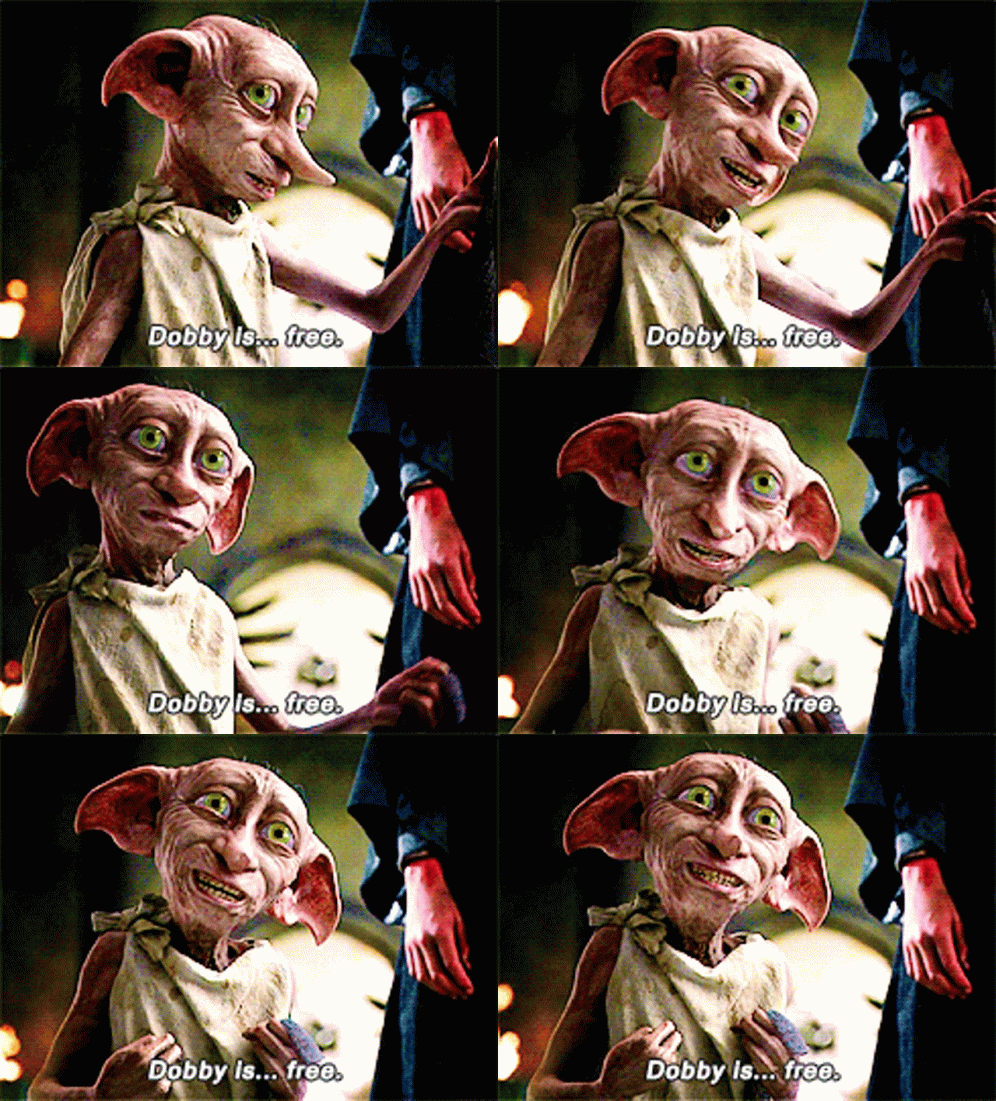
Tiny, timid, scared, would be the 3 words I would use to describe this marvellous house-elf. The love and protectiveness this sweet one has for Harry is simply adorable. Sure, he’s got Harry in a few difficult situations, but all the while hoping to keep him away from danger. Not to mention, he was there, exactly whenever and wherever Harry needed him.

Although seeing this little fella pass away broke many people’s hearts, he did teach us, that sometimes we need to take some risks and break some rules (and even defy our master’s) just to protect those who mean a lot to us, even if,in that moment our actions might seem unreasonable.

“Such a beautiful place this is, to be with friends, Dobby feels joy for being with his friends, Harry Potter.”

– Dobby

Hermoine

Smart, kind, talented, cheeky and definitely a goddess, this little girl knew what she was stepping into, even before she knew what she was actually stepping into. Although born to muggles, she was better than even the pure bloods, which goes to show; it doesn’t matter where you’re born or to whom you’re born. Your real power and talent comes from yourself.

Being ambitious, kind and the bestest friend to Ron and Harry were clearly some traits highlighted, but something else that I learnt was ; people might not always accept you, and may even call you horrible things, but at the end if you keep your head held high and be proud of who you truly are, you might just be able to punch those same people in the face (literally &/or figuratively).

“Books! And cleverness! There are more important things! — Friendship! And Bravery!”

– Hermoine Jean Granger

Sirius

First portrayed as the bad man and then revealing himself as the actual good guy, only to be killed, Black really brings the point home that sometimes, things are not how they really seem, sometimes, there’s more to the story. Also, never let go of hope, sure, you might have to spend 12 years in the most horrifying, dangerous prison ever, but eventually a time will come when you will be able to show yourself truly, if not to everyone, then atleast to those who mean everything to you. So if you’re going through difficult times, hang in there, eventually a time will come when you too will be able to fly off into the moonlight on a Hippogriff.

“We’ve all got both light and dark inside us. What matters is the part we choose to act on—that’s who we really are.”

– Sirius Black

Draco

Dark, mysterious, trouble-maker, bad boy, bully, I could go on and on about this fella but no words are enough to explain my love for this Slytherin king. Tough as a rock from the outside, perfectly mean to any and all muggles, but on the inside, the most sweetest kid with the weakest heart.

Although a little bit of a drama queen (okay ,maybe a little too much of a drama queen!) , he really makes you realise that what you see from the outside, isn’t necessarily what’s happening inside as well. So the next time someone is rude to you for no reason there might actually be a reason, maybe you just don’t understand them.

Draco as a character also makes you realise that sometimes you need to ask for help, or just accept help when someone offers it – even though you might feel like you’re completely fine on your own and have everything under control, actually having someone by your side can be a huge help.

“It comes and it goes. Still, I consider myself lucky. If it wasn’t for Madame Pomfrey, another minute or two and I could have lost my arm. Couldn’t possibly do any homework for weeks.”

– Draco Lucius Malfoy

Ron

Clumsy yet the cutest of the Weasley family, a character who surely stole everyone’s hearts right from platform 9¾. A clear indication that honest, real, unconditional love for our friends is so important. Someone who stayed by Harry’s side through everything, good and bad (although sometimes he can be a little annoying). Be it a broken wand or a broken arm, he knew to put his friends before himself. Want another reason to love Ron? – You can stuff your face around him, no judgements whatsoever, he might even join you XD, also, he has the most hilarious comebacks to some pretty unusual situations!. (How can you still not love him?!)

“Why spiders? Why couldn’t it be ‘follow the butterflies’?”

– Ronald Bilius Weasley

Neville

The shy little sweetheart who always only wished good for everyone. (Much like human version of Dobby, if you ask me) Mostly pushed off to the side, only to shine at the end when he wielded the sword of the true Gryffindor. Neville makes you feel like you belong, it doesn’t matter if you’re friends with the popular kids or not, it doesn’t matter if you’re part of the fancy sports teams or not, it doesn’t matter who you are, you will always belong – as long as you have goodness in your heart. If you’re good at heart you can fight the biggest snakes out there, just believe in yourself.

“I’ll join you when hell freezes over!”

– Neville Longbottom

Voldemort
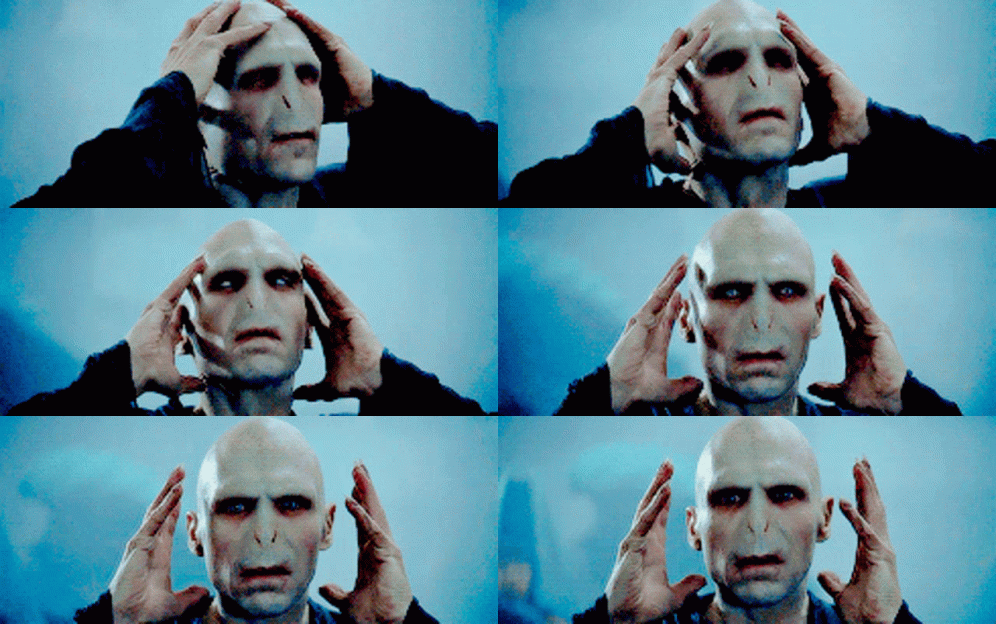
The Dark Lord himself. Powerful but vain (in my opinion). Although not the most loved character of the series, Tom faced a lot of hardships in his childhood and many people can see themselves in him. The feeling that you don’t belong has hurt one too many people (although not all of them turned out this evil ). Something which Voldemort’s story does tell is this – even if you feel like you don’t belong and people around you make you feel terrible about who you truly are, there will come a time when you will find your place in the world, be it between muggles, pure-bloods or even half-bloods.

“There is no good and evil. There is only power. And those too weak to seek it.”

– Tom Marvolo Riddle

Learning From The Past

Some people look back at thier past, to find happy memories, some find sad, hurtful memories, but the thing that will be common for everyone looking back at their past is that you can (and should) learn from the past.

The experiences, the people and the situations you were in – they all have a much bigger purpose in your life. They are there to help you learn and help you grow, for you to grow into the best version of yourself.

The past holds high notes of wisdom, notes that can change your present if you gain inspiration from it.

It’s fair to say that we’ve all had good and bad times in our past, times when we were happy, and times when we weren’t.

Always remember that life is like an everflowing river, constantly swirling and making new paths, sometimes carrying on with the old paths and sometimes making new ones.
No matter good or bad, your past can only control your present and future to an extent.

There is a fine balance between honouring the past and losing yourself in it.

Eckhart Tolle


We all have, at some point, made mistakes in our past, but replaying all the regrets from the past is not going to make any difference to the present.

The way to get over the regrets from these mistakes is to actually learn the proper lesson from it. When we learn from it, it is no longer a negative element in your life, rather, it becomes the positive aspect of our past.

Remember the lessons the past has taught you, but don’t let the fear from the past experiences affect the choices you make in the present.

We need to be able to learn from the past, but at the same time, it’s important to update those lessons based on the current situation and the person that you’ve changed into.

It's good to learn about the mistakes from the past and use them to make better decisions for the future but it's important to know that at the end, your mistakes only guide you, they do not reflect who you are. 


We can’t change what’s already happened, so instead of thinking of those times, it’s important to grow into a better version for the present and the future.
Try to see the past as training for a better future and use the lessons to grow.

The way to actually grow from the past is to firstly have the self-realization and courage to accept the mistakes you made and acknowledge it’s consequences.
It’s important to have the courage to make changes to your actions to make changes for the future results.

Have the courage to recognise the behaviours from the past that are negatively affecting your present. Analyse those behavioural patterns and their affect on you.

Then, take responsibility for your actions and the mistakes. When you take the responsibility,it becomes easier to actually accept it and move on and also stops you from always bringing up the past and blaming others for the mistakes and problems you faced in the past.

Bringing up the past and blaming others for the bad in it is never going to lead to anything positive and will hinder your relationship.
We bring up the past and try to connect it with the present when we feel like we’re not in control of the situation, what we need to understand is that it does not help the situation at hand and instead pulls the focus away from the main issue.

Instead of holding grudges with people connected to a sad past, try reasoning with them and having conversations. Resentment only takes away power and energy from you, forgiveness sets you free.

Fear not for the future, weep not for the past.

Percy Bysshe Shelley


Once you understand and accept the past and every thing in it – good and bad, it becomes easy to learn from it and steer into a better future.

Teach yourself better ways to deal with situations and people. Teach yourself to actually be present at the moment and most importantly, teach yourself to be responsible for your actions and think about the consequences it can have in your future.

The best thing about looking at the past is all the good memories. Whenever you feel low or unmotivated and need something to cheer you up its a good exercise to look back at the times when you were in a better state of mind and felt powerful.
Think of the times when things went your way and you were productive and made positive changes to your life.

Try to remember things to the last detail and then use the same energy that you felt then. Manifest that power back into your life and harness that energy to drive away the negative energy surrounding you (sort of like the Patronus charm – Expecto Patronum ! )

FACING OUR FEARS

With the new year many of us are making new year resolutions- eating healthy, working out, developing new hobbies, practicing self-love are some of the many that I’ve heard from people around me.
But here’s one that I’ve not heard from anyone that I think everyone should persue (or atleast try to) and that is – facing our fears and growing from them.

A question that came to my mind was,

Why face our fears?


Isn’t it much more easier to just let things be as they are?

Well, yes. It would be, but think about it, the last few years (2020 & 2021) have been pretty tough, how much worse can it get?
Might as well take the risks and see how it goes. Because life is all about taking risks and overcoming fear. If you don’t take that leap today, you’ll never know what you’re capable of.

If we embrace our fears and work on them, we can break the biggest ceiling – our own mind. Once we do that, everything will be limitless! When we work on the things that we fear, or even simply acknowledge it and put some thought into it – we take away its power to control us.

If you don’t work on that one thing that is constantly at the back of your head, that one thing that makes you stay up at night and worries you throughout the day, it will consume your mind entirely and will not let you reach the success that you’re aiming for.

We all need to face our fears and challenge ourselves to acknowledge these fears in order to rid our mind of the emotional baggage that these fears bring into our lives.

But let’s be honest , it’s all easier said than done.
So the biggest question,

How do we face said fears and grow?


1) The first thing to do is to realise that being afraid of things is common human nature. We’re all humans and we’re all afraid of something. It’s not about not being afraid, it’s about how you handle those fears and how you grow from them. Know that fear is mostly an uneasiness our mind feels over things that we don’t know about, or we’re unsure about.

2) The second – and maybe the most important thing, is to know what you’re afraid of and to what extent. It may sound strange but many people (including myself) aren’t exactly sure of what they’re afraid of.
Take some time off and sit down and think about the things that bother you/worry you.
When you know exactly what to work on you can actually focus in that direction instead of feeling stuck . When you know exactly what to work on things become more manageable and less scary.

3) Try to identify exactly what triggers fear and worry into your head. Sit down with yourself and just think about those things and the emotions they bring up inside you without actually feeling those emotions or letting those emotions control your mind.
It might seem difficult at first, but slowly ease yourself into the process, eventually, you’ll be able to process those thoughts and emotions without really feeling much of them.

4) Like I said before, fear is (to some extent) an uneasiness in our mind about things that we don’t know about, or things that are ‘the unknown’. So gather as much information as you can, the more you know about it, the less scary it will be, and you might even find it interesting!
Also, telling someone about your fears can be a great way to elevate some of the stress and can help you think more clearly. Writing those fears down can also be a great way to acknowledge them, it will help your mind to come up with solutions much more easily.

5) Use your imagination to think of the worst case scenario that could happen if you go forward with chasing these fears – and maybe even conquering them.
Then, make a plan of what you could do if such a thing was to happen.
Once you acknowledge the worst case scenario and find out ways to come out of it, it becomes way more easier to deal with them. It will help you take your mind off the problem and you can actually put in your energy to working towards the goal.


With all this said, you need to know a few more things before going into this journey.

When you start off, there will be times when you would feel overwhelmed, you might feel like you’re not getting anywhere and all of this is just a waste of time. At times like this, reflect back to what things were like before and how far you’ve come.

Know that all the hard work and unhappiness you’re feeling now is for something far more greater.
Whenever you’re feeling emotionally burnt out and frustrated, take a break, listen to soothing music and process what’s happening around you, only then will you be able to move forward.

At the end, always remember that there is no greater feeling than overcoming fears and barriers, the feeling of coming out of it as a better person on the other side is simply irreplaceable.

TOP TIPS TO BE A GREAT LEADER

Being a leader is something which many people can do, but being a great leader, one who can lead the team to success while training all the members to become future great leaders is not a skill that everyone has.

According to some theories, great leaders are ‘born and not made’, i.e. certain people inherit certain qualities that make them great leaders, so, the people who are not born with these traits cannot be great leaders.
On the other hand, some theories suggest the opposite, that great leaders are ‘made not born’. That people learn to be great leaders and the traits required to be great leaders cannot be inherited, it is something people learn through experiences of life and observing other people.

I think a great leader is one who is the perfect balance of both theories.
To be a great leader, it is necessary to have a natural leadership instinct along with the traits that one can achieve only by experiences and learning from those experiences as well as other people, preferably other ‘great leaders’.

“A leader is he/she that creates more leaders.”

Ranveer Allahbadia


Here are some of the most important qualities a great leader should have (based on some of the amazing leaders I’ve seen and have been heavily inspired by)

Passion


A great leader is one who is passionate about the project/work, someone who’s energy can really inspire and pump up the passion in the other teammates. A leader should be driven by the passion and make it their purpose as well as have people with the similar passion in their team.

When leaders have set goals and are able to communicate it to the rest of the team effectively, they can bring the entire team together to reach the goal while growing as a team as well.

Empathy


A leader that has empathy towards their teammates is one who can understand the teammates to a deeper level and can connect with them emotionally.
Teammates also feel better working with a leader who understands and bonds with them.

Empathy also allows to get rid of any workplace tension and get straight to the root cause of the problem.

Confidence


A great leader is one who is secure with themselves and are self confident. You will rarely see them in self doubt.
Teammates can rely more on confident leaders who are trustworthy and also grow their self confidence.

However, keep in mind that confidence and arrogance are completely different things. A leader who is confident can help you build your self confidence, on the other hand, an arrogant leader will only focus on their own growth and doesn’t take the growth of their teammates seriously.

Conversationalist


A great team leader is also a great speaker, one who can use their words to inspire and push their team towards success/the end goal. Great leaders are clear with the message they convey to the team and in times of trouble they are able to solve the problems with their words.

Leaders are comfortable addressing big groups as well as having one on one conversations with their teammates.
Along with being great speakers, leaders are also great listners, which leads to amazing, innovative, insightful conversations.

Open minded


People that can easily adapt to situations and have an optimistic, open minded attitude towards even the most difficult situations excel as leaders. They also inspire those around them to adapt to changes surrounding them, the good and the bad.

Great leaders understand that people are the biggest assests and welcome all criticism and feedback from others as well as teammates and appreciate exchanging ideas and opinions with their teammates.

Motivational


Great leaders are the perfect role models for members of the team, in addition to that, they are great source of motivation for the team members, especially during difficult times – professionally and/or personally.
They know the important role of motivated team members in the growth of the entire team.

Great leaders can motivate and inspire their team members only if they are confident and optimistic and at the same time have a realistic look towards life. A motivational leader has a very big hand in the growth of each individual of the team.

“The best leaders know their teammates inside out, and know how to get the BEST out of each individual, individually!”

Ranveer Allahbadia

Selflessness


A great leader is the leader who gets happiness from seeing others being rewarded for their hardwork. Their leadership is not based on titles or position or power, their influence on people is not because of their money or power or connections.
They define their success on the basis of the positive influence they have on people and the impact their actions have on other people. They constantly show up in times of need and are reliable to the team, they always put their team first and take actions that help each member of the team grow.

A great leader brings out the true potential in others and helps them become great leaders of the future. They are not just concerned with getting the team to success as a whole, but also invest themselves in helping each member of the group reach their true potential.

Determination


Great leaders are always determined to accomplish what they set out to do. They don’t give up when things get tough. They see difficulties/problems as a challenge and see it as an opportunity to grow.

Such people are not afraid to think outside the box or take decisions/steps that are ‘uncomfortable’ or ‘difficult’, they constantly try to step out of their comfort zone and persuade their team to do the same.
“It is better to lead from behind and to put others in front, especially when you celebrate victory when nice things occur. You take the front line when there is danger. Then people will appreciate your leadership.” —Nelson Mandela

“It is better to lead from behind and to put others in front, especially when you celebrate victory when nice things occur. You take the front line when there is danger. Then people will appreciate your leadership.”

Nelson Mandela

THE IDEA OF PERFECTION

What, according to you, is perfect?
Is it that character you saw in a movie or that lead in your favourite book? Is it that one person in your class/at work whom everyone looks up to.

The idea of perfection varies from person to person and time to time. It’s a lot like coffee.


Different people have different preferences when it comes to coffee and some don’t like coffee, it just goes with what you’re in the mood for.
Perfection is just like that, everyone’s idea of ‘perfect’ is different, and it changes from place to place and time to time.


When you’re in school it might be that person who has the most friends and hangs out with the popular crowd, when you grow older it might become the people that have a well paying job and are respected in the community.


The thing to note is that ‘perfect’ is not the same for everyone, all of us feel that perfect is different, better and something unlike us.
Everyone has, atleast once in their life, compared themselves to their idea of ‘perfect’.


But the question that arises is, “Why are some things considered to be perfect, while others are not?”

The idea of perfection is very different for different people but the reality of the situation is – nothing and no one is perfect!


We all have this idea of perfect in our head that we have put up on a pedestal and look up to and aspire to be and many times force ourselves to be.
We do the most absurd things to fit the idea of ‘perfect’. We put ourselves on diets and trainings and all sorts of things that we might not even want to do but we do it, just to fit this idea of perfect, which we’ve made up in our head!


Hear me out, there is nothing wrong with following a healthy lifestyle and doing things that keep you healthy and fit, but putting yourself through things that you don’t even want to do or are unhealthy for you, just to fit this image of ‘perfect body’ is wrong.
The same way, there’s nothing wrong with having a good job that pays well and gives you a high position in society, but doing that while pushing away your passion and happiness, just to match your parents idea of ‘the perfect child’ or society’s idea of ‘the perfect match’ is wrong.

There are so many other instances when we push away our own happiness and peace of mind just to fit the idea of perfect, something that will never be able to bring us true happiness.


Have you ever admired someone? Thought them to be the living version of perfect? Idolised them to such a level that you dreamt and aspired to be them?
Well, I have, and I had to learn it the hard way thay nothing and no one is perfect. Everyone has their good and bad side, everyone has their own shortcomings and everyone has days that are good and that are bad.
Putting someone on that pedestal and expecting them to fit your idea of perfect is not right. Accepting someone for who they are, good and bad, is the way to show true admiration and letting someone know that you actually care about them.


There’s nothing wrong with helping someone become better and improve but it’s always important to know our limits and not push ourselves and at the same time remind others to be careful and not push themselves too hard.


I don’t know about you, but I grew up watching people that had the perfect hair, the perfect body, the perfect laugh, everything that fit society’s idea of ‘perfect’ and that shaped my idea of perfect, which made me push myself in that direction, in a direction that seemed so wonderful, but was so dark and did not give me any happiness.

In the end, I don’t fit the idea of perfect! I don’t have the perfect smile, the perfect grades or the perfect behaviour. I’m not that and the first time I accepted that, it scared me, I was not what everyone wanted me to be and I might never become that, but now I’ve learnt to accept myself as that, as that imperfect, silly little girl, that might never make anyone proud, but atleast I’m happy.

I’m happy and I’m comfortable in my own skin… actually that’s not true, I’m not completely comfortable, I have days when I’m so bold and comfortable and feel so grand , and then I have days when I’m insecure, self conscious and scared and that is completely okay!
It’s a long hard journey and I’m going to make it, one day at a time. Baby steps.


And I want to encourage everyone reading this, take a moment and analyse yourself, what about you do you think is imperfect or doesn’t fit your version of ‘perfect’? What do you think is perfect? More importantly, why do you think it’s perfect? Why not put yourself into the idea of imperfect and love that?
There is so much beauty in imperfections – in all our imperfections, it’s high time that we stop praising the idea of perfect and learn to love ourselves a little more each day and grow each day.


Let’s learn to surround ourselves with people and things that help us develop self love, that help us love us for who we are and help us become better and happier.

There could be a hundred things that could make us upset, make us feel bad, about ourselves and the world around us, so it’s important to find love in ourselves, only then can we find love for the world outside.
And one of the best ways to love ourselves is to rid ourselves from the idea of perfect, to fall in love with our own imperfections.


It’s great if you can make yourself a better version of you and it’s great to try to be a better version of yourself every day, but it’s important to love yourself, regardless of who you could be, it’s about loving yourself as who you are, because there is so much to love about yourself…

To love yourself is the path to loving the world & to love the world is to spread love, peace and happiness

STOP SINGLE USE PLASTIC – REDUCE, REUSE & RECYCLE

If you are unfamiliar with the term single use plastic, it simply means plastic that is designed and manufactured simply to be used one time.

We are all well aware of the ill effects of using plastic. Yet every day we see millions of plastic bags,cups, toys being thrown around carelessly.

It is time that we stop the misuse of plastic and actually take strong steps against it.
And to do this, you don’t need to make big sacrifices and changes to your life, every small change in your lifestyle can bring a change to the world and reduce your carbon footprint. Here’s how you can do it.

We’ve all heard about the 3 R’s. Very commonly known as Reduce, Reuse, Recycle. In the most simple terms it means – refuse the items that you don’t need, reuse the items more than once and properly dispose the items that are no longer useful to you. At the end, it helps to cut down the amount of waste that we throw away.

“Outright bans on plastic bags may not be the best solution, but education and incentives to get people to stop using them are necessary.”

David Suzuki

REDUCE

The logic behind it is quite simple, if there is less waste, then there is less to recycle or reuse.

Before purchasing a product ask yourself – “Is there something else that I can use for this purpose?” , “Is this product necessary to do this task?” and “Is the item something that I want or something that I need?”
Asking these questions to yourself will help re-analyze the purchases that you make.

Also, purchasing multi tasking products can be a great investment – to your financial situation and to the nature.

REUSE

To reuse something simply means to repurpose things.
It saves them from landfills and dosent require extra expenditure of natural resources to recycle them and remake things out of them.

In today’s day and age, repurposing things has a new name – DIY or Do It Yourself. These are fun, interesting projects that you can do. It’s a great way to reduce wastage of things and also boosts your creativity.

RECYCLE

Recycling means to transform something back to a raw material and then making new things out of them.

It is a great way of properly disposing waste but it requires a lot of energy and time. Also, many recycling techniques are harmful for the environment.

So before you buy anything make sure that it is made out of non toxic materials, that way it can be easier to recycle.

Also, while disposing waste carefully separate the products that can and cannot be recycled.

Now that we know the 3 R’s
Let’s learn some of thier benefits.

As mentioned earlier, it reduces the amount of waste thrown into the environment thereby reducing the chances of polluting the environment.

Reducing and reusing our waste automatically reduces the level of greenhouse gas emissions.

Apart from that the 3R’s save land and money that communities and governments have to use to dispose wastes in landfills.

In addition to all of this, they also help to lessen the use of newer resources and energy, thus, making better use of resources.

With all this information in your hands, think about the change that you can make, with just one simple change in your everyday life.

TAKING CRITICISM

Criticism – it’s something we all hear, some people even hear it on a daily basis.
Friends, teachers, parents, co-workers, siblings and sometimes- even strangers criticise us for almost everything we do whether good or bad, big or small.

Let’s go deeper and take a dive into the world of criticism and try to understand (almost) everything about it.

As we all may (or may not) know, criticism is important for us! To grow and be better at what we do and even to be better people, we need outside criticism to guide us.
But most of the time, we tend to take criticism in the negative way.

We feel hurt and attacked by most criticism that we recieve, and in some cases it is true that the criticism comes from a place of hatred and negativity rather than from positivity and well-wishes.
But sometimes we feel hurt by even the positive criticism that wasn’t meant to be negative, instead it was meant to be taken positively and for our own growth.

It’s important to keep in mind that while taking criticism, try to keep an open mind and keeping your emotions out.
Do not react to it or take it personally, instead take a deep breath and look at it from the other side, find out what are your weak points and what can you do to make yourself better.
Constructive criticism is the way to know our weaknesses and improve by working on them. But if we get defensive and try to prove the critique wrong, it won’t help us truly understand the message being delivered and won’t let us improve.

We shouldn’t be afraid of criticism or be hurt by it, rather, we should use it as fuel to do better and learn from them.

Criticism may not be agreeable, but it is necessary. It fulfills the same function as pain in the human body. It calls attention to an unhealthy state of things.

Winston Churchill

Criticism helps you learn and understand your shortcomings and helps you make better decisions in the future to make better changes in yourself and in your work.
It can show you the spots that you’ve been missing and more often, gives you a helping hand that will support you and guide you.

As humans, we react to different criticism in different ways. The way we react to each critique will determine how it will affect us and our work.

If you pay too much attention to negative, hurtful and bashing criticism, then you’ll just end up hurting yourself and your confidence.
On the other hand, if you dismiss every single piece of advice and criticism that you recieve, you won’t grow.
If you pay attention to criticism without letting your emotions get in the way, you can properly understand the criticism. You can then analyse it and take what is useful for you and can help you grow.

If you find something hurtful, meaningless and bitter, shrug it off and don’t let it break your confidence.

You have to take criticism with a grain of salt because you’re never going to please everybody.

Yolanda Adams

It’s important to know where you take criticism from. Know that you cannot please everybody, which also means that you do not have to pay attention to everybody’s opinion of you or your work.

Be mindful of the people that criticise you and before paying attention to them or letting their words get to you, ask yourself, does this person know what you’re going through? Have they been in the same field of work/the same situation? Does this person genuinely want you to grow and become better or are the words coming from a place of hatered and/or negativity?

Ask yourself if it is even worth letting the harsh words of this person take up your valuable time, energy and mental as well as emotional happiness and strength.

You need to remember that everyone that criticises you doesn’t necessarily mean the best for you.

If the person offering you advice/criticism is from the same field of work or has similar experiences in life and they actually wish you to be happy and want the best for you, treat their advice as gold, but if anyone with a bad intention decides to let you know their opinion on your life, push them away (maybe not literally!)

Criticism, like rain, should be gentle enough to nourish a man’s growth without destroying his roots.

Frank A Clark.

COMFORT ZONE

Have you ever made a decision that made you uncomfortable? Something for the ‘greater good’ that was out of your comfort zone? If you have, then you would know that pushing past those boundaries of comfort ultimately brings out the best in you.
If you haven’t then I really suggest you do.

Anyone that is unfamiliar with the concept of comfort zone might ask ‘What is comfort zone?’
A comfort zone isn’t necessarily a place, it’s a habit, a habit of avoiding uncomfortable situations or new things and risks. It’s a safe mental space where your work, behavior, thoughts and actions fit a routine and pattern, which minimises stress and anxiety. This safe space gives a sense of mental security.


Comfort zone doesn’t necessarily have to be a bad thing. It’s a state that people generally tend to move towards. Leaning away from it brings increased risks and chances of failure, not to mention stress and anxiety, but depending upon how you react to it, it can have positive or negative effect.

Behind the walls of comfort lies the unknown that brings out the most valuable lessons.

Let’s dig deeper, and as some of you might be thinking, Why should you step out of your comfort zone?
Stepping out of your comfort zone makes you feel vulnerable, it gives you anxiety and stress. But this can work in your favour if you let it. It improves your performance and can push you towards success.

Moving out of the comfort zone is necessary to rise above and reach greatness, the comfort may make you feel safe and pleasant, but that doesn’t make it good for you. Infact, if you don’t push past this comfort zone, it’s going to get smaller.
Remember that the more we stick with what is familiar, the more we’re going to be afraid of moving to the unfamiliar.
You need to let go of the thoughts in your head that tell you to stick to the comfort zone, because it blocks your view of the bigger picture and the growth you can achieve by stepping out of this comfort zone.

The comfort zone is the wall between you and greatness and success, and the only way to tear down this wall is by pushing yourself into uncomfortable situations.
If you’re someone who is confused with what you’re meant to do in life, take that first step and step into the uncomfortable zone, that’s the only way you’ll realise your true calling.

Without having the uncomfortable feeling of deadlines and targets, we cannot push ourselves to do the best of our abilities. We tend to go the bare minimum of what is required of us and often fall into the ‘work trap’ which is basically just telling yourself you’re ‘busy’ to avoid stepping out of the comfort zone and trying new things.

Before we move on to ‘how’, let’s first learn about 2 more zones that you’re going to have to face on your journey from comfort to success.

The first is, Learning Zone.
It’s the period of time we spend learning – it doesn’t need to be academic knowledge, ot could even be the time you teach yourself a certain skill or even absorbing the things that you learn on an everyday basis that helps you improve. This is a zone that you should be in all the time, not just on the path to success but even after getting to success.

The second zone is, Performance Zone.
It’s the point of time where you apply what you have learnt and work towards success.

Now that we’ve covered that part, let’s move on to How can you step out of the comfort zone?

The first thing to keep in mind is that getting out of your comfort zone is not an overnight process. It will only come true by taking small steps and working towards that goal every single day.
Try expanding your comfort zone one step at a time.

Step 1) Identify the thing that is most important to you, the thing that you want to move ahead with.
The best way to know what your true calling is, is by moving towards things that are unfamiliar and new to you. You don’t need to expose yourself to it all of a sudden, again, go one day at a time. This will be the first step out of the comfort zone.

Step 2) Take the decision to start working on it.
Once you figure out what you want to do, start pursuing it. If you have to, set a date, place and time. This will be the entry to unfamiliar territory.

Step 3) Build your courage.
Once you start working on this goal, you will get even farther away from the comfort zone, and when you do that, you’ll be scared, and it’s okay. It takes a lot of courage just to identify these fears and then working on them.
You need to remember that when you build this courage, you will be able to face your fears and not only that, but you’ll also be able to take risks and make bold moves, that sometimes might give a great outcome, but sometimes might make you look like a fool, and you need to have courage for that.

Step 4) Follow this consistently with a positive mindset.
The most important step in this process. You need to have the mindset to push through all the difficult times and consistently work on yourself. You need to have the willingness to make mistakes and learn from them to work on your weaknesses. You need to be able to consistently put yourself in uncomfortable situations to develop and grow.

Now that we know the what, why and how, let’s go over some things to remember.

  • Choose to step out of the comfort zone, because if you don’t step out of it and put yourself in uncomfortable situations, you will not grow and ultimately, you will not get to success
  • Everytime you feel overwhelmed by something, walk away from it for a few minutes, clear your head, meditate, drink a glass of water, walk or even take a power nap. This will help you relax and even find a solution to problems or look at things from a fresh perspective.
  • Outside your comfort zone you will find people and situations that inspire you, push you to work harder and even irritate and annoy you. When you deal with these people and these situations, you grow and reach your full potential.
  • Think big and set targets and goals out of your comfort zone. Remember, the bigger the challenge, the harder you push yourself to work harder. Keep in mind that setting unattainable goals for yourself will only lead to more stress, fear, worry and anxiety which will lead to procrastination, which is only going to be counter-productive.

We’re all afraid of new experiences and situations, especially uncomfortable situations that are out of our comfort zone and it’s completely normal. The way we react to these situations and experiences reflects on how we will live our life.
Try to live out these experiences with confidence and belief in yourself instead of stress and anxiety.

THE ART OF LISTENING

Listening is perhaps the most important and the most difficult part of having a healthy conversation. The main reason why most people struggle with being good listeners is because of their ego and impatience.

Let’s take a deeper look at listening and (almost) everything about it!

What is listening?

Listening does not mean hearing just to respond. It is hearing to understand.
Listening is not to judge/analyse what the other person is saying, it means to fully concentrate on what is being said. It is about using empathy and compassion and understanding the complete message, including the underlying emotional message conveyed.


Active listening is a technique to develop our ability to listen and make an effort to truly understand what the other person is trying to say.
It doesn’t need to be about agreeing with everything that is being said, it’s about respecting the other person and their opinion and avoiding judgmental tones or words.
It is about listening to what the other person is saying without having judgment or assumptions.

Why is listening important?

Being a good listener makes you an even better communicator. Your conversations and/or feedback really depends upon your listening skills, if you’re not a good listener, your response can be faulty.

Listening is not only a learning opportunity for you, but it is also one of the fastest and easiest way of making friends and building your network.
As human beings we are social creatures and by actively listening to people around us, we are able to connect, co-operate, develop and understand ourselves and each other.

Listening is a critical skill to have in a workspace. It helps you learn about the people that you work with and allows you to have a crystal clear understanding of the conversations which will help you make better decisions and solve problems.

Good listening skills will help you understand other people’s perspective better and understand any underlying feelings that they are unable to express. Also, by being an empathetic listener, you create a space for taking your own feelings and thoughts into account and taking a much closer look at them.

Finally, listening is the first base for growth, it helps you make good decisions and at the same time it slows you down to take a careful look at a situation before taking any decision or giving an opinion.

How to be a good listener?

Listen for curiosity and not for the sake of listening just to reply. Real effective communication cannot happen if we pretend to listen and it will certainly not happen if we don’t listen at all.

When listening to someone, try to have your full focus on them and their story rather than getting distracted or reflecting on your past experience or thinking of an answer or comeback.

Try to listen with an open mind and give the other person space and time to effectively communicate and express themselves and give their opinion.
It’s always easier to come to a compromise or find the best solution when everyone has the opportunity to explain their experience and understand the other person’s position.

Ask questions and take into consideration the whole situation before coming to a solid conclusion. Try to take a step back and analyse the whole situation from the other person’s point of view before giving any answer or advice.

To make someone feel heard, maintain eye contact (but try not to be creepy!) and give subtle indications like nodding. You can also ask questions and/or simply paraphrase what they said (or you could combine it and do both! For example – “so you’re saying… because…and …?”). This will make them feel heard and understood and make you feel engaging as well.

What am I doing wrong?/ Things not to do

Poor listening skills create walls in Communication and make things difficult and build more chance for mishappenings and accidents, especially due to miscommunication or incorrect assumptions/conclusions.

The first and most important thing to keep in mind while listening is : listen to understand, not to reply.

So the next time you listen to someone, listen to actually understand what they’re saying.
Don’t try to finish their sentences or interrupt them, allow them to finish, that way you can have a proper idea of their point of view and come to a better conclusion.

Secondly, try to avoid any and all narcissism. Try not to make it all about you or think about your own past experiences while the person is talking.
Although it is good to give advice from past experiences and mistakes, not paying full attention to the speaker might make them feel that you’re not interested and you might miss out on any key points.

And finally, do not think about your reply or get distracted by anything else, try to keep your full attention on the speaker and their story.

ASKING WHY

Do you remember a time when you were young, asking questions about anything and everything around you. The innocent little ‘why’, ‘where’, ‘how’, and ‘who’ that made people around you laugh and more often sigh in annoyance.
Toddlers have more curiosity in life than most adults. They are not afraid or ashamed to ask the question ‘why’ to anything and everything that catches their attention.

If you’re one of the few adults who has questions about your surroundings and still have that childlike natural curiosity, great! Trust me, this curiosity will really open up your heart and mind to your surroundings and to the people around you.
You bring a childlike energy and happiness everywhere you go and a lot of people need that in their lives which is why you’re important to them.


Now if you’re someone who has lost touch with that innocent childlike curiosity, I suggest you bring it back! And here’s why :

According to lifehack, “When you question things, asking why regularly, it can move you in a new direction and get you thinking about your core values and beliefs.”

Because this article is all about questions, let’s start with this first question:-

Why is asking ‘Why’ important?

When we ask questions (especially why) we open new doors to new opportunities.
Asking why eliminated confusion that are caused by assumptions. Also, asking why brings a much clearer picture infront of everyone and brings the whole team on the same page. Questions are tools that help us explore and solve problems on the workfront. Questions lead to actions and inspire people to be innovative.
Good decision makers and prominant leaders constantly ask ‘why’, this helps in getting closer to the core problems and issues and gives an insight to solving the problem.


If you would have noticed, these points are from a ‘professional’ or ‘workplace’ point of view. So let’s go a little deeper.


Let’s see why asking ‘why’ is important for our relationships?

In any relationship being honest is the most important thing and asking why will help the other person be honest with you and you can get rid of all the worries and misconceptions growing in your mind.
If you’re someone who loves helping people and making people happy, especially people that are close to you, then you should ask them ‘why’. More specifically ask them about their lives, their dreams, why they chose their career? Why are they happy? Why are they sad? Why did they decide to wear the clothes that the are wearing?
The questions you ask can be big or small, light hearted or deep. What matters is you ask them questions.

When we show real interest in another person it makes them feel special. Asking why (or any other question) will lead to heart to heart open ended questions that can lift up the other person’s spirits, and at times, even yours!

Another benefit of asking why and questioning things around you is that you inspire people, especially young people around you.
When you openly question things and people around you, you inspire people, you inspire them to be fearless, confident and curious, all qualities that will help them (and you) to develp themselves and grow and ultimately become better versions of themselves.


I feel like we’re getting somewhat deep, so let’s go deeper, let’s see why asking ‘why’ is important for our self?

Asking yourself why you do things will give you a better outlook and remind you of the prize of your hardwork.
Many times we are so busy by the outside world that we forget to look in.
Check in with your inner self to make sure you’re okay and to calm yourself in any tense situations.
You can question yourself to motivate yourself and keep the confidence and faith alive in you.
Questions can change you as an individual and even the most smallest question has the potential to completely transform who you are.

Now that we’re a little more clear with the why let’s move to what.

So, what is a good question?

A ‘good question’ is a question that comes from your mind and/or heart and not an attempt to be cheeky. It should be a question that comes to your mind/heart from geniune interest and curiosity that can keep you up at night if you don’t get an answer to it.
Great questions are not those that have a (supposedly) right answer. Good questions are those that lead to deep and heart to heart conversations, whether with ourselves or with someone else, and help us reflect and think about things that matter (both professionally and personally).


Now let’s go one step further and look into the how.
How can we ask good question? Or more importantly, how can we bring back our inner naturally curious child?

Try to develop a confident nature, to ask questions and be curious without being afraid or ashamed. Use that confidence to encourage yourself to think deeply and develop new ideas.
Try to learn about new things through books or even online courses, this can help you communicate efficiently and ask deeper questions and it might even help you find a new hobby or passion.


An important thing to keep in mind is that people can become defensive or really shy or introverted by certain questions or sudden changes in topics or even suddenly getting a deep question thrown at them. When asking questions or going in for deep conversations try to slowly ease into the topic instead of randomly throwing it at them.


The most important thing to always remember is that questions are like a key to many unopened doors. Doors that can lead us inside a bigger world, better people and even inside a better version of us.

I have no special talents, I am only passionately curious.

Albert Einstein