
About Learning

As I enter my last year of highschool, the idea of “learning” holds a very important part in my life. This year is going to decide the rest of my life (according to peers and seniors) and so the idea of learning or being good at something by learning it had become more or less the focal point of my life now.
So I decided to read up a little of this subject, something which we’ve all done and we all continue doing, in different ways.

So here’s what I found from learning about learning –

Learning new things has become a skill everyone has to develop in order to thrive in the mordern world where change is an everyday occurance. In order to handle this everyday change, we need to be able to learn and unlearn just as rapidly.
With the mordern world, if you want to reach any level of success, you have to aim for being the best (it’s hard to accept it, but being average just won’t work anymore).

Every field out there is constantly changing, everything is becoming bigger and better and to keep up with the changes we have to be able to develop ourselves in such a way that we thrive, and that can only be by having the habit of learning (all the time!)

When we think of learning schools and colleges is mostly the first thing that comes to mind. For the average person going back to school/college or being in institutions isn’t always an option, that’s when ultralearning comes in.

What is ultralearning?

( Source – Ultralearning by Scott H Young )

According to the book by Scott H Young, “Ultralearning is a strategy for aggressive, self-directed learning.” Simply speaking, it is a way of dealing with the ever changing world by taking the power of effective learning into your own hands.

It’s about taking decisions concerning the idea of learning, more so, the ‘what’, ‘why’ and ‘how’ of learning. Ultralearning tends to have unusual steps/methods for the most effective learning, and these “ultralearners” are those who make/search for some of these bizarre steps for maximum learning efficiency.

Ultralearning aims to highlight some of these core points

  • Start by learning the ‘how’ of learning. To put it simply, understand how you want to learn the new skill.
  • Practice makes perfect, so try to implement what you’re learning in everyday life.
  • Your comfort zone is your biggest enemy. Step out of it when it comes to learning new things.
  • Feedback from outside can be your biggest help. Learn to take criticism and suggestions.
  • Dissolve difficult and complex tasks into smaller simpler tasks.
  • Constantly testing your knowledge helps in making an assessment of your own skills and changes you need to make.
  • Explore different concepts and ideas to widen your horizon.
  • Focus is an essential part of learning. So cut off distractions.

Speaking of distractions, which are the most common when it comes to learning?

Your Work

Some of the work that we wish to pursue can be a little too difficult, making it easier for other things to distract us, or simply seem like a “better” use of our time. That’s when the idea of breaking complex tasks into simpler task comes into play. When you try to do something complex it’s difficult for your brain to take in all the new and complex information. Breaking a difficult task/skill into smaller, more manageable chunks allows our mind to accept and process information much more easily and effectively.

Your Environment

It’s obvious enough, the things in and around your surroundings hold the power to grab your attention and distract you from the work right infront of you. Surrounding yourself with a “learner friendly” environment is essential to make the most out of your learning time.
To test out how well a work area is for you, try learning something for a set amount of time, during that timespan keep track of how many times you get distracted by something and at the end of the timespan test yourself to see how much of the information you were able to retain. Try it with a few possible options and go for what suit you best.

Your mind

The biggest distractor! If you feel constantly distracted, without it being your environment or any other external medium, it might be that it’s all internal!
The negative emotions – depressive, angry thoughts, the whirlwind of thoughts travelling in your head, the daydreamings, the million notes going through your mind – it all plays a big role in messing up with your ability to learn and have a clear head for recalling information you’ve already learnt.

With all these distractions known, it’s important to note that you can overcome these distractions with a little hard work and effort.

What is Interleaving?

Interleaving is another skill that people who are forever learning swear by, especially while learning something new.
It is all about spacing out the learning process over a long period of time, randomising the information and frequent active recalling of past information that has been already learnt.

It allows the brain to hold focus for longer periods of time and forces you to adjust yourself to probelm solving in every step, allowing the information to be stored as a long term memory rather than passively learning and re-learning the same thing with no positive result.

A few final tips for all the hungry learners

  1. To learn a concept completely, it’s important to understand it fully. And to understand something thoroughly visualising it plays a very big role.
  2. Practicing everything you learn – be it in the form of tests or quizzes or even using it in real life situations helps fixing something to your mind.
  3. Whenever you face roadblocks, take a break. Overly obsessing over a particular topic might not always help solve it, instead, taking a break and looking at the problem from a different angle can help get a better perspective.
  4. Plenty of sleep is always a key aspect of learning. Sleep not only affects your recall and memory, it also helps your mind calm down and helps functioning of your creative side.
  5. Self motivation is the most important aspect of learning something while being happy. When you learn something that you actually love and have full interest in, you feel motivated to be the best at it.

ASKING WHY

Do you remember a time when you were young, asking questions about anything and everything around you. The innocent little ‘why’, ‘where’, ‘how’, and ‘who’ that made people around you laugh and more often sigh in annoyance.
Toddlers have more curiosity in life than most adults. They are not afraid or ashamed to ask the question ‘why’ to anything and everything that catches their attention.

If you’re one of the few adults who has questions about your surroundings and still have that childlike natural curiosity, great! Trust me, this curiosity will really open up your heart and mind to your surroundings and to the people around you.
You bring a childlike energy and happiness everywhere you go and a lot of people need that in their lives which is why you’re important to them.


Now if you’re someone who has lost touch with that innocent childlike curiosity, I suggest you bring it back! And here’s why :

According to lifehack, “When you question things, asking why regularly, it can move you in a new direction and get you thinking about your core values and beliefs.”

Because this article is all about questions, let’s start with this first question:-

Why is asking ‘Why’ important?

When we ask questions (especially why) we open new doors to new opportunities.
Asking why eliminated confusion that are caused by assumptions. Also, asking why brings a much clearer picture infront of everyone and brings the whole team on the same page. Questions are tools that help us explore and solve problems on the workfront. Questions lead to actions and inspire people to be innovative.
Good decision makers and prominant leaders constantly ask ‘why’, this helps in getting closer to the core problems and issues and gives an insight to solving the problem.


If you would have noticed, these points are from a ‘professional’ or ‘workplace’ point of view. So let’s go a little deeper.


Let’s see why asking ‘why’ is important for our relationships?

In any relationship being honest is the most important thing and asking why will help the other person be honest with you and you can get rid of all the worries and misconceptions growing in your mind.
If you’re someone who loves helping people and making people happy, especially people that are close to you, then you should ask them ‘why’. More specifically ask them about their lives, their dreams, why they chose their career? Why are they happy? Why are they sad? Why did they decide to wear the clothes that the are wearing?
The questions you ask can be big or small, light hearted or deep. What matters is you ask them questions.

When we show real interest in another person it makes them feel special. Asking why (or any other question) will lead to heart to heart open ended questions that can lift up the other person’s spirits, and at times, even yours!

Another benefit of asking why and questioning things around you is that you inspire people, especially young people around you.
When you openly question things and people around you, you inspire people, you inspire them to be fearless, confident and curious, all qualities that will help them (and you) to develp themselves and grow and ultimately become better versions of themselves.


I feel like we’re getting somewhat deep, so let’s go deeper, let’s see why asking ‘why’ is important for our self?

Asking yourself why you do things will give you a better outlook and remind you of the prize of your hardwork.
Many times we are so busy by the outside world that we forget to look in.
Check in with your inner self to make sure you’re okay and to calm yourself in any tense situations.
You can question yourself to motivate yourself and keep the confidence and faith alive in you.
Questions can change you as an individual and even the most smallest question has the potential to completely transform who you are.

Now that we’re a little more clear with the why let’s move to what.

So, what is a good question?

A ‘good question’ is a question that comes from your mind and/or heart and not an attempt to be cheeky. It should be a question that comes to your mind/heart from geniune interest and curiosity that can keep you up at night if you don’t get an answer to it.
Great questions are not those that have a (supposedly) right answer. Good questions are those that lead to deep and heart to heart conversations, whether with ourselves or with someone else, and help us reflect and think about things that matter (both professionally and personally).


Now let’s go one step further and look into the how.
How can we ask good question? Or more importantly, how can we bring back our inner naturally curious child?

Try to develop a confident nature, to ask questions and be curious without being afraid or ashamed. Use that confidence to encourage yourself to think deeply and develop new ideas.
Try to learn about new things through books or even online courses, this can help you communicate efficiently and ask deeper questions and it might even help you find a new hobby or passion.


An important thing to keep in mind is that people can become defensive or really shy or introverted by certain questions or sudden changes in topics or even suddenly getting a deep question thrown at them. When asking questions or going in for deep conversations try to slowly ease into the topic instead of randomly throwing it at them.


The most important thing to always remember is that questions are like a key to many unopened doors. Doors that can lead us inside a bigger world, better people and even inside a better version of us.

I have no special talents, I am only passionately curious.

Albert Einstein

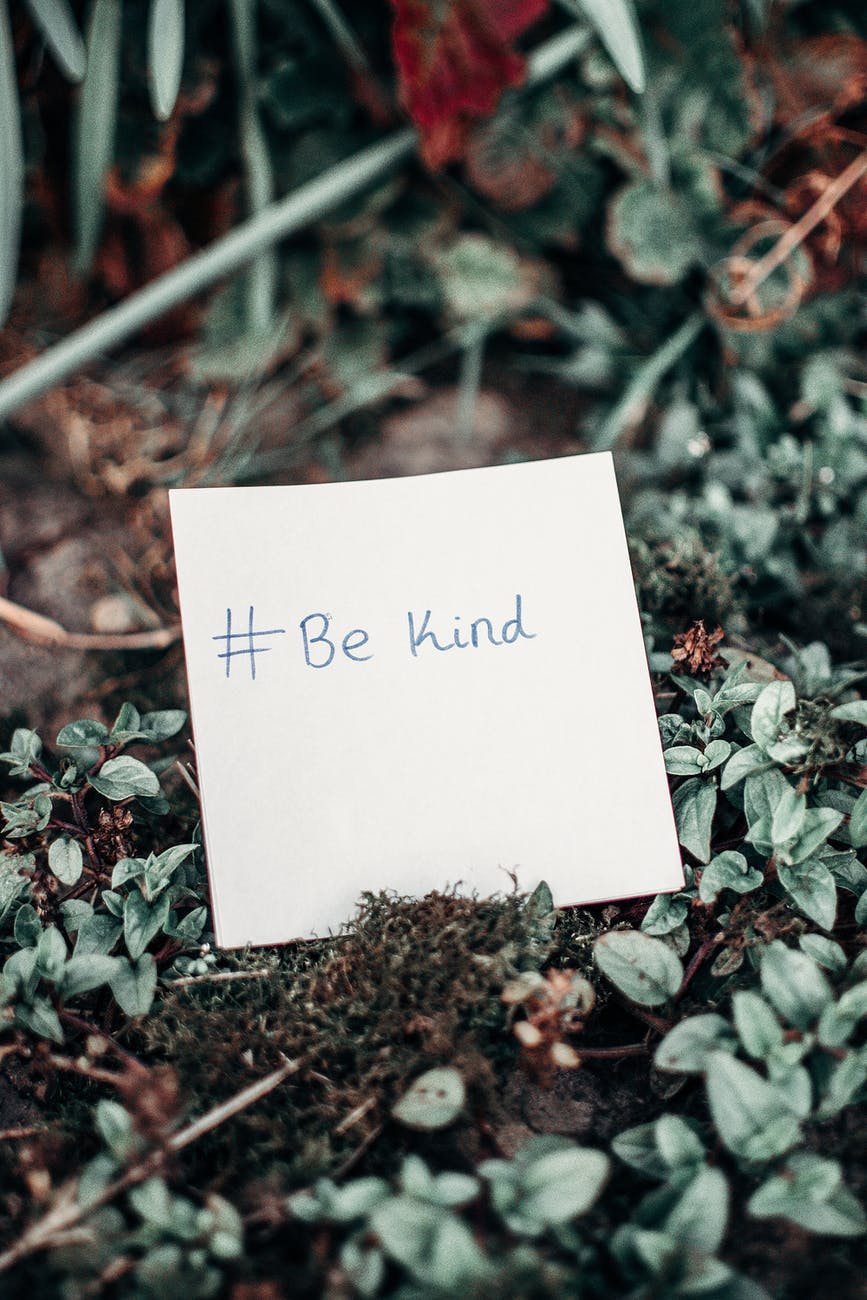
THE POWER OF KINDNESS

‘Your actions should be such that when you leave, the world is a better place than when you arrived’

KINDNESS. According to Google, kindness is ‘the quality of being friendly, generous and considerate.’ I agree to this. But I’d like to add something more to it. A kind person is loving and gives out positive energy to everyone around them. Kindness is about being selfless, compassionate, caring and merciful.

‘In the long run, the sharpest weapon of all is a kind and gentle spirit.’   -Anne Frank

Never hesitate to be kind to someone, no matter who they are what they’ve done to you. You never know how much that person might need the support. Treat everyone with the same level of kindness and love that you would like for yourself.

Take the first step, be the reason why people around you believe in humanity. You don’t need to do really big things to make change. Just one kind word can change someone’s day, they will then change someone else’s day, and thus, create a chain reaction.

Simple words like ‘thank you’  ‘I’m proud of you’ and ‘you’re important’ can make someone’s day. Even a genuine smile can be the reason for someone’s happiness. Give out the type of energy you want to see everywhere.

Set an example for those around you. Be the image of kindness and love. Do things today so that on your deathbed, you look back and see a life not full of regrets, but full of happiness and joy, joy of others.

Spread love. Be kind. Be grateful.

There are so many good things in the world. Be the reason for someone’s happiness. Trust me, at the end of the day when you go to bed and think of all the people that smiled because of you, everything will seem a thousand times better.

Lots of love ❤