Writing as Work and Hobby

Daily writing prompt
What do you enjoy most about writing?

How did I get into writing? I’m sure that every great (and even the not so great writer) started as a complete bookworm. As did I. The first ever novel that I read was The Famous Five by Enid Blyton, of course before that I had been held captive by countless other comic books and children’s magazines. But I distinctly remember the exact day that I finished reading The Five go to Finniston Farm, I put down the book and opened up my little diary and attempted to write a story just like the one I had read. Two chapters later the diary lay in the corner and the papers were shredded to bits. I hit writers block a little too early. I cant remember the exact day I actually started writing, but I have some pretty old memories of coming up with stories of talking dogs and girls with long brown hair connecting with their roots and finding out they had superpowers!

According to my mom I used to make up all these stories even before that, when I was just a baby I used to make all kinds of stories and characters to keep myself entertained (and also anybody else who wanted to listen).

Following that came the tween phase where I attempted my hand at journaling and making diary entries (completely inspired by Anne Frank) , but since consistency wasn’t my strongest traits, they all ended up in the trash eventually. It was also during this period of my life that I discovered the word of E-books and that just led me into a whole new world.

I will admit, I found a little too much comfort in the world of fiction, and yes, it was a pretty huge distraction from my studies and my parents were not as happy as I was. Despite the fact, I went through book after book, finding new genres every week and falling in love with the styles of so many authors.

My early teens were pretty much filled with Blake Pierce and W L Knightly (still would binge read all their books). Following that came the second attempt at writing a novel. And as much as I cringe thinking of that “horror” novel, to that version of me it was a masterpiece.

That began my pursuit of creating the best works that I could. I spent as much time as I could (keep in mind that in a brown household studies take first priority) devoted to thinking and re-thinking plots and characters visualizing different narratives, subconsciously dealing with some of my own personal life problems through these characters lives.

And that phase of my life led me to start this blog and post some of my own works (PS – I also have a second blog where I post my own short stories and novels) .

After a pretty long run of consistency and regular uploads I hit dead end. I had nothing good to put out into the creative spaces of the internet and even the smallest of works ended up in a pile of trash under my desk until I gave up all hope. I’m not proud of admitting this but I almost gave up all hopes of ever becoming anything more than a regular teenager with a couple blogs on the vast internet. Obviously a part of me hated that but it was just so easy, I had school and college and a whole bunch of extracurriculars that required my attention more than some stupid hobby.

A part of me hated to believe that the one thing I enjoyed so much was just going to be left in the past. But what was I to do? Writing was too difficult, much less writing everyday and as a profession, it just wasn’t for me. I wanted myself to believe that not every hobby is meant to turn into a money making machine. And for a while I believed that, I let go of the idea that I would ever become a writer and just tried to move on with my life.

Every once in a while I did try to come up with something even moderately close to amazing, but the lack of consistency translated into the algorithm not really pushing any of my works, and that translated into me being more and more disheartened and push aside the pen.

But the past few months have been a time of new growth and new experiences for me. I recently moved to a new state and officially decided to drop a year before college. Now, although these are not too major changes for my life (I’ve spent my whole life travelling around), I realized with all these new changes in life there is one more thing that I need to change- my mindset. I’ve spent the last few weeks thinking and re-thinking my life and career, and my choices right now.

I realised that I’m very young, (no seriously, I’m just 18) I’m still living with my parents and I’m not even in college. I have practically my whole life infront of me and its way too early to make a solid decision like pursuing writing as a complete career, let alone making this blog into a full time thing.

While there is nothing wrong with choosing a career and working towards it from an early stage, it is also wrong to lead every young adult into believing that they need to have their whole life figured out and be set into it from the time they turn into an adult.

I let myself believe that my worth was set on how well I could work rather than the worth of my work. I’ve been trying to grow and in that process also realise that growth takes a lot of time and trial and error. There is nothing wrong with me trying to take my time and give myself room to learn and breath and take everything in, and most of all enjoy the process. I forgot that writing started out as a hobby, something that I was supposed to enjoy, that brought me peace, instead it had turned into another task throughout the day that I had started to despise and roll my eyes at.

But that changes now. I’m reaching a new phase of my life, where I learn and grow as a person, and that will reflect in what I write, it might not be consistent and it might not please the algorithm gods, but that is what true growth is. Its not to appease the masses, but to please oneself. And that begins now.

Love, Anu.

Being Busy Is Good?

In today’s time, we as a society have glorified the idea of being ‘busy‘. People that are seen constantly stressed, buried in their work are viewed as more accomplished than someone not swamped by work and worry.

Today’s hustle cultre views these so called ‘hard-workers‘ as the image of the ‘perfect employee‘ and holds this standard of being busy on a pedestal.

Is being busy actually bad?

No, it’s hard to say that everything about hustle cultre or being busy is bad. But it’s definitely a point to note that these do glorify the idea of constantly being on the go and working and have even made it the norm for today’s generation to constantly be working and measuring their own self worth by how much they’ve accomplished.

Think about it, how many times have you criticized yourself because you didn’t do ‘enough work‘ or you didn’t ‘work harder‘?
How many times have you actually been happy on a day off and been glad that you took care of yourself?
Have you ever felt miserable for taking the weekend to rejuvenate and work on things that make you happy instead of working extra?

According to the standards we’ve created for ourselves, anyone who isn’t busy and doesn’t spend every second immersed in work simply doesn’t stand up to these standards and is just termed as ‘not hard working‘ or simply ‘lazy‘.
This outlook of society makes us judge our own self worth by the amount of work we do and the labels society puts on us.

Glorifying the idea of always being busy tends to make us much more about self and can, in a sense, make our thoughts and actions even more selfish.
We tend to get more stuck in our own little world excessively brooding about our own work and our own problems which obviously have a negative strike to our mental health but also end up in us neglecting close friends and family.
Cancelling plans last minute, not being present for special occasions and being missing from important moments tends to become ‘normal‘ for busy people.

Now, once or twice these actions may be ignored or forgiven but constant occurances tend to leave cracks in relationships which might eventually leave you feeling lonely and distant, unable to maintain those relations.

The current idea of busyness doesn’t necessarily put in ‘quality of work’ as an important factor, instead, ‘quantity of work’ becomes the deciding factor.
When we place priorities in the wrong areas it does end up being counter-productive and instead of actually getting things done we might only be wasting precious time.
It’s necessary to keep track of how and what you spend your time. Know if the time you spend on doing something is actually for something ‘productive‘ or is it just being busy.

How to know if you’re actually productive or just busy?

Being ‘busy‘ isn’t something you’re forced to do, it’s a life choice – something you make and continue.
Know that being efficient isn’t about the number of hours you spend doing something that may or may not have a positive outcome. Efficiency is about the number of positive results you get on doing things.

Think about the things you do on a daily basis that you think are ‘productive‘ – does it actually give outcomes that help you grow? Does it help with things you’re struggling with/find difficult?

Being busy is just about passing time doing things that seem productive,while actually, using time for things that support growth is real productivity.

Answering emails is one such task that might seem and feel productive but it has more cons to pros. It doesn’t matter how many times a day you check your email, you can always expect more to be there eventually. It always makes you feel productive but in reality it just gives you that extra stress that hampers with actual productivity.
It’s often advised to check your emails only once or twice a day to allow some actual productivity instead of spending hours each day in ‘pseudo-productivity‘.

But why is it that we fixate ourselves in pseudo-productive work?

When we’re constantly under stress and lose work-life balance (which is a consequence of hustle cultre) we tend to mess with our attention span, and the constant pressure from work and personal life harms the cognitive bandwidth.
Even though having narrow cognitive bandwidth might help you hyperfocus on something, it also has its cons – popularly termed as Tunneling.
Tunneling, according to dictionary.apa.org is defined as

"a psychological state, typical of people concentrating on a demanding task or operating under conditions of stress, in which a single, narrowly defined category of information is attended to and processed. "

In the most simple terms, tunneling is being extra focused on things that are right infront of us that may not be so productive, which is caused by extreme stress in our lives.

A definite point of importance is that when we become so fixated in our own lives doing ‘productive’ work, we tend to have less time for things that actually matter, like our own physical and mental health.
We tend to have less time for decisions that affect us, instead we make impulsive decisions because taking cautious, calculative steps isn’t an option anymore.

So how can we get rid of busyness and make time for things that actually matter?

• It might make us feel important to be constantly busy and get that validation from society. But remember that the same busyness has long term effects on your health.
These long hours of stress and lack of sleep and completely ignoring self-health can lead to problems like headaches, insomnia, fatigue, seizures, etc. When you make changes in busyness, you will only have positive changes in your physical and mental health and will improve relationships with people you’ve been pushing away.

• Take a deep dive into the work you’re always busy doing – then think if spending all that time and resources is actually a wise decision. Spend time doing things that you actually find valuable – does it feel productive?

• Learn to ignore the voices, views and opinions of society that promotes hustle cultre and being busy. Keep in mind the actual goal you have, that which you strive for. (I know it’s so much more easier said than done, but give it a shot!) Challenge the idea of being busy and go for what you believe you want to do.

• Understand the importance of saying no to things that don’t serve purpose to your life, instead, spend that time on things that drive you and things you find yourself excited to do.

• Sometimes you can find true satisfaction in doing less. You could do hundreds of tasks a day but they won’t necessarily bring you happiness, but even doing one task that drives you can be the source of your happiness.

• Encourage yourself and people around you to get the image of being busy out of their mind and instead set being productive as the idealistic mindset.

Unlearning

The 21st century has been the time of great discoveries, inventions and learning. With all this learning comes even more new things and concepts that might seem strange to some, but it is absolutely necessary for us to learn these to move forward.

One such concept is “Unlearning”.

But an important question to ask would be

What is unlearning?

When you remove something from your memory, you lose it and never think about it again and eventually it fades away from your mind leaving space for new, important information – that is unlearning.
Living in today’s day and age, it is a necessary skill to have.

Unlearning old activities/skills that once seemed useful and productive and replacing it with skills much more valuable, new skills that can help you get ahead and take your community forward – this is a very important skill, one which might seem really difficult (and even is, if we’re being honest) but is necessary nonetheless.

As it is a fairly new concept, it might be difficult to fully grasp it and more importantly, to understand it’s purpose.

Why is unlearning necessary ?

As said before, people need to develop unlearning to move forward and carry society forward side by side, to have better work ethic and overall have a new, fresh outlook towards all aspects of life.

The concept of unlearning forces the mind to constantly learn, re-learn and discard old learnings ; keeping the mind fresh, agile and sharp.

It isn’t necessarily important that everything you learnt or the skills you developed in the past have to be useful to you in the present or in the foreseeable future.
Unlearning is all about removing the unimportant/useless skills/information from your mind and clearing up space for much more productive and useful things.

There is also a high chance that whatever you re-learn isn’t the complete opposite of what you had previously learnt, instead, it could just be a modification of the old information/skills, morphed to suit you better.
But this requires expanding your mindspace to allow more and new information, which will definitely require you to get rid of the old clutter occupying your mind.

Also, if you’re someone who likes to constantly change things up, especially when it comes to professions and/or hobbies or if you’re simply looking into jobs, unlearning can be a great skill to have as many new, up-and-coming businesses and workspaces prefer having employees who can manage many skills and are easily adaptable to new and sudden changes.

Someone who is constantly unlearning and developing themselves is seen as a risk taker and someone who isn’t afraid to make changes, no matter how sudden or random they seem, which is another great impression to keep of yourself.

Now, to some people, the concept of sudden changes of learning and re-learning and even constant changes in life might seem strange, difficult and even scary.

How to develop unlearning ?

1) When you make the decision to develop unlearning in your skill set, it would mean you have found previous knowledge/skills inadequate to help you hustle through some important tasks and projects or maybe you simply wish to make room in your head for things that align with your present day priorities.
Either way, seeking new knowledge should be the very first step of your unlearning journey.

Only when you gain all that new knowledge will you be able to replace the old information with it or add more to your skill sets. So make it a point to constantly read and surf the net on subjects that you find interesting and constantly update yourself on new changes happening in that field.

2) Another way to gather more information and learning more is by talking to more people .
Build the habit of going outside of your social circle and meet new people and try to start intelligent, insightful conversations.

Try to talk to people having the same interests as you to learn more about your present day interests and priorities, but if you’re trying to learn new skills or trying to find even more skills, talk to people having complete different interests and educate yourself about their field of work and interests.

3) It is very easy to be in our own bubble of comfort and enjoy the safety of everything that we know. But to develop unlearning, one must venture out of this comfort zone and experiment in life.

If you can, travel and experience different places, cultures and people. Or simply make bold choices in life, choices you may not make in the safety and security of your comfort zone.
Go beyond what feels normal and ‘okay’, go for what makes your heart race with excitement.

4) When you experience new people and places, you clear your head of useless clutter in your mind.
Then comes the best and difficult part – relearning.

It’s the best thing because relearning allows you to use those new experiences and process them in your mind to update your existing knowledge about something or learn new things and improve yourself.
At the same time, it’s difficult. You need to be open to new and different perspectives and opinions and learn to accept ideas and concepts that go against your general/old understanding.
It’s also difficult to create an environment, both physically and mentally, that allows easy relearning.

5) When you’re able to reach a place where you’ve discarded information not useful for you and updated it with new and advanced learnings – you reach the finishing point.

You reach a stage where you’re a little more knowledgeable and a little more advanced, but don’t think this to be the end. It is merely another phase of the unlearning journey, because unlearning is a forever cycle.

Even we know all this, but surely there must be something that might just make the process a little easier…

Things to keep in mind

  • Instead of completely flipping your life around and making drastic, dramatic changes, start off slow. Make small changes in your life to replace previous habits/tasks and work your way up to more difficult tasks.
  • To begin unlearning you need to learn that your past tactics won’t be useful forever. It’s about making that realisation that change is the need of the hour.
  • It’s necessary to have a constant look at your life, especially a view from outside, to be self aware. When you have that vision you’ll be able to predict which skills will and will not help you thrive in the future and that allows you to make changes to things that no longer serve a good purpose in your life.

Unlearning is something we all can benefit from, so whatever phase of life you’re in – consider giving unlearning a chance in your life and see how much it changes things.

Work-Life Balance?

The concept of work life balance basically views work and life as 2 separate parts of our life that need to be maintained equally.

In a much broader sense, it means to utilise more time for leisure things, family time or simply self care. It is something which many youths, including myself, struggle with. It’s difficult to find a space that is just the right balance of work and leisure.

About work-life balance

The reason why work-life balance has become such a growing topic in discussions among the self-help and self-care community is because the “constant hustle” cultre has fixed the idea of constantly being on the go, working and being productive into the workforce and has made it the norm.
This has built the toxic idea in most workplace employees that they should be constantly on the go and hustling, being productive instead of taking time off for themselves and doing things that they love.

Even if you love your job and are motivated to work, overworking yourself without taking breaks will eventually lead to some resentment – either towards yourself, your colleagues or even your job.

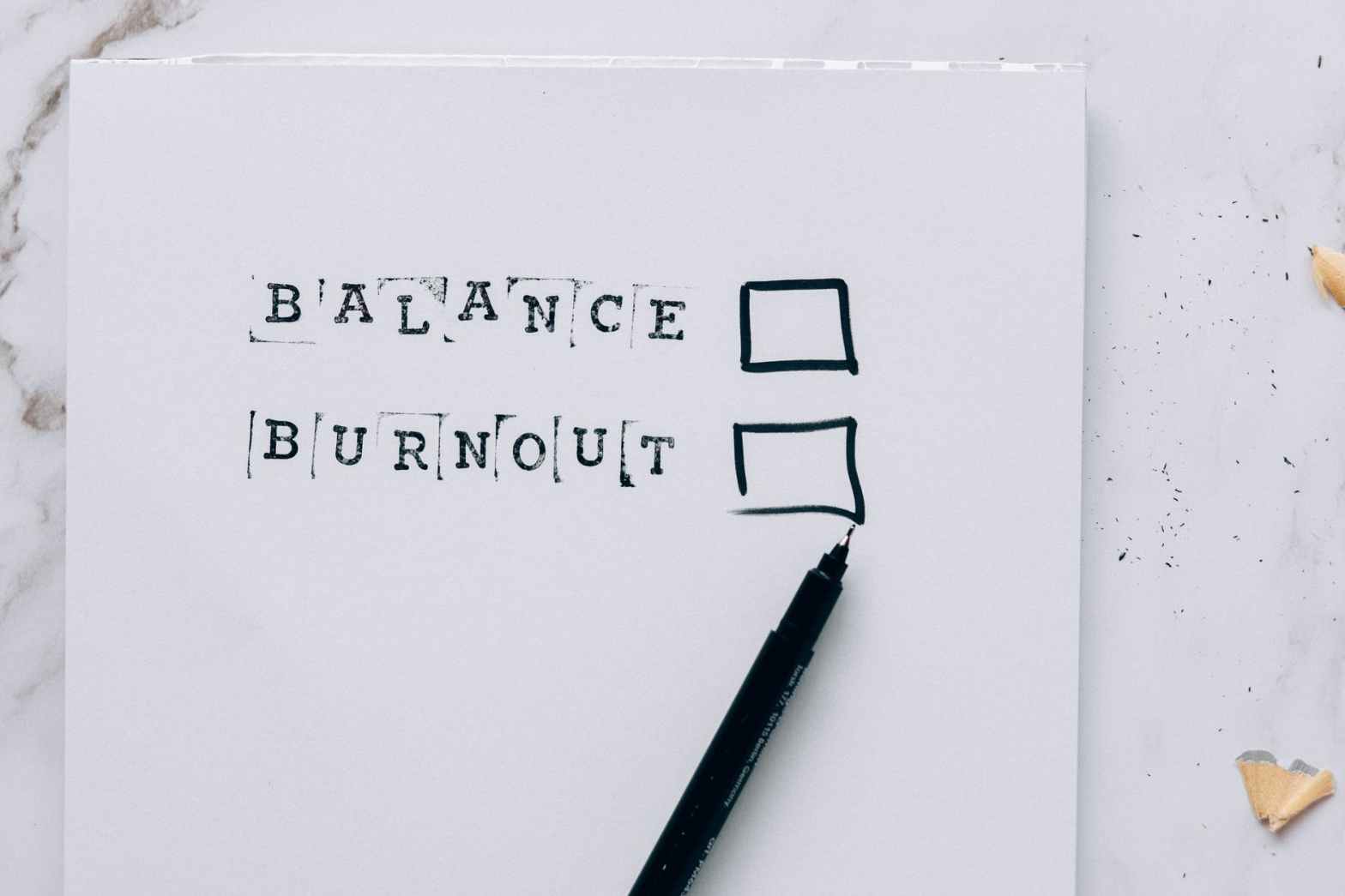
Constantly being on the run, working even on the weekends will lead to eventual burnout – be it mentally or physically – this is what leads to resentment and negative feelings which is your mind and body’s indication to needing a break.

Also, assuming that if you work extra hard, harder than others will lead you to great success in your career is wrong. Yes, it might help to get ahead, but at the cost of your own well being. (Definitely not worth it!)


It’s important to learn to develop healthy work-life balance.

Tips to maintain work-life balance

  • Define

Before going into work-life balance, you need to know what is ‘balance’ for you.
Write down the things in your life that are priorities, then analyse your life daily life and try to make an estimate on how much time you’re able to allot to each priority.

Then take a moment to reflect on that.
Are you happy with that? What would you like to change? How much of a change do you want? How will that change your life?

  • Set Schedules

When you realise how you want your day-to-day life to be organized it becomes easier to schedule your day accordingly.
Set a fixed schedule for workdays with fixed times for work and fun things that you enjoy .

When you have a fixed schedule, especially one that is more or less consistent throughout all workdays, it becomes much easier to get into that ‘flow’ state of work and enjoy uninterrupted work times. Also helps you detangle yourself from work after a specific time and just enjoy other things.

Now, it might seem easy to fix a schedule and plan out your entire day, but the difficult part is sticking to that workplan and being consistent with it.
Especially as someone like me who doesn’t fit well with schedules and hates being routine, it gets boring.

Something that I have been trying is to set timers and little rewards for myself for successfully going through a schedule. 
But somedays, even that doesn't motivate me enough, those days you just have to force yourself, sometimes you have to push through without motivation.
  • Turn Off

Turn off work mode – both, from your devices and your head.
Turn off work and email notifications. If possible, turn off devices and spend time doing the things that make you happy or spend time with people that make you happy.
It’s important to not let work distract you during times that are supposed to be your ‘off’ times.

Obviously this won’t work for you if you have a job that requires you to be on alert most of the times.
But for a student plus writer like me, it’s easy to shut off my phone and go out on a walk or read or study my favourite subjects.

  • Make Boundaries

When you have a schedule and fixed times for everything, there is only that limited time for you to work and to relax.
It’s important to learn to maintain that boundary between your work and your personal life.

Learn to not bring your work into your personal space, to give time to people outside of the work environment and maintain balance.
The way to achieve this balance is from within, it is a resultant of your own choices and it’s important for you to make wise decisions and respect the boundary that you have created for yourself.

If you are someone like me who finds it difficult to work within boundaries,it’s going to be a difficult task to navigate through them and be disciplined, but the only way to have successful work-life balance is by execution- simply learn to work within boundaries and stick to your routine.

  • Reflect

After atleast a month of following through, go back to analysing your daily life. Ask yourself the same questions you asked yourself in the first step.

Are your answers different now? Do you feel more happy/content with the way your work-life balance is now?
Observe and reflect on your emotions before and after and see if things have changed.

Even though work life balance is a widely discussed topic, not everything said about it is positive.

Cons to work-life balance

Work-life balance is based on the idea that work and life are 2 different parts of our life that need to be maintained equally. It creates this barrier between work and life and puts a pressure on people to be able to manage both equally and successfully.

But the reality of the situation is that work and life can never be equally balanced in life.

There will be times when you will have to make certain decisions based off of your professional life and that takes priority in your everyday life.
There will also be times when your personal life will take the spotlight and you will set your work away to enjoy your life with people you love or just do things to keep yourself happy.

So when it is clear that having a perfect work-life balance isn’t possible and yet we pressurise ourselves to live that way, it is just like running a race but in the opposite direction to everyone else – you might feel like you’re winning when in reality you’re making decisions that will not benefit you.

It’s important to accept that the idea of perfect work-life balance is not correct. Accept that you cannot treat things as rigid blocks, sometimes things are just grey.

While studying about these ‘grey’ areas, I came across this really interesting concept.

Work-life integration

Work-life integration removes the idea of having a perfectly balanced equation between work and life and blends everything together.

To be precise, it removes the rigid boundaries between your personal and professional life and sets your day in such a way that work, health, family, self, everything is given appropriate attention but without the strict regimes and schedules.
It is a way of creating a collaboration between many areas of your life.

With the added flexibility to your life, it becomes easier to manage work and personal life and if you feel like adding more things to your life, you can easily do that.

It gives the opportunity to be professional while handling many things at the same time and still remain sane !

Tips to work-life integration

  • Create a schedule that focuses on all the main priorities in your life. Unlike schedules from work-life balance that dealt with ensuring ‘equlibrium’ between work and life on almost a daily basis, these schedules are based more on what you feel like and what you’re motivated to do
  • For example – one day I might be in the mood to study and write and instead of going out with friends i would just stay at home and read a book or draw.
    The next day I might not be in the mindset to study, so I could spend time with friends and family.
  • It’s a way to balance your life,but in a way that suits you.
  • The only thing to keep in mind is to make sure that your schedule distributes time to all your priorities in a more or less equal amount and fulfills you and the people most important to you.
  • Just like in work-life balance situations, it’s important to have boundaries here as well, but not as strict/rigid.
  • Here you don’t have to set times in your day reserved only for work and only for fun. You only have a brief blueprint of how much time you want to spend working and how much on leisure things.
  • You just need to try and not let the two (work and fun) overlap and keep them at a distance.

But just like incase of work-life balance, work-life integration also has some downsides.

Cons to work-life integration

  1. If you don’t spread your priorities out equally, you might end up spending most of your time either working or on leisure things.
  2. You may not be able to properly navigate through the blend of work and life and might lose the grip on maintaining balance between the two.
  3. You may have your mind constantly preoccupied with other things due to lack of proper scheduling of thoughts and work times.

Having read all of this – what do you feel suits your life and your goals to the best limit? Let us know!

FACING OUR FEARS

With the new year many of us are making new year resolutions- eating healthy, working out, developing new hobbies, practicing self-love are some of the many that I’ve heard from people around me.
But here’s one that I’ve not heard from anyone that I think everyone should persue (or atleast try to) and that is – facing our fears and growing from them.

A question that came to my mind was,

Why face our fears?


Isn’t it much more easier to just let things be as they are?

Well, yes. It would be, but think about it, the last few years (2020 & 2021) have been pretty tough, how much worse can it get?
Might as well take the risks and see how it goes. Because life is all about taking risks and overcoming fear. If you don’t take that leap today, you’ll never know what you’re capable of.

If we embrace our fears and work on them, we can break the biggest ceiling – our own mind. Once we do that, everything will be limitless! When we work on the things that we fear, or even simply acknowledge it and put some thought into it – we take away its power to control us.

If you don’t work on that one thing that is constantly at the back of your head, that one thing that makes you stay up at night and worries you throughout the day, it will consume your mind entirely and will not let you reach the success that you’re aiming for.

We all need to face our fears and challenge ourselves to acknowledge these fears in order to rid our mind of the emotional baggage that these fears bring into our lives.

But let’s be honest , it’s all easier said than done.
So the biggest question,

How do we face said fears and grow?


1) The first thing to do is to realise that being afraid of things is common human nature. We’re all humans and we’re all afraid of something. It’s not about not being afraid, it’s about how you handle those fears and how you grow from them. Know that fear is mostly an uneasiness our mind feels over things that we don’t know about, or we’re unsure about.

2) The second – and maybe the most important thing, is to know what you’re afraid of and to what extent. It may sound strange but many people (including myself) aren’t exactly sure of what they’re afraid of.
Take some time off and sit down and think about the things that bother you/worry you.
When you know exactly what to work on you can actually focus in that direction instead of feeling stuck . When you know exactly what to work on things become more manageable and less scary.

3) Try to identify exactly what triggers fear and worry into your head. Sit down with yourself and just think about those things and the emotions they bring up inside you without actually feeling those emotions or letting those emotions control your mind.
It might seem difficult at first, but slowly ease yourself into the process, eventually, you’ll be able to process those thoughts and emotions without really feeling much of them.

4) Like I said before, fear is (to some extent) an uneasiness in our mind about things that we don’t know about, or things that are ‘the unknown’. So gather as much information as you can, the more you know about it, the less scary it will be, and you might even find it interesting!
Also, telling someone about your fears can be a great way to elevate some of the stress and can help you think more clearly. Writing those fears down can also be a great way to acknowledge them, it will help your mind to come up with solutions much more easily.

5) Use your imagination to think of the worst case scenario that could happen if you go forward with chasing these fears – and maybe even conquering them.
Then, make a plan of what you could do if such a thing was to happen.
Once you acknowledge the worst case scenario and find out ways to come out of it, it becomes way more easier to deal with them. It will help you take your mind off the problem and you can actually put in your energy to working towards the goal.


With all this said, you need to know a few more things before going into this journey.

When you start off, there will be times when you would feel overwhelmed, you might feel like you’re not getting anywhere and all of this is just a waste of time. At times like this, reflect back to what things were like before and how far you’ve come.

Know that all the hard work and unhappiness you’re feeling now is for something far more greater.
Whenever you’re feeling emotionally burnt out and frustrated, take a break, listen to soothing music and process what’s happening around you, only then will you be able to move forward.

At the end, always remember that there is no greater feeling than overcoming fears and barriers, the feeling of coming out of it as a better person on the other side is simply irreplaceable.

THE IDEA OF PERFECTION

What, according to you, is perfect?
Is it that character you saw in a movie or that lead in your favourite book? Is it that one person in your class/at work whom everyone looks up to.

The idea of perfection varies from person to person and time to time. It’s a lot like coffee.


Different people have different preferences when it comes to coffee and some don’t like coffee, it just goes with what you’re in the mood for.
Perfection is just like that, everyone’s idea of ‘perfect’ is different, and it changes from place to place and time to time.


When you’re in school it might be that person who has the most friends and hangs out with the popular crowd, when you grow older it might become the people that have a well paying job and are respected in the community.


The thing to note is that ‘perfect’ is not the same for everyone, all of us feel that perfect is different, better and something unlike us.
Everyone has, atleast once in their life, compared themselves to their idea of ‘perfect’.


But the question that arises is, “Why are some things considered to be perfect, while others are not?”

The idea of perfection is very different for different people but the reality of the situation is – nothing and no one is perfect!


We all have this idea of perfect in our head that we have put up on a pedestal and look up to and aspire to be and many times force ourselves to be.
We do the most absurd things to fit the idea of ‘perfect’. We put ourselves on diets and trainings and all sorts of things that we might not even want to do but we do it, just to fit this idea of perfect, which we’ve made up in our head!


Hear me out, there is nothing wrong with following a healthy lifestyle and doing things that keep you healthy and fit, but putting yourself through things that you don’t even want to do or are unhealthy for you, just to fit this image of ‘perfect body’ is wrong.
The same way, there’s nothing wrong with having a good job that pays well and gives you a high position in society, but doing that while pushing away your passion and happiness, just to match your parents idea of ‘the perfect child’ or society’s idea of ‘the perfect match’ is wrong.

There are so many other instances when we push away our own happiness and peace of mind just to fit the idea of perfect, something that will never be able to bring us true happiness.


Have you ever admired someone? Thought them to be the living version of perfect? Idolised them to such a level that you dreamt and aspired to be them?
Well, I have, and I had to learn it the hard way thay nothing and no one is perfect. Everyone has their good and bad side, everyone has their own shortcomings and everyone has days that are good and that are bad.
Putting someone on that pedestal and expecting them to fit your idea of perfect is not right. Accepting someone for who they are, good and bad, is the way to show true admiration and letting someone know that you actually care about them.


There’s nothing wrong with helping someone become better and improve but it’s always important to know our limits and not push ourselves and at the same time remind others to be careful and not push themselves too hard.


I don’t know about you, but I grew up watching people that had the perfect hair, the perfect body, the perfect laugh, everything that fit society’s idea of ‘perfect’ and that shaped my idea of perfect, which made me push myself in that direction, in a direction that seemed so wonderful, but was so dark and did not give me any happiness.

In the end, I don’t fit the idea of perfect! I don’t have the perfect smile, the perfect grades or the perfect behaviour. I’m not that and the first time I accepted that, it scared me, I was not what everyone wanted me to be and I might never become that, but now I’ve learnt to accept myself as that, as that imperfect, silly little girl, that might never make anyone proud, but atleast I’m happy.

I’m happy and I’m comfortable in my own skin… actually that’s not true, I’m not completely comfortable, I have days when I’m so bold and comfortable and feel so grand , and then I have days when I’m insecure, self conscious and scared and that is completely okay!
It’s a long hard journey and I’m going to make it, one day at a time. Baby steps.


And I want to encourage everyone reading this, take a moment and analyse yourself, what about you do you think is imperfect or doesn’t fit your version of ‘perfect’? What do you think is perfect? More importantly, why do you think it’s perfect? Why not put yourself into the idea of imperfect and love that?
There is so much beauty in imperfections – in all our imperfections, it’s high time that we stop praising the idea of perfect and learn to love ourselves a little more each day and grow each day.


Let’s learn to surround ourselves with people and things that help us develop self love, that help us love us for who we are and help us become better and happier.

There could be a hundred things that could make us upset, make us feel bad, about ourselves and the world around us, so it’s important to find love in ourselves, only then can we find love for the world outside.
And one of the best ways to love ourselves is to rid ourselves from the idea of perfect, to fall in love with our own imperfections.


It’s great if you can make yourself a better version of you and it’s great to try to be a better version of yourself every day, but it’s important to love yourself, regardless of who you could be, it’s about loving yourself as who you are, because there is so much to love about yourself…

To love yourself is the path to loving the world & to love the world is to spread love, peace and happiness

TAKING CRITICISM

Criticism – it’s something we all hear, some people even hear it on a daily basis.
Friends, teachers, parents, co-workers, siblings and sometimes- even strangers criticise us for almost everything we do whether good or bad, big or small.

Let’s go deeper and take a dive into the world of criticism and try to understand (almost) everything about it.

As we all may (or may not) know, criticism is important for us! To grow and be better at what we do and even to be better people, we need outside criticism to guide us.
But most of the time, we tend to take criticism in the negative way.

We feel hurt and attacked by most criticism that we recieve, and in some cases it is true that the criticism comes from a place of hatred and negativity rather than from positivity and well-wishes.
But sometimes we feel hurt by even the positive criticism that wasn’t meant to be negative, instead it was meant to be taken positively and for our own growth.

It’s important to keep in mind that while taking criticism, try to keep an open mind and keeping your emotions out.
Do not react to it or take it personally, instead take a deep breath and look at it from the other side, find out what are your weak points and what can you do to make yourself better.
Constructive criticism is the way to know our weaknesses and improve by working on them. But if we get defensive and try to prove the critique wrong, it won’t help us truly understand the message being delivered and won’t let us improve.

We shouldn’t be afraid of criticism or be hurt by it, rather, we should use it as fuel to do better and learn from them.

Criticism may not be agreeable, but it is necessary. It fulfills the same function as pain in the human body. It calls attention to an unhealthy state of things.

Winston Churchill

Criticism helps you learn and understand your shortcomings and helps you make better decisions in the future to make better changes in yourself and in your work.
It can show you the spots that you’ve been missing and more often, gives you a helping hand that will support you and guide you.

As humans, we react to different criticism in different ways. The way we react to each critique will determine how it will affect us and our work.

If you pay too much attention to negative, hurtful and bashing criticism, then you’ll just end up hurting yourself and your confidence.
On the other hand, if you dismiss every single piece of advice and criticism that you recieve, you won’t grow.
If you pay attention to criticism without letting your emotions get in the way, you can properly understand the criticism. You can then analyse it and take what is useful for you and can help you grow.

If you find something hurtful, meaningless and bitter, shrug it off and don’t let it break your confidence.

You have to take criticism with a grain of salt because you’re never going to please everybody.

Yolanda Adams

It’s important to know where you take criticism from. Know that you cannot please everybody, which also means that you do not have to pay attention to everybody’s opinion of you or your work.

Be mindful of the people that criticise you and before paying attention to them or letting their words get to you, ask yourself, does this person know what you’re going through? Have they been in the same field of work/the same situation? Does this person genuinely want you to grow and become better or are the words coming from a place of hatered and/or negativity?

Ask yourself if it is even worth letting the harsh words of this person take up your valuable time, energy and mental as well as emotional happiness and strength.

You need to remember that everyone that criticises you doesn’t necessarily mean the best for you.

If the person offering you advice/criticism is from the same field of work or has similar experiences in life and they actually wish you to be happy and want the best for you, treat their advice as gold, but if anyone with a bad intention decides to let you know their opinion on your life, push them away (maybe not literally!)

Criticism, like rain, should be gentle enough to nourish a man’s growth without destroying his roots.

Frank A Clark.

COMFORT ZONE

Have you ever made a decision that made you uncomfortable? Something for the ‘greater good’ that was out of your comfort zone? If you have, then you would know that pushing past those boundaries of comfort ultimately brings out the best in you.
If you haven’t then I really suggest you do.

Anyone that is unfamiliar with the concept of comfort zone might ask ‘What is comfort zone?’
A comfort zone isn’t necessarily a place, it’s a habit, a habit of avoiding uncomfortable situations or new things and risks. It’s a safe mental space where your work, behavior, thoughts and actions fit a routine and pattern, which minimises stress and anxiety. This safe space gives a sense of mental security.


Comfort zone doesn’t necessarily have to be a bad thing. It’s a state that people generally tend to move towards. Leaning away from it brings increased risks and chances of failure, not to mention stress and anxiety, but depending upon how you react to it, it can have positive or negative effect.

Behind the walls of comfort lies the unknown that brings out the most valuable lessons.

Let’s dig deeper, and as some of you might be thinking, Why should you step out of your comfort zone?
Stepping out of your comfort zone makes you feel vulnerable, it gives you anxiety and stress. But this can work in your favour if you let it. It improves your performance and can push you towards success.

Moving out of the comfort zone is necessary to rise above and reach greatness, the comfort may make you feel safe and pleasant, but that doesn’t make it good for you. Infact, if you don’t push past this comfort zone, it’s going to get smaller.
Remember that the more we stick with what is familiar, the more we’re going to be afraid of moving to the unfamiliar.
You need to let go of the thoughts in your head that tell you to stick to the comfort zone, because it blocks your view of the bigger picture and the growth you can achieve by stepping out of this comfort zone.

The comfort zone is the wall between you and greatness and success, and the only way to tear down this wall is by pushing yourself into uncomfortable situations.
If you’re someone who is confused with what you’re meant to do in life, take that first step and step into the uncomfortable zone, that’s the only way you’ll realise your true calling.

Without having the uncomfortable feeling of deadlines and targets, we cannot push ourselves to do the best of our abilities. We tend to go the bare minimum of what is required of us and often fall into the ‘work trap’ which is basically just telling yourself you’re ‘busy’ to avoid stepping out of the comfort zone and trying new things.

Before we move on to ‘how’, let’s first learn about 2 more zones that you’re going to have to face on your journey from comfort to success.

The first is, Learning Zone.
It’s the period of time we spend learning – it doesn’t need to be academic knowledge, ot could even be the time you teach yourself a certain skill or even absorbing the things that you learn on an everyday basis that helps you improve. This is a zone that you should be in all the time, not just on the path to success but even after getting to success.

The second zone is, Performance Zone.
It’s the point of time where you apply what you have learnt and work towards success.

Now that we’ve covered that part, let’s move on to How can you step out of the comfort zone?

The first thing to keep in mind is that getting out of your comfort zone is not an overnight process. It will only come true by taking small steps and working towards that goal every single day.
Try expanding your comfort zone one step at a time.

Step 1) Identify the thing that is most important to you, the thing that you want to move ahead with.
The best way to know what your true calling is, is by moving towards things that are unfamiliar and new to you. You don’t need to expose yourself to it all of a sudden, again, go one day at a time. This will be the first step out of the comfort zone.

Step 2) Take the decision to start working on it.
Once you figure out what you want to do, start pursuing it. If you have to, set a date, place and time. This will be the entry to unfamiliar territory.

Step 3) Build your courage.
Once you start working on this goal, you will get even farther away from the comfort zone, and when you do that, you’ll be scared, and it’s okay. It takes a lot of courage just to identify these fears and then working on them.
You need to remember that when you build this courage, you will be able to face your fears and not only that, but you’ll also be able to take risks and make bold moves, that sometimes might give a great outcome, but sometimes might make you look like a fool, and you need to have courage for that.

Step 4) Follow this consistently with a positive mindset.
The most important step in this process. You need to have the mindset to push through all the difficult times and consistently work on yourself. You need to have the willingness to make mistakes and learn from them to work on your weaknesses. You need to be able to consistently put yourself in uncomfortable situations to develop and grow.

Now that we know the what, why and how, let’s go over some things to remember.

  • Choose to step out of the comfort zone, because if you don’t step out of it and put yourself in uncomfortable situations, you will not grow and ultimately, you will not get to success
  • Everytime you feel overwhelmed by something, walk away from it for a few minutes, clear your head, meditate, drink a glass of water, walk or even take a power nap. This will help you relax and even find a solution to problems or look at things from a fresh perspective.
  • Outside your comfort zone you will find people and situations that inspire you, push you to work harder and even irritate and annoy you. When you deal with these people and these situations, you grow and reach your full potential.
  • Think big and set targets and goals out of your comfort zone. Remember, the bigger the challenge, the harder you push yourself to work harder. Keep in mind that setting unattainable goals for yourself will only lead to more stress, fear, worry and anxiety which will lead to procrastination, which is only going to be counter-productive.

We’re all afraid of new experiences and situations, especially uncomfortable situations that are out of our comfort zone and it’s completely normal. The way we react to these situations and experiences reflects on how we will live our life.
Try to live out these experiences with confidence and belief in yourself instead of stress and anxiety.

THE ART OF LISTENING

Listening is perhaps the most important and the most difficult part of having a healthy conversation. The main reason why most people struggle with being good listeners is because of their ego and impatience.

Let’s take a deeper look at listening and (almost) everything about it!

What is listening?

Listening does not mean hearing just to respond. It is hearing to understand.
Listening is not to judge/analyse what the other person is saying, it means to fully concentrate on what is being said. It is about using empathy and compassion and understanding the complete message, including the underlying emotional message conveyed.


Active listening is a technique to develop our ability to listen and make an effort to truly understand what the other person is trying to say.
It doesn’t need to be about agreeing with everything that is being said, it’s about respecting the other person and their opinion and avoiding judgmental tones or words.
It is about listening to what the other person is saying without having judgment or assumptions.

Why is listening important?

Being a good listener makes you an even better communicator. Your conversations and/or feedback really depends upon your listening skills, if you’re not a good listener, your response can be faulty.

Listening is not only a learning opportunity for you, but it is also one of the fastest and easiest way of making friends and building your network.
As human beings we are social creatures and by actively listening to people around us, we are able to connect, co-operate, develop and understand ourselves and each other.

Listening is a critical skill to have in a workspace. It helps you learn about the people that you work with and allows you to have a crystal clear understanding of the conversations which will help you make better decisions and solve problems.

Good listening skills will help you understand other people’s perspective better and understand any underlying feelings that they are unable to express. Also, by being an empathetic listener, you create a space for taking your own feelings and thoughts into account and taking a much closer look at them.

Finally, listening is the first base for growth, it helps you make good decisions and at the same time it slows you down to take a careful look at a situation before taking any decision or giving an opinion.

How to be a good listener?

Listen for curiosity and not for the sake of listening just to reply. Real effective communication cannot happen if we pretend to listen and it will certainly not happen if we don’t listen at all.

When listening to someone, try to have your full focus on them and their story rather than getting distracted or reflecting on your past experience or thinking of an answer or comeback.

Try to listen with an open mind and give the other person space and time to effectively communicate and express themselves and give their opinion.
It’s always easier to come to a compromise or find the best solution when everyone has the opportunity to explain their experience and understand the other person’s position.

Ask questions and take into consideration the whole situation before coming to a solid conclusion. Try to take a step back and analyse the whole situation from the other person’s point of view before giving any answer or advice.

To make someone feel heard, maintain eye contact (but try not to be creepy!) and give subtle indications like nodding. You can also ask questions and/or simply paraphrase what they said (or you could combine it and do both! For example – “so you’re saying… because…and …?”). This will make them feel heard and understood and make you feel engaging as well.

What am I doing wrong?/ Things not to do

Poor listening skills create walls in Communication and make things difficult and build more chance for mishappenings and accidents, especially due to miscommunication or incorrect assumptions/conclusions.

The first and most important thing to keep in mind while listening is : listen to understand, not to reply.

So the next time you listen to someone, listen to actually understand what they’re saying.
Don’t try to finish their sentences or interrupt them, allow them to finish, that way you can have a proper idea of their point of view and come to a better conclusion.

Secondly, try to avoid any and all narcissism. Try not to make it all about you or think about your own past experiences while the person is talking.
Although it is good to give advice from past experiences and mistakes, not paying full attention to the speaker might make them feel that you’re not interested and you might miss out on any key points.

And finally, do not think about your reply or get distracted by anything else, try to keep your full attention on the speaker and their story.