
FACING OUR FEARS

With the new year many of us are making new year resolutions- eating healthy, working out, developing new hobbies, practicing self-love are some of the many that I’ve heard from people around me.
But here’s one that I’ve not heard from anyone that I think everyone should persue (or atleast try to) and that is – facing our fears and growing from them.

A question that came to my mind was,

Why face our fears?


Isn’t it much more easier to just let things be as they are?

Well, yes. It would be, but think about it, the last few years (2020 & 2021) have been pretty tough, how much worse can it get?
Might as well take the risks and see how it goes. Because life is all about taking risks and overcoming fear. If you don’t take that leap today, you’ll never know what you’re capable of.

If we embrace our fears and work on them, we can break the biggest ceiling – our own mind. Once we do that, everything will be limitless! When we work on the things that we fear, or even simply acknowledge it and put some thought into it – we take away its power to control us.

If you don’t work on that one thing that is constantly at the back of your head, that one thing that makes you stay up at night and worries you throughout the day, it will consume your mind entirely and will not let you reach the success that you’re aiming for.

We all need to face our fears and challenge ourselves to acknowledge these fears in order to rid our mind of the emotional baggage that these fears bring into our lives.

But let’s be honest , it’s all easier said than done.
So the biggest question,

How do we face said fears and grow?


1) The first thing to do is to realise that being afraid of things is common human nature. We’re all humans and we’re all afraid of something. It’s not about not being afraid, it’s about how you handle those fears and how you grow from them. Know that fear is mostly an uneasiness our mind feels over things that we don’t know about, or we’re unsure about.

2) The second – and maybe the most important thing, is to know what you’re afraid of and to what extent. It may sound strange but many people (including myself) aren’t exactly sure of what they’re afraid of.
Take some time off and sit down and think about the things that bother you/worry you.
When you know exactly what to work on you can actually focus in that direction instead of feeling stuck . When you know exactly what to work on things become more manageable and less scary.

3) Try to identify exactly what triggers fear and worry into your head. Sit down with yourself and just think about those things and the emotions they bring up inside you without actually feeling those emotions or letting those emotions control your mind.
It might seem difficult at first, but slowly ease yourself into the process, eventually, you’ll be able to process those thoughts and emotions without really feeling much of them.

4) Like I said before, fear is (to some extent) an uneasiness in our mind about things that we don’t know about, or things that are ‘the unknown’. So gather as much information as you can, the more you know about it, the less scary it will be, and you might even find it interesting!
Also, telling someone about your fears can be a great way to elevate some of the stress and can help you think more clearly. Writing those fears down can also be a great way to acknowledge them, it will help your mind to come up with solutions much more easily.

5) Use your imagination to think of the worst case scenario that could happen if you go forward with chasing these fears – and maybe even conquering them.
Then, make a plan of what you could do if such a thing was to happen.
Once you acknowledge the worst case scenario and find out ways to come out of it, it becomes way more easier to deal with them. It will help you take your mind off the problem and you can actually put in your energy to working towards the goal.


With all this said, you need to know a few more things before going into this journey.

When you start off, there will be times when you would feel overwhelmed, you might feel like you’re not getting anywhere and all of this is just a waste of time. At times like this, reflect back to what things were like before and how far you’ve come.

Know that all the hard work and unhappiness you’re feeling now is for something far more greater.
Whenever you’re feeling emotionally burnt out and frustrated, take a break, listen to soothing music and process what’s happening around you, only then will you be able to move forward.

At the end, always remember that there is no greater feeling than overcoming fears and barriers, the feeling of coming out of it as a better person on the other side is simply irreplaceable.
TOP TIPS TO BE A GREAT LEADER

Being a leader is something which many people can do, but being a great leader, one who can lead the team to success while training all the members to become future great leaders is not a skill that everyone has.

According to some theories, great leaders are ‘born and not made’, i.e. certain people inherit certain qualities that make them great leaders, so, the people who are not born with these traits cannot be great leaders.
On the other hand, some theories suggest the opposite, that great leaders are ‘made not born’. That people learn to be great leaders and the traits required to be great leaders cannot be inherited, it is something people learn through experiences of life and observing other people.

I think a great leader is one who is the perfect balance of both theories.
To be a great leader, it is necessary to have a natural leadership instinct along with the traits that one can achieve only by experiences and learning from those experiences as well as other people, preferably other ‘great leaders’.

“A leader is he/she that creates more leaders.”

Ranveer Allahbadia


Here are some of the most important qualities a great leader should have (based on some of the amazing leaders I’ve seen and have been heavily inspired by)

Passion


A great leader is one who is passionate about the project/work, someone who’s energy can really inspire and pump up the passion in the other teammates. A leader should be driven by the passion and make it their purpose as well as have people with the similar passion in their team.

When leaders have set goals and are able to communicate it to the rest of the team effectively, they can bring the entire team together to reach the goal while growing as a team as well.

Empathy


A leader that has empathy towards their teammates is one who can understand the teammates to a deeper level and can connect with them emotionally.
Teammates also feel better working with a leader who understands and bonds with them.

Empathy also allows to get rid of any workplace tension and get straight to the root cause of the problem.

Confidence


A great leader is one who is secure with themselves and are self confident. You will rarely see them in self doubt.
Teammates can rely more on confident leaders who are trustworthy and also grow their self confidence.

However, keep in mind that confidence and arrogance are completely different things. A leader who is confident can help you build your self confidence, on the other hand, an arrogant leader will only focus on their own growth and doesn’t take the growth of their teammates seriously.

Conversationalist


A great team leader is also a great speaker, one who can use their words to inspire and push their team towards success/the end goal. Great leaders are clear with the message they convey to the team and in times of trouble they are able to solve the problems with their words.

Leaders are comfortable addressing big groups as well as having one on one conversations with their teammates.
Along with being great speakers, leaders are also great listners, which leads to amazing, innovative, insightful conversations.

Open minded


People that can easily adapt to situations and have an optimistic, open minded attitude towards even the most difficult situations excel as leaders. They also inspire those around them to adapt to changes surrounding them, the good and the bad.

Great leaders understand that people are the biggest assests and welcome all criticism and feedback from others as well as teammates and appreciate exchanging ideas and opinions with their teammates.

Motivational


Great leaders are the perfect role models for members of the team, in addition to that, they are great source of motivation for the team members, especially during difficult times – professionally and/or personally.
They know the important role of motivated team members in the growth of the entire team.

Great leaders can motivate and inspire their team members only if they are confident and optimistic and at the same time have a realistic look towards life. A motivational leader has a very big hand in the growth of each individual of the team.

“The best leaders know their teammates inside out, and know how to get the BEST out of each individual, individually!”

Ranveer Allahbadia

Selflessness


A great leader is the leader who gets happiness from seeing others being rewarded for their hardwork. Their leadership is not based on titles or position or power, their influence on people is not because of their money or power or connections.
They define their success on the basis of the positive influence they have on people and the impact their actions have on other people. They constantly show up in times of need and are reliable to the team, they always put their team first and take actions that help each member of the team grow.

A great leader brings out the true potential in others and helps them become great leaders of the future. They are not just concerned with getting the team to success as a whole, but also invest themselves in helping each member of the group reach their true potential.

Determination


Great leaders are always determined to accomplish what they set out to do. They don’t give up when things get tough. They see difficulties/problems as a challenge and see it as an opportunity to grow.

Such people are not afraid to think outside the box or take decisions/steps that are ‘uncomfortable’ or ‘difficult’, they constantly try to step out of their comfort zone and persuade their team to do the same.
“It is better to lead from behind and to put others in front, especially when you celebrate victory when nice things occur. You take the front line when there is danger. Then people will appreciate your leadership.” —Nelson Mandela

“It is better to lead from behind and to put others in front, especially when you celebrate victory when nice things occur. You take the front line when there is danger. Then people will appreciate your leadership.”

Nelson Mandela

STOP SINGLE USE PLASTIC – REDUCE, REUSE & RECYCLE

If you are unfamiliar with the term single use plastic, it simply means plastic that is designed and manufactured simply to be used one time.

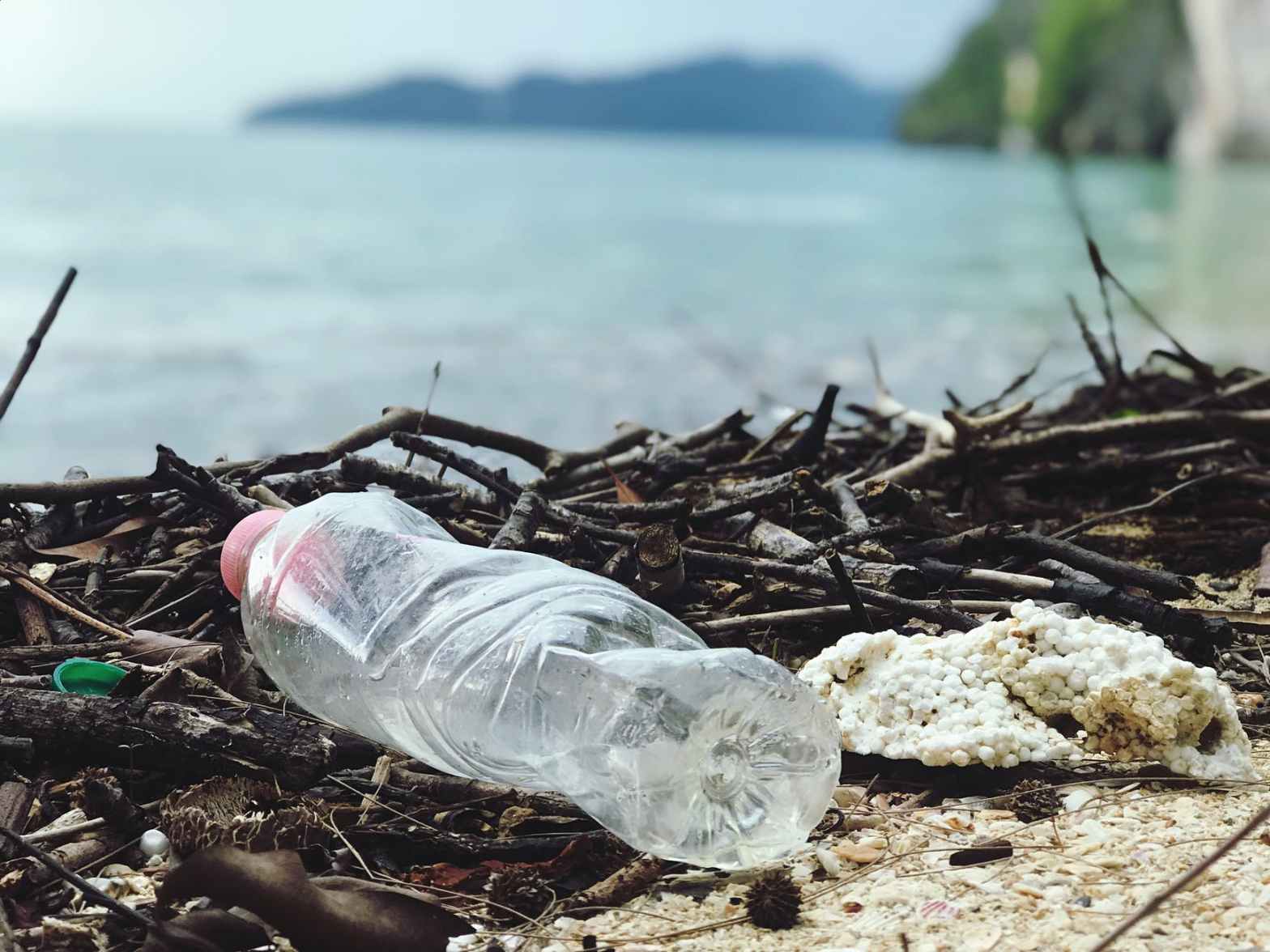
We are all well aware of the ill effects of using plastic. Yet every day we see millions of plastic bags,cups, toys being thrown around carelessly.

It is time that we stop the misuse of plastic and actually take strong steps against it.
And to do this, you don’t need to make big sacrifices and changes to your life, every small change in your lifestyle can bring a change to the world and reduce your carbon footprint. Here’s how you can do it.

We’ve all heard about the 3 R’s. Very commonly known as Reduce, Reuse, Recycle. In the most simple terms it means – refuse the items that you don’t need, reuse the items more than once and properly dispose the items that are no longer useful to you. At the end, it helps to cut down the amount of waste that we throw away.

“Outright bans on plastic bags may not be the best solution, but education and incentives to get people to stop using them are necessary.”

David Suzuki

REDUCE

The logic behind it is quite simple, if there is less waste, then there is less to recycle or reuse.

Before purchasing a product ask yourself – “Is there something else that I can use for this purpose?” , “Is this product necessary to do this task?” and “Is the item something that I want or something that I need?”
Asking these questions to yourself will help re-analyze the purchases that you make.

Also, purchasing multi tasking products can be a great investment – to your financial situation and to the nature.

REUSE

To reuse something simply means to repurpose things.
It saves them from landfills and dosent require extra expenditure of natural resources to recycle them and remake things out of them.

In today’s day and age, repurposing things has a new name – DIY or Do It Yourself. These are fun, interesting projects that you can do. It’s a great way to reduce wastage of things and also boosts your creativity.

RECYCLE

Recycling means to transform something back to a raw material and then making new things out of them.

It is a great way of properly disposing waste but it requires a lot of energy and time. Also, many recycling techniques are harmful for the environment.

So before you buy anything make sure that it is made out of non toxic materials, that way it can be easier to recycle.

Also, while disposing waste carefully separate the products that can and cannot be recycled.

Now that we know the 3 R’s
Let’s learn some of thier benefits.

As mentioned earlier, it reduces the amount of waste thrown into the environment thereby reducing the chances of polluting the environment.

Reducing and reusing our waste automatically reduces the level of greenhouse gas emissions.

Apart from that the 3R’s save land and money that communities and governments have to use to dispose wastes in landfills.

In addition to all of this, they also help to lessen the use of newer resources and energy, thus, making better use of resources.

With all this information in your hands, think about the change that you can make, with just one simple change in your everyday life.