Unlearning

The 21st century has been the time of great discoveries, inventions and learning. With all this learning comes even more new things and concepts that might seem strange to some, but it is absolutely necessary for us to learn these to move forward.

One such concept is “Unlearning”.

But an important question to ask would be

What is unlearning?

When you remove something from your memory, you lose it and never think about it again and eventually it fades away from your mind leaving space for new, important information – that is unlearning.
Living in today’s day and age, it is a necessary skill to have.

Unlearning old activities/skills that once seemed useful and productive and replacing it with skills much more valuable, new skills that can help you get ahead and take your community forward – this is a very important skill, one which might seem really difficult (and even is, if we’re being honest) but is necessary nonetheless.

As it is a fairly new concept, it might be difficult to fully grasp it and more importantly, to understand it’s purpose.

Why is unlearning necessary ?

As said before, people need to develop unlearning to move forward and carry society forward side by side, to have better work ethic and overall have a new, fresh outlook towards all aspects of life.

The concept of unlearning forces the mind to constantly learn, re-learn and discard old learnings ; keeping the mind fresh, agile and sharp.

It isn’t necessarily important that everything you learnt or the skills you developed in the past have to be useful to you in the present or in the foreseeable future.
Unlearning is all about removing the unimportant/useless skills/information from your mind and clearing up space for much more productive and useful things.

There is also a high chance that whatever you re-learn isn’t the complete opposite of what you had previously learnt, instead, it could just be a modification of the old information/skills, morphed to suit you better.
But this requires expanding your mindspace to allow more and new information, which will definitely require you to get rid of the old clutter occupying your mind.

Also, if you’re someone who likes to constantly change things up, especially when it comes to professions and/or hobbies or if you’re simply looking into jobs, unlearning can be a great skill to have as many new, up-and-coming businesses and workspaces prefer having employees who can manage many skills and are easily adaptable to new and sudden changes.

Someone who is constantly unlearning and developing themselves is seen as a risk taker and someone who isn’t afraid to make changes, no matter how sudden or random they seem, which is another great impression to keep of yourself.

Now, to some people, the concept of sudden changes of learning and re-learning and even constant changes in life might seem strange, difficult and even scary.

How to develop unlearning ?

1) When you make the decision to develop unlearning in your skill set, it would mean you have found previous knowledge/skills inadequate to help you hustle through some important tasks and projects or maybe you simply wish to make room in your head for things that align with your present day priorities.
Either way, seeking new knowledge should be the very first step of your unlearning journey.

Only when you gain all that new knowledge will you be able to replace the old information with it or add more to your skill sets. So make it a point to constantly read and surf the net on subjects that you find interesting and constantly update yourself on new changes happening in that field.

2) Another way to gather more information and learning more is by talking to more people .
Build the habit of going outside of your social circle and meet new people and try to start intelligent, insightful conversations.

Try to talk to people having the same interests as you to learn more about your present day interests and priorities, but if you’re trying to learn new skills or trying to find even more skills, talk to people having complete different interests and educate yourself about their field of work and interests.

3) It is very easy to be in our own bubble of comfort and enjoy the safety of everything that we know. But to develop unlearning, one must venture out of this comfort zone and experiment in life.

If you can, travel and experience different places, cultures and people. Or simply make bold choices in life, choices you may not make in the safety and security of your comfort zone.
Go beyond what feels normal and ‘okay’, go for what makes your heart race with excitement.

4) When you experience new people and places, you clear your head of useless clutter in your mind.
Then comes the best and difficult part – relearning.

It’s the best thing because relearning allows you to use those new experiences and process them in your mind to update your existing knowledge about something or learn new things and improve yourself.
At the same time, it’s difficult. You need to be open to new and different perspectives and opinions and learn to accept ideas and concepts that go against your general/old understanding.
It’s also difficult to create an environment, both physically and mentally, that allows easy relearning.

5) When you’re able to reach a place where you’ve discarded information not useful for you and updated it with new and advanced learnings – you reach the finishing point.

You reach a stage where you’re a little more knowledgeable and a little more advanced, but don’t think this to be the end. It is merely another phase of the unlearning journey, because unlearning is a forever cycle.

Even we know all this, but surely there must be something that might just make the process a little easier…

Things to keep in mind

  • Instead of completely flipping your life around and making drastic, dramatic changes, start off slow. Make small changes in your life to replace previous habits/tasks and work your way up to more difficult tasks.
  • To begin unlearning you need to learn that your past tactics won’t be useful forever. It’s about making that realisation that change is the need of the hour.
  • It’s necessary to have a constant look at your life, especially a view from outside, to be self aware. When you have that vision you’ll be able to predict which skills will and will not help you thrive in the future and that allows you to make changes to things that no longer serve a good purpose in your life.

Unlearning is something we all can benefit from, so whatever phase of life you’re in – consider giving unlearning a chance in your life and see how much it changes things.
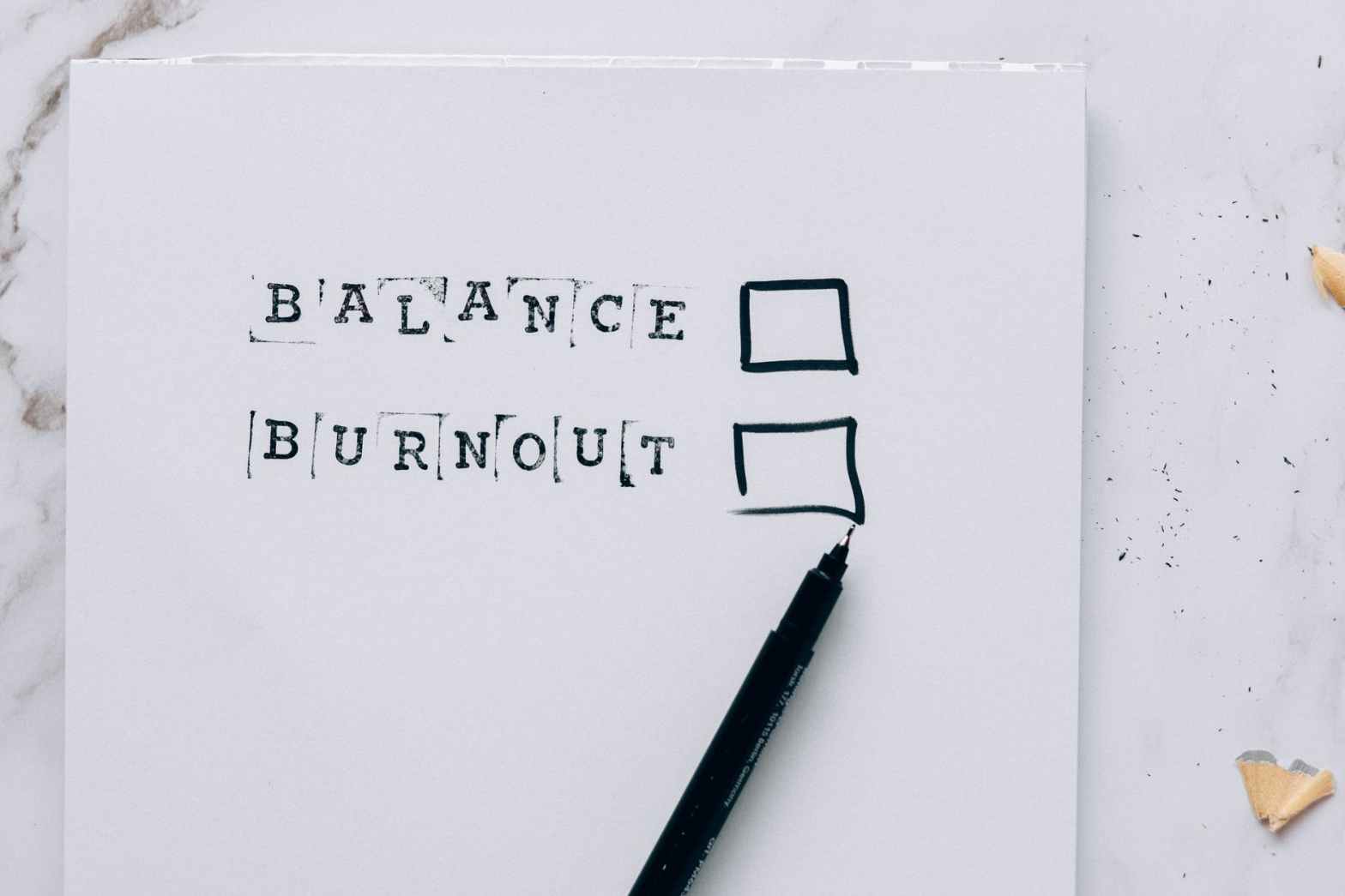
Work-Life Balance?

The concept of work life balance basically views work and life as 2 separate parts of our life that need to be maintained equally.

In a much broader sense, it means to utilise more time for leisure things, family time or simply self care. It is something which many youths, including myself, struggle with. It’s difficult to find a space that is just the right balance of work and leisure.

About work-life balance

The reason why work-life balance has become such a growing topic in discussions among the self-help and self-care community is because the “constant hustle” cultre has fixed the idea of constantly being on the go, working and being productive into the workforce and has made it the norm.
This has built the toxic idea in most workplace employees that they should be constantly on the go and hustling, being productive instead of taking time off for themselves and doing things that they love.

Even if you love your job and are motivated to work, overworking yourself without taking breaks will eventually lead to some resentment – either towards yourself, your colleagues or even your job.

Constantly being on the run, working even on the weekends will lead to eventual burnout – be it mentally or physically – this is what leads to resentment and negative feelings which is your mind and body’s indication to needing a break.

Also, assuming that if you work extra hard, harder than others will lead you to great success in your career is wrong. Yes, it might help to get ahead, but at the cost of your own well being. (Definitely not worth it!)


It’s important to learn to develop healthy work-life balance.

Tips to maintain work-life balance

  • Define

Before going into work-life balance, you need to know what is ‘balance’ for you.
Write down the things in your life that are priorities, then analyse your life daily life and try to make an estimate on how much time you’re able to allot to each priority.

Then take a moment to reflect on that.
Are you happy with that? What would you like to change? How much of a change do you want? How will that change your life?

  • Set Schedules

When you realise how you want your day-to-day life to be organized it becomes easier to schedule your day accordingly.
Set a fixed schedule for workdays with fixed times for work and fun things that you enjoy .

When you have a fixed schedule, especially one that is more or less consistent throughout all workdays, it becomes much easier to get into that ‘flow’ state of work and enjoy uninterrupted work times. Also helps you detangle yourself from work after a specific time and just enjoy other things.

Now, it might seem easy to fix a schedule and plan out your entire day, but the difficult part is sticking to that workplan and being consistent with it.
Especially as someone like me who doesn’t fit well with schedules and hates being routine, it gets boring.

Something that I have been trying is to set timers and little rewards for myself for successfully going through a schedule. 
But somedays, even that doesn't motivate me enough, those days you just have to force yourself, sometimes you have to push through without motivation.
  • Turn Off

Turn off work mode – both, from your devices and your head.
Turn off work and email notifications. If possible, turn off devices and spend time doing the things that make you happy or spend time with people that make you happy.
It’s important to not let work distract you during times that are supposed to be your ‘off’ times.

Obviously this won’t work for you if you have a job that requires you to be on alert most of the times.
But for a student plus writer like me, it’s easy to shut off my phone and go out on a walk or read or study my favourite subjects.

  • Make Boundaries

When you have a schedule and fixed times for everything, there is only that limited time for you to work and to relax.
It’s important to learn to maintain that boundary between your work and your personal life.

Learn to not bring your work into your personal space, to give time to people outside of the work environment and maintain balance.
The way to achieve this balance is from within, it is a resultant of your own choices and it’s important for you to make wise decisions and respect the boundary that you have created for yourself.

If you are someone like me who finds it difficult to work within boundaries,it’s going to be a difficult task to navigate through them and be disciplined, but the only way to have successful work-life balance is by execution- simply learn to work within boundaries and stick to your routine.

  • Reflect

After atleast a month of following through, go back to analysing your daily life. Ask yourself the same questions you asked yourself in the first step.

Are your answers different now? Do you feel more happy/content with the way your work-life balance is now?
Observe and reflect on your emotions before and after and see if things have changed.

Even though work life balance is a widely discussed topic, not everything said about it is positive.

Cons to work-life balance

Work-life balance is based on the idea that work and life are 2 different parts of our life that need to be maintained equally. It creates this barrier between work and life and puts a pressure on people to be able to manage both equally and successfully.

But the reality of the situation is that work and life can never be equally balanced in life.

There will be times when you will have to make certain decisions based off of your professional life and that takes priority in your everyday life.
There will also be times when your personal life will take the spotlight and you will set your work away to enjoy your life with people you love or just do things to keep yourself happy.

So when it is clear that having a perfect work-life balance isn’t possible and yet we pressurise ourselves to live that way, it is just like running a race but in the opposite direction to everyone else – you might feel like you’re winning when in reality you’re making decisions that will not benefit you.

It’s important to accept that the idea of perfect work-life balance is not correct. Accept that you cannot treat things as rigid blocks, sometimes things are just grey.

While studying about these ‘grey’ areas, I came across this really interesting concept.

Work-life integration

Work-life integration removes the idea of having a perfectly balanced equation between work and life and blends everything together.

To be precise, it removes the rigid boundaries between your personal and professional life and sets your day in such a way that work, health, family, self, everything is given appropriate attention but without the strict regimes and schedules.
It is a way of creating a collaboration between many areas of your life.

With the added flexibility to your life, it becomes easier to manage work and personal life and if you feel like adding more things to your life, you can easily do that.

It gives the opportunity to be professional while handling many things at the same time and still remain sane !

Tips to work-life integration

  • Create a schedule that focuses on all the main priorities in your life. Unlike schedules from work-life balance that dealt with ensuring ‘equlibrium’ between work and life on almost a daily basis, these schedules are based more on what you feel like and what you’re motivated to do
  • For example – one day I might be in the mood to study and write and instead of going out with friends i would just stay at home and read a book or draw.
    The next day I might not be in the mindset to study, so I could spend time with friends and family.
  • It’s a way to balance your life,but in a way that suits you.
  • The only thing to keep in mind is to make sure that your schedule distributes time to all your priorities in a more or less equal amount and fulfills you and the people most important to you.
  • Just like in work-life balance situations, it’s important to have boundaries here as well, but not as strict/rigid.
  • Here you don’t have to set times in your day reserved only for work and only for fun. You only have a brief blueprint of how much time you want to spend working and how much on leisure things.
  • You just need to try and not let the two (work and fun) overlap and keep them at a distance.

But just like incase of work-life balance, work-life integration also has some downsides.

Cons to work-life integration

  1. If you don’t spread your priorities out equally, you might end up spending most of your time either working or on leisure things.
  2. You may not be able to properly navigate through the blend of work and life and might lose the grip on maintaining balance between the two.
  3. You may have your mind constantly preoccupied with other things due to lack of proper scheduling of thoughts and work times.

Having read all of this – what do you feel suits your life and your goals to the best limit? Let us know!

Being A Nightowl

I have to confess… I am a nightowl! (Really dramatic, I know)

But what does that mean?
Basically, just like an owl has a much more clear sense of vision during the night, I have a much more clear sense of productivity during the night, or more specifically, after the sun sets.

So when the rest of the people are going to bed or even asleep, I’m wide awake doing work/studying. And when everyone else gets up from slumber, I’m only starting to doze off.

To some people, this might seem strange and even slightly concerning, but actually, it’s way more common than an average person might think.
Studies show that almost 30 to 40 percentage of the population find themselves the most productive after 11pm (or 2300hrs.)


And no, by productive I do not mean endlessly scrolling through social media or binge watching movies/shows for the whole night. I actually mean concentrating and getting some serious work done.

But

How does a person become a nightowl?

Well, firstly it isn’t exactly a lifestyle choice one can develop in a week or two.
According to some studies, our chronotype (which is largely influenced by genetics) determines what type of person – a nightowl or an early bird- one will be.

People with night time chronotype (or wolf chronotype) show more of nightowl tendencies (or ‘nocturnal’ tendencies)

So, it isn’t a choice for most people, sure, long exposure to this type of behavior and environment may change some people’s lifestyle. Or sometimes our chronotype might change as we grow older, but we can’t really change them ourselves.

For people who are genetically given these behaviours don’t really have a choice. They reach their maximum level of energy and productivity only after dark. They also find it difficult to focus and be active early in the morning.
According to studies, night owls show the most energy and activity (which is controlled by the cerebum) 4-10 hours after they wake up.

So if you find yourself constantly in a drowsy state during the day and super energetic and active during the night – then you might be a nightowl. (Welcome to the gang!)

Now, incase you are a nightowl (or just found out you’re one) and not very happy with the idea of being a nightowl, here are some

Pros to being a nightowl


• When you’re a nightowl and productive at night, you can actually get a lot of work done without even half of the distractions you might have during the day. (Nobody walking around you and disrupting your flow!)

• According to studies by numerous institutions, nightowls have shown to score more on IQ tests compared to early risers. Which basically means we’re smarter!

• People who are night owls tend to use lateral thinking more than early birds, to put it simply, we’re better at solving problems by using an indirect/creative approach and view such problems with a new light (Basically, we’re more creative).

Now that we have talked pros I guess it is only fair to talk about the cons as well.

Cons to being a nightowl

• Studies from many universities showed that people with morning chronotype were more physically active than compared to those with night chronotype and suggests that people who do stay up late and wake up late should try to keep themselves physically active.

• Even though night owls have an advantage when it comes to lateral thinking and intelligence, we’re also more likely to perform poorly in academics/work. This is because we have to function during our least functional hours i.e. typically an 8-4 or 9-5.

• Since nightowls are more creative, active and approachable during the night, they’re less so during the day, which is when a major part of society and our communities are up and about.
Trying to keep up with these people around us often leads to insufficient sleep, not to mention poor lifestyle habits and a general inability to adjust to ‘regular’ schedules. This can lead to a number of physical and mental health issues such as diabetes, obesity and even depression.

Now that we’ve covered that, how can you make your life a little easier as a nightowl?
So here are some tips, from one owl to another.

Top tips for nightowls

1) Accept yourself and set your routine such that it accomodates time for sleep. Atleast 5-6 hours. It might seem difficult, but with a little bit of planning you’ll be able to work all night and still get 7-8 hours of sleep.


2) Try to sneak in little naps between the day or even during your work sessions. Also, try to set a limit for yourself, tell yourself “I will not work past _”


3) While working at night , have a glass of water and some healthy snacks (like nuts and berries) next to you, it will stop you from eating junk and will kill the cravings.


4) Try to take atleast 5-10 minute breaks in between work to get up, stretch, fix your posture and just take a little walk around your walk area.


5) 20 minutes before your bed time/the time you set for yourself, stop all work. Read a relaxing book or listen to calming music, turn off all bright lights and all devices. Set the mood to calm yourself before going to sleep, that way you can ensure a peaceful few hours of sleep for yourself without waking up in the middle and having disturbed/rocky sleep.


6) If you generally have a 9-5 ‘routine’ and also work during the night, give yourself weekends or atleast one day of the week to get full rest and excercise. Also meet up with your friends and family to ensure your own physical and mental health.
Even during the day/night when you’re working,make it a point to take care of your health – physical and mental.


Having read all of this, know that it doesn’t matter if you’re a nightowl or an early bird or even if you have no idea of your strong and weak timespans , all that matters is you fit your work into your work whenever you’re the most productive and the most motivated to make changes.

Mastering Self Discipline

All of us have a goal, it could be something like owning your own business/company or something as simple as getting up early – big or small, it doesn’t matter, we’re all aiming towards something.
The first step towards achieving the goals we set for ourselves is to master discipline or more importantly, make ourselves more disciplined.

What Is Self Discipline?

When you wake up in the morning, a little voice in your head might tell you to lie back down. “Just for 5 more minutes.”,i t might say. The ability to push away that temptation and actually getting up and doing something productive – that is self discipline!

Discipline is about putting your future self and prioritising it above your present, it about making changes and sacrificing some pleasures.

The most important and also one of the most difficult life skill to develop in life, which will surely, in the long run help you reach that ultimate goal.

To be disciplined is to sit down and work,to work on and towards the goals you set. For yourself, to do that work no matter how tedious it is,no matter how demotivated you are. It is to fight through and hustle regardless of your current situation.

Why To Be Disciplined?

Discipline is about resisting/overcoming short term temptations to put all our effort and hard work into the long term goals that actually matter. When you develop the ability to resist those feelings, you provide yourself with a sense of fulfillment and happiness, something that will continuously repeat as you keep on developing your skills.

When you have a goal oriented attitude and discipline to back you up, you can reach great lengths in life, you only need to learn how to combine both of them!

As someone who has been (trying to) developing the habit of self discipline

Here Are Some Tips

1) Accepting weaknesses

Just like every self improvement skill, it is important to acknowledge and accept your shortcomings.
When you accept within yourself that you need to make changes, it motivates your mind into doing better and pushing yourself further outside your comfort zone.

While looking over your shortcomings, try to look at yourself not from a negative light. There is always scope for improvement – but going for an unrealistic image of perfect will not help.
Know yourself as who you are, accept yourself and love yourself, then make slow steady changes.


2) Get rid of temptations

When you resist temptations around you, you build a stronger willpower. But expecting yourself to have a strong goal oriented vision within 2 days is unrealistic. Having that level of self control is a skill that is honed with a lot of training over a long time.

Developing self discipline is a long process, that will take some time for sure. To build up discipline, learn to push off temptations.

As a beginner, it is always good to actually remove them from around you.
• When you go to bed, keep away devices that will keep you in bed in the morning. Instead of setting an alarm on your phone,get an actual alarm clock.
• While studying/working, keep away from distractions, turn everything off except for what you’re actually working on.

Having distractions away from your general sight/area of vision gives the little boost you need.


3) Map it out

Sometimes, simply having a goal in mind doesn’t help. At times, it’s important to have a step by step plan of the grand map towards your goal.

Having a step by step execution plan not only helps you know exactly what to do and how to do it, but at the same time, it gives that push and motivation you might need on a gloomy day.

Whether you actually write down each step of the map or simply store it in one corner of your brain, it is important to have a plan of action and also a backup plan for the times when things might not go your way.
It’s good to be optimistic about the future,but at times being prepared for the harsh conditions life throws at you can really help, especially when it comes to big life decisions.

Not having an alternate plan can sometimes demotivate you and push you to throw in the towel, but when you have an idea of what to do in the ‘what if’ situations, that might just pump you up to go for round 2!


4) Building blocks to building you

Just like little kids use building blocks to build a toy or a puzzle, you build a better version of yourself by replacing building blocks with discipline.

Making discipline a habit, and developing self discipline via daily habits is the most easiest way to master it.
Instead of making it an option, make it a part of your daily habits and everyday life.

Take those steps and press it into your daily life. When you make it an everyday thing your subconscious self will not allow you to push it off for some other time.

A point to note is that the hardest part of having a routine is actually following through with it, every single day. So instead of adding new things to your daily life, try to change the old habits you had.
Making small subtle changes won’t affect your daily life too tragically but at the same time it will help you get on track to make more impactful changes.

Don’t let yourself slack off. The urge to slack off comes when you’re unable to have a strong hold on your discipline. But know that it is not an overnight skill, you need to learn to push off urges to relax and laze.

Self discipline is about acting on your thoughts, do not let your feelings get in the way.
If you feel like slacking off and doing less work, push off that feeling and get to work!

Sometimes it’s important to not be dependent on motivation – sometimes you just have to push through.

At the same time, it’s important to learn to distinguish between pushing through and overworking yourself.
Don’t let yourself fall down the path that eventually you start hating what you’re doing. You should still be able to enjoy what you do and it should bring you some form of happiness.

5) Rewards are okay!

Once in a while, reward yourself. When you complete an exceptionally difficult task, when you push yourself a little harder than other days, when you let go of comfort and work instead. Reward yourself to thank yourself for being a better person.
Reward yourself to remind yourself of the love you have for yourself (try saying that 3 times).

Know that occasionally rewarding yourself is okay and you shouldn’t have to feel bad about showing yourself some kindness and love.
Also, learn that it’s okay to make mistakes, to trip and fall every once in a while. Try not to beat yourself up over every small thing.

Learn that it is only human nature to make mistakes. Learn from these mistakes and move on, don’t let it stick to you.

Winners embrace hard work. They love the discipline of it, the trade-off they’re making to win. Losers, on the other hand, see it as punishment. And that’s the difference.

– Lou Holtz

The Power Of Words

A pen is stronger than a sword” is a quote we’ve all heard at some point, and it’s true! Words have a power than nothing else has.

Writing is taking small, baby ideas and turning them into concrete pieces. People use their words to express themselves, some through journaling, some by writing stories, poems and prose, some even use their words and express themselves through captions on social media.

But, what about for someone who doesn’t really express themselves through written words? Or a more appropriate question to ask would be

Why To Write?


There are many reasons to write, but something to keep in mind is, you need to have the will to write.
To weave those words with the thoughts in your head, the rush you can get from writing down things that have meaning to you is simply different and irreplaceable.

The feeling of creating a masterpiece with words is something really precious to every writer.

When you write, you’re training your mind to focus on a specific topic and stay with it. When you write, you unlock a whole new level of focus and self-discipline, something that can be useful outside of writing and in your daily life.

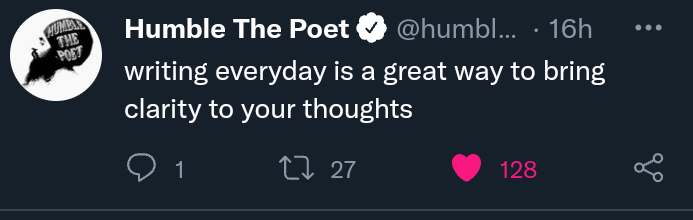
Writing is essentially about clearing up your head from the racing thoughts and placing them all down for better inspection and simply for the sake of having a clear mind to focus on other things.
When you’re in the habit of writing, you’re forcing yourself to put the effort to focus and be present – something which we all need in the present times.

Words As Therapy


Words As Therapy

• Writing, as a habit can be really theraputic. Dealing with a million emotions can be challenging, but when you externalise those feelings and emotions, your mental health improves and the overwhelming feelings stay at arms length.

• Expressive writing, or writing for expressing one’s own thoughts and feelings into words is one of the most common ways of self help and just calming oneself.

• When you write or journal about your own negative experiences, you allow your mind to sort out the thoughts and process them, which allows you to deal with situations and even come up with solutions to difficult situations.

• Gratitude journaling is a great tool to maintain a healthy mental space. Writing about things, people and experiences you’re grateful for can be a great reminder about all the good things in life and things that are worth going forward for.

• Letter writing is another, underrated habit of writing. Many times, things left unsaid can bother us. These things, to others and to ourselves can be written down in letters and be therapeutic and relaxing.

Words At Work


Writing can be useful,not just for personal life, even for your professional life.

• When you write down the many thoughts going on in your mind you leave space for more productive processing to happen in your head.

• Noting down important things happening in your day to day life, just as simple notes or to do notes can be a very easy way to categorise and organize work which helps you have a clear head, helping you be pay attention and be present at work.

• Aside from that, writing can be a great way to learn communication skills. Writing and publishing your own words to a certain number of people increases your self confidence which in turn, helps you build better work relationships.

• When you build a habit of writing, you automatically learn the art of expressing yourself clearly without using fancy words. When you have a clear language and mode of communication, you can express yourself without fancy big words.

• Good writing habits also reflects on clear, concise thinking, being a good writer you can have structured thoughts and a better outlook towards the work which automatically improves the quality of work.


But what if you actually want to start writing,but you can’t get past a certain point?

Here are some Tips To Deal With Writing Fears


Many times, it’s not the writing process,it’s the thinking process that doesn’t allow you to start. It’s important to know what to write before you actually step into it.

Read on a large span of topics. Read everything – things that interest you and those that don’t, eventually find a topic that you feel comfortable writing about.

Then, spend some time thinking about what to write on that specific topic. Working out, commuting to places, going to bed, use these times to think about ideas and find inspiration from things and people around you.

Once ideas start coming in your mind, write them down, each one. Don’t look for a specific ‘good’ or ‘bad’ idea, write everything down, you can sort through the ideas and edit them all later.

Once you’ve written something you’re proud of, read and re-read it, your mind will realise that it is actually a soothing experience and actually worth the effort, that way, you will be motivated to write more.


Something that a lot of writers are scared of is “the writer’s block”. It is basically when you don’t have the inspiration and/or motivation to write new and interesting pieces.

How To Deal With Writer’s Block?


• For many of the modern writers (including myself), procrastination is a major roadblock. So essentially, it is important to build the will to actually get up and get to writing.

• Another reason for experiencing writer’s block can be your environment. Suddenly changing your surrounding or being surrounded by the same things for long periods of time can impact your productivity as well.
Try making small changes to your workspace at regular intervals, also try to have fresh light coming in – a little light can go a long way!

• And finally, while writing, have no distractions around you. Close out all other programs or distractions and let your mind focus on the words and involve yourself in the process of creating beauty through words.

FACING OUR FEARS

With the new year many of us are making new year resolutions- eating healthy, working out, developing new hobbies, practicing self-love are some of the many that I’ve heard from people around me.
But here’s one that I’ve not heard from anyone that I think everyone should persue (or atleast try to) and that is – facing our fears and growing from them.

A question that came to my mind was,

Why face our fears?


Isn’t it much more easier to just let things be as they are?

Well, yes. It would be, but think about it, the last few years (2020 & 2021) have been pretty tough, how much worse can it get?
Might as well take the risks and see how it goes. Because life is all about taking risks and overcoming fear. If you don’t take that leap today, you’ll never know what you’re capable of.

If we embrace our fears and work on them, we can break the biggest ceiling – our own mind. Once we do that, everything will be limitless! When we work on the things that we fear, or even simply acknowledge it and put some thought into it – we take away its power to control us.

If you don’t work on that one thing that is constantly at the back of your head, that one thing that makes you stay up at night and worries you throughout the day, it will consume your mind entirely and will not let you reach the success that you’re aiming for.

We all need to face our fears and challenge ourselves to acknowledge these fears in order to rid our mind of the emotional baggage that these fears bring into our lives.

But let’s be honest , it’s all easier said than done.
So the biggest question,

How do we face said fears and grow?


1) The first thing to do is to realise that being afraid of things is common human nature. We’re all humans and we’re all afraid of something. It’s not about not being afraid, it’s about how you handle those fears and how you grow from them. Know that fear is mostly an uneasiness our mind feels over things that we don’t know about, or we’re unsure about.

2) The second – and maybe the most important thing, is to know what you’re afraid of and to what extent. It may sound strange but many people (including myself) aren’t exactly sure of what they’re afraid of.
Take some time off and sit down and think about the things that bother you/worry you.
When you know exactly what to work on you can actually focus in that direction instead of feeling stuck . When you know exactly what to work on things become more manageable and less scary.

3) Try to identify exactly what triggers fear and worry into your head. Sit down with yourself and just think about those things and the emotions they bring up inside you without actually feeling those emotions or letting those emotions control your mind.
It might seem difficult at first, but slowly ease yourself into the process, eventually, you’ll be able to process those thoughts and emotions without really feeling much of them.

4) Like I said before, fear is (to some extent) an uneasiness in our mind about things that we don’t know about, or things that are ‘the unknown’. So gather as much information as you can, the more you know about it, the less scary it will be, and you might even find it interesting!
Also, telling someone about your fears can be a great way to elevate some of the stress and can help you think more clearly. Writing those fears down can also be a great way to acknowledge them, it will help your mind to come up with solutions much more easily.

5) Use your imagination to think of the worst case scenario that could happen if you go forward with chasing these fears – and maybe even conquering them.
Then, make a plan of what you could do if such a thing was to happen.
Once you acknowledge the worst case scenario and find out ways to come out of it, it becomes way more easier to deal with them. It will help you take your mind off the problem and you can actually put in your energy to working towards the goal.


With all this said, you need to know a few more things before going into this journey.

When you start off, there will be times when you would feel overwhelmed, you might feel like you’re not getting anywhere and all of this is just a waste of time. At times like this, reflect back to what things were like before and how far you’ve come.

Know that all the hard work and unhappiness you’re feeling now is for something far more greater.
Whenever you’re feeling emotionally burnt out and frustrated, take a break, listen to soothing music and process what’s happening around you, only then will you be able to move forward.

At the end, always remember that there is no greater feeling than overcoming fears and barriers, the feeling of coming out of it as a better person on the other side is simply irreplaceable.

TOP TIPS TO BE A GREAT LEADER

Being a leader is something which many people can do, but being a great leader, one who can lead the team to success while training all the members to become future great leaders is not a skill that everyone has.

According to some theories, great leaders are ‘born and not made’, i.e. certain people inherit certain qualities that make them great leaders, so, the people who are not born with these traits cannot be great leaders.
On the other hand, some theories suggest the opposite, that great leaders are ‘made not born’. That people learn to be great leaders and the traits required to be great leaders cannot be inherited, it is something people learn through experiences of life and observing other people.

I think a great leader is one who is the perfect balance of both theories.
To be a great leader, it is necessary to have a natural leadership instinct along with the traits that one can achieve only by experiences and learning from those experiences as well as other people, preferably other ‘great leaders’.

“A leader is he/she that creates more leaders.”

Ranveer Allahbadia


Here are some of the most important qualities a great leader should have (based on some of the amazing leaders I’ve seen and have been heavily inspired by)

Passion


A great leader is one who is passionate about the project/work, someone who’s energy can really inspire and pump up the passion in the other teammates. A leader should be driven by the passion and make it their purpose as well as have people with the similar passion in their team.

When leaders have set goals and are able to communicate it to the rest of the team effectively, they can bring the entire team together to reach the goal while growing as a team as well.

Empathy


A leader that has empathy towards their teammates is one who can understand the teammates to a deeper level and can connect with them emotionally.
Teammates also feel better working with a leader who understands and bonds with them.

Empathy also allows to get rid of any workplace tension and get straight to the root cause of the problem.

Confidence


A great leader is one who is secure with themselves and are self confident. You will rarely see them in self doubt.
Teammates can rely more on confident leaders who are trustworthy and also grow their self confidence.

However, keep in mind that confidence and arrogance are completely different things. A leader who is confident can help you build your self confidence, on the other hand, an arrogant leader will only focus on their own growth and doesn’t take the growth of their teammates seriously.

Conversationalist


A great team leader is also a great speaker, one who can use their words to inspire and push their team towards success/the end goal. Great leaders are clear with the message they convey to the team and in times of trouble they are able to solve the problems with their words.

Leaders are comfortable addressing big groups as well as having one on one conversations with their teammates.
Along with being great speakers, leaders are also great listners, which leads to amazing, innovative, insightful conversations.

Open minded


People that can easily adapt to situations and have an optimistic, open minded attitude towards even the most difficult situations excel as leaders. They also inspire those around them to adapt to changes surrounding them, the good and the bad.

Great leaders understand that people are the biggest assests and welcome all criticism and feedback from others as well as teammates and appreciate exchanging ideas and opinions with their teammates.

Motivational


Great leaders are the perfect role models for members of the team, in addition to that, they are great source of motivation for the team members, especially during difficult times – professionally and/or personally.
They know the important role of motivated team members in the growth of the entire team.

Great leaders can motivate and inspire their team members only if they are confident and optimistic and at the same time have a realistic look towards life. A motivational leader has a very big hand in the growth of each individual of the team.

“The best leaders know their teammates inside out, and know how to get the BEST out of each individual, individually!”

Ranveer Allahbadia

Selflessness


A great leader is the leader who gets happiness from seeing others being rewarded for their hardwork. Their leadership is not based on titles or position or power, their influence on people is not because of their money or power or connections.
They define their success on the basis of the positive influence they have on people and the impact their actions have on other people. They constantly show up in times of need and are reliable to the team, they always put their team first and take actions that help each member of the team grow.

A great leader brings out the true potential in others and helps them become great leaders of the future. They are not just concerned with getting the team to success as a whole, but also invest themselves in helping each member of the group reach their true potential.

Determination


Great leaders are always determined to accomplish what they set out to do. They don’t give up when things get tough. They see difficulties/problems as a challenge and see it as an opportunity to grow.

Such people are not afraid to think outside the box or take decisions/steps that are ‘uncomfortable’ or ‘difficult’, they constantly try to step out of their comfort zone and persuade their team to do the same.
“It is better to lead from behind and to put others in front, especially when you celebrate victory when nice things occur. You take the front line when there is danger. Then people will appreciate your leadership.” —Nelson Mandela

“It is better to lead from behind and to put others in front, especially when you celebrate victory when nice things occur. You take the front line when there is danger. Then people will appreciate your leadership.”

Nelson Mandela

THE IDEA OF PERFECTION

What, according to you, is perfect?
Is it that character you saw in a movie or that lead in your favourite book? Is it that one person in your class/at work whom everyone looks up to.

The idea of perfection varies from person to person and time to time. It’s a lot like coffee.


Different people have different preferences when it comes to coffee and some don’t like coffee, it just goes with what you’re in the mood for.
Perfection is just like that, everyone’s idea of ‘perfect’ is different, and it changes from place to place and time to time.


When you’re in school it might be that person who has the most friends and hangs out with the popular crowd, when you grow older it might become the people that have a well paying job and are respected in the community.


The thing to note is that ‘perfect’ is not the same for everyone, all of us feel that perfect is different, better and something unlike us.
Everyone has, atleast once in their life, compared themselves to their idea of ‘perfect’.


But the question that arises is, “Why are some things considered to be perfect, while others are not?”

The idea of perfection is very different for different people but the reality of the situation is – nothing and no one is perfect!


We all have this idea of perfect in our head that we have put up on a pedestal and look up to and aspire to be and many times force ourselves to be.
We do the most absurd things to fit the idea of ‘perfect’. We put ourselves on diets and trainings and all sorts of things that we might not even want to do but we do it, just to fit this idea of perfect, which we’ve made up in our head!


Hear me out, there is nothing wrong with following a healthy lifestyle and doing things that keep you healthy and fit, but putting yourself through things that you don’t even want to do or are unhealthy for you, just to fit this image of ‘perfect body’ is wrong.
The same way, there’s nothing wrong with having a good job that pays well and gives you a high position in society, but doing that while pushing away your passion and happiness, just to match your parents idea of ‘the perfect child’ or society’s idea of ‘the perfect match’ is wrong.

There are so many other instances when we push away our own happiness and peace of mind just to fit the idea of perfect, something that will never be able to bring us true happiness.


Have you ever admired someone? Thought them to be the living version of perfect? Idolised them to such a level that you dreamt and aspired to be them?
Well, I have, and I had to learn it the hard way thay nothing and no one is perfect. Everyone has their good and bad side, everyone has their own shortcomings and everyone has days that are good and that are bad.
Putting someone on that pedestal and expecting them to fit your idea of perfect is not right. Accepting someone for who they are, good and bad, is the way to show true admiration and letting someone know that you actually care about them.


There’s nothing wrong with helping someone become better and improve but it’s always important to know our limits and not push ourselves and at the same time remind others to be careful and not push themselves too hard.


I don’t know about you, but I grew up watching people that had the perfect hair, the perfect body, the perfect laugh, everything that fit society’s idea of ‘perfect’ and that shaped my idea of perfect, which made me push myself in that direction, in a direction that seemed so wonderful, but was so dark and did not give me any happiness.

In the end, I don’t fit the idea of perfect! I don’t have the perfect smile, the perfect grades or the perfect behaviour. I’m not that and the first time I accepted that, it scared me, I was not what everyone wanted me to be and I might never become that, but now I’ve learnt to accept myself as that, as that imperfect, silly little girl, that might never make anyone proud, but atleast I’m happy.

I’m happy and I’m comfortable in my own skin… actually that’s not true, I’m not completely comfortable, I have days when I’m so bold and comfortable and feel so grand , and then I have days when I’m insecure, self conscious and scared and that is completely okay!
It’s a long hard journey and I’m going to make it, one day at a time. Baby steps.


And I want to encourage everyone reading this, take a moment and analyse yourself, what about you do you think is imperfect or doesn’t fit your version of ‘perfect’? What do you think is perfect? More importantly, why do you think it’s perfect? Why not put yourself into the idea of imperfect and love that?
There is so much beauty in imperfections – in all our imperfections, it’s high time that we stop praising the idea of perfect and learn to love ourselves a little more each day and grow each day.


Let’s learn to surround ourselves with people and things that help us develop self love, that help us love us for who we are and help us become better and happier.

There could be a hundred things that could make us upset, make us feel bad, about ourselves and the world around us, so it’s important to find love in ourselves, only then can we find love for the world outside.
And one of the best ways to love ourselves is to rid ourselves from the idea of perfect, to fall in love with our own imperfections.


It’s great if you can make yourself a better version of you and it’s great to try to be a better version of yourself every day, but it’s important to love yourself, regardless of who you could be, it’s about loving yourself as who you are, because there is so much to love about yourself…

To love yourself is the path to loving the world & to love the world is to spread love, peace and happiness

STOP SINGLE USE PLASTIC – REDUCE, REUSE & RECYCLE

If you are unfamiliar with the term single use plastic, it simply means plastic that is designed and manufactured simply to be used one time.

We are all well aware of the ill effects of using plastic. Yet every day we see millions of plastic bags,cups, toys being thrown around carelessly.

It is time that we stop the misuse of plastic and actually take strong steps against it.
And to do this, you don’t need to make big sacrifices and changes to your life, every small change in your lifestyle can bring a change to the world and reduce your carbon footprint. Here’s how you can do it.

We’ve all heard about the 3 R’s. Very commonly known as Reduce, Reuse, Recycle. In the most simple terms it means – refuse the items that you don’t need, reuse the items more than once and properly dispose the items that are no longer useful to you. At the end, it helps to cut down the amount of waste that we throw away.

“Outright bans on plastic bags may not be the best solution, but education and incentives to get people to stop using them are necessary.”

David Suzuki

REDUCE

The logic behind it is quite simple, if there is less waste, then there is less to recycle or reuse.

Before purchasing a product ask yourself – “Is there something else that I can use for this purpose?” , “Is this product necessary to do this task?” and “Is the item something that I want or something that I need?”
Asking these questions to yourself will help re-analyze the purchases that you make.

Also, purchasing multi tasking products can be a great investment – to your financial situation and to the nature.

REUSE

To reuse something simply means to repurpose things.
It saves them from landfills and dosent require extra expenditure of natural resources to recycle them and remake things out of them.

In today’s day and age, repurposing things has a new name – DIY or Do It Yourself. These are fun, interesting projects that you can do. It’s a great way to reduce wastage of things and also boosts your creativity.

RECYCLE

Recycling means to transform something back to a raw material and then making new things out of them.

It is a great way of properly disposing waste but it requires a lot of energy and time. Also, many recycling techniques are harmful for the environment.

So before you buy anything make sure that it is made out of non toxic materials, that way it can be easier to recycle.

Also, while disposing waste carefully separate the products that can and cannot be recycled.

Now that we know the 3 R’s
Let’s learn some of thier benefits.

As mentioned earlier, it reduces the amount of waste thrown into the environment thereby reducing the chances of polluting the environment.

Reducing and reusing our waste automatically reduces the level of greenhouse gas emissions.

Apart from that the 3R’s save land and money that communities and governments have to use to dispose wastes in landfills.

In addition to all of this, they also help to lessen the use of newer resources and energy, thus, making better use of resources.

With all this information in your hands, think about the change that you can make, with just one simple change in your everyday life.

POWER OF TOGETHERNESS AND HUMANITY

Preface
This was written in the midst of COVID-19 pandemic and a few days ago I came across this and decided to change it up a little based on the current situation going around.

During the time of this pandemic, all our lives have changed drastically.
We witnessed people being really sick, some coming through stronger and healthier and some who no longer hold our hands.
We saw the arrival of zoom meetings, Google meet and other ways of working, studying and connecting with people.

Alone we can do so little, together we can do so much.

Helen Keller

Since then we’ve all gotten used to this new way of life, in some ways, it has become the new ‘normal’.

Throughout this whole experience, right from the discovery of this virus, to seeing it rapidly spread globally, to then getting the vaccine (speaking of which, if you haven’t, get the vaccine!!!) and now to this point where things are getting more or less back to normal, we’ve consistently seen the power of togetherness and humanity.

We saw people coming together (while staying apart), keeping their masks on, staying home and most importantly, constantly supporting and cheering on the people working hard for us.

We’ve seen humanity evolve into this version of us that we haven’t seen in a long time.
We have seen kindness and compassion and love in each other’s hearts, and we saw some of them showing it through their actions.

I remember December 2019, sitting at home and thinking, “Gosh! 2019 was horrible. But 2020 is going to be my year!” (As most of us thought). But then 2020 came in with a bang, just not the kind we expected.

When the thought of staying at home with my family finally settled in, I was horrified, could you imagine, being home, stuck with them 24/7. Gosh!

But we all got used to that after a point and things started getting into a routine. We all learnt to deal with the people around us and the differences we have with them. We learnt to forgive our past and started looking for a brighter future (which most of us are still doing!)

Most of us have reached out to the people that we haven’t spoken to in a long while. That friend that turned their back on us in middle school, that aunt who was really mean to us and even little Billy from kindergarten (hi Billy!) and if you haven’t, then you should! Let go of the bad memories from the past and embrace this time.

I think that is what humanity and togetherness is about, it’s about letting go of the harsh past and working for a beautiful and better future, for ourselves and for others.

You must not lose faith in humanity. Humanity is an ocean, if a few drops of the ocean are dirty, the ocean does not become dirty.

Mahatma Gandhi

I won’t deny the fact that there are some people who tend to go in the direction opposite to humanity and cause trouble for others (hi Karen!) but at the same time, there are people that move and guide people to the direction of greatness.

This is another great trait of humanity and togetherness. Together we’re able to push past the point of negativity and let positivity take the spotlight.
We’re able to create and spread a sense of togetherness by spreading kindness and love to everyone around us.

We’ve seen time and time again, the power of togetherness and the message we’re able to spread together. Right from the #MeToo to the #BlackLivesMatter and then #AllLivesMatter and countless others that have taken the spotlight.

We constantly see people supporting each other and spreading the message of togetherness and love.

I won’t disregard all the bad things that have happened in the past, but through kindness, love and compassion, we’ve been able to get through those bad times and we’ve come back stronger and better than ever.

To anyone out there who is going through tough times, I want to let you know, things will become better.
Nothing bad lasts forever, just as nothing good lasts forever, which means we need to learn from these times and accept the change.

I want you to share the thoughts you have during these hard times and even in the good times. Share them with a friend, a family member, a loved one, a colleague or even me! (You can comment them below if you like, or you can mail me at talkwithanuwp@gmail.com I would love to hear from you!)

At the end, I want everyone reading this to know, we’re all going through the highs and lows of life, but we can come out of it wiser, stronger and better, using the power of togetherness and humanity.