Writing as Work and Hobby

Daily writing prompt
What do you enjoy most about writing?

How did I get into writing? I’m sure that every great (and even the not so great writer) started as a complete bookworm. As did I. The first ever novel that I read was The Famous Five by Enid Blyton, of course before that I had been held captive by countless other comic books and children’s magazines. But I distinctly remember the exact day that I finished reading The Five go to Finniston Farm, I put down the book and opened up my little diary and attempted to write a story just like the one I had read. Two chapters later the diary lay in the corner and the papers were shredded to bits. I hit writers block a little too early. I cant remember the exact day I actually started writing, but I have some pretty old memories of coming up with stories of talking dogs and girls with long brown hair connecting with their roots and finding out they had superpowers!

According to my mom I used to make up all these stories even before that, when I was just a baby I used to make all kinds of stories and characters to keep myself entertained (and also anybody else who wanted to listen).

Following that came the tween phase where I attempted my hand at journaling and making diary entries (completely inspired by Anne Frank) , but since consistency wasn’t my strongest traits, they all ended up in the trash eventually. It was also during this period of my life that I discovered the word of E-books and that just led me into a whole new world.

I will admit, I found a little too much comfort in the world of fiction, and yes, it was a pretty huge distraction from my studies and my parents were not as happy as I was. Despite the fact, I went through book after book, finding new genres every week and falling in love with the styles of so many authors.

My early teens were pretty much filled with Blake Pierce and W L Knightly (still would binge read all their books). Following that came the second attempt at writing a novel. And as much as I cringe thinking of that “horror” novel, to that version of me it was a masterpiece.

That began my pursuit of creating the best works that I could. I spent as much time as I could (keep in mind that in a brown household studies take first priority) devoted to thinking and re-thinking plots and characters visualizing different narratives, subconsciously dealing with some of my own personal life problems through these characters lives.

And that phase of my life led me to start this blog and post some of my own works (PS – I also have a second blog where I post my own short stories and novels) .

After a pretty long run of consistency and regular uploads I hit dead end. I had nothing good to put out into the creative spaces of the internet and even the smallest of works ended up in a pile of trash under my desk until I gave up all hope. I’m not proud of admitting this but I almost gave up all hopes of ever becoming anything more than a regular teenager with a couple blogs on the vast internet. Obviously a part of me hated that but it was just so easy, I had school and college and a whole bunch of extracurriculars that required my attention more than some stupid hobby.

A part of me hated to believe that the one thing I enjoyed so much was just going to be left in the past. But what was I to do? Writing was too difficult, much less writing everyday and as a profession, it just wasn’t for me. I wanted myself to believe that not every hobby is meant to turn into a money making machine. And for a while I believed that, I let go of the idea that I would ever become a writer and just tried to move on with my life.

Every once in a while I did try to come up with something even moderately close to amazing, but the lack of consistency translated into the algorithm not really pushing any of my works, and that translated into me being more and more disheartened and push aside the pen.

But the past few months have been a time of new growth and new experiences for me. I recently moved to a new state and officially decided to drop a year before college. Now, although these are not too major changes for my life (I’ve spent my whole life travelling around), I realized with all these new changes in life there is one more thing that I need to change- my mindset. I’ve spent the last few weeks thinking and re-thinking my life and career, and my choices right now.

I realised that I’m very young, (no seriously, I’m just 18) I’m still living with my parents and I’m not even in college. I have practically my whole life infront of me and its way too early to make a solid decision like pursuing writing as a complete career, let alone making this blog into a full time thing.

While there is nothing wrong with choosing a career and working towards it from an early stage, it is also wrong to lead every young adult into believing that they need to have their whole life figured out and be set into it from the time they turn into an adult.

I let myself believe that my worth was set on how well I could work rather than the worth of my work. I’ve been trying to grow and in that process also realise that growth takes a lot of time and trial and error. There is nothing wrong with me trying to take my time and give myself room to learn and breath and take everything in, and most of all enjoy the process. I forgot that writing started out as a hobby, something that I was supposed to enjoy, that brought me peace, instead it had turned into another task throughout the day that I had started to despise and roll my eyes at.

But that changes now. I’m reaching a new phase of my life, where I learn and grow as a person, and that will reflect in what I write, it might not be consistent and it might not please the algorithm gods, but that is what true growth is. Its not to appease the masses, but to please oneself. And that begins now.

Love, Anu.

Things I learnt from Highschool

Hey! Before I start this blog I think its important for me to introduce myself. My name is Anu, I’m 18 and just recently graduated from high school. And here are some of the lessons I learnt.

Now, I will be very honest here, and I think a lot of my fellow people will relate to me when I say this – high school is way too hyped. It is definitely not like those movies you see on the weekends in middle school and start fantasizing about. Its not all that glamour and glory and is mostly just like all your previous years of schooling except you probably have more work load (and if you’re like me then you probably don’t care about it)

Having said that, I don’t mean to bash those last few years of “fun” and “carefree” times. Despite all the trauma that high school gave me (that’s a topic for another time) I’m still grateful for some of the lessons that I learnt.

Not education based lessons though, cause all that I learnt in high school was trash. That’s right, I’m not actually going to dissect a flower or use integration in real life. I’m going to be very honest when I say this – I didn’t actually pay too much attention to my lessons, obviously I passed with half decent grades, but I don’t find my life much different from when I was the “top of the class” student. But I’ve digressed here.

The matter of fact is – no matter how unbearable highschool was, it taught me a lot of things I will actually cherish my entire life.

The first and I think most important that I’ve learnt is how to build networks and connect with people. I, like many people, did not have too many friends – only a handful of people that I could call friends, but, I did however, make acquaintances and also learnt the art of building a network and being able to form instant connections with people which, safe to say, has helped the professional side of my life.

My parents had always pushed me to take part in almost every co-curricular activity, that definitely helped me learn a handful of talents and also hone some skills but more importantly, I never had the fear of trying new things or being in uncomfortable situations and stepping out of my comfort zone. Also helps that I experienced stage fright and performance anxiety at a very early age and have gotten very accustomed to that nerve recking feeling.

Also, can we be honest here, the best part about high school had to be the rigidity and stability it gave to our day to day lives. I can truthfully say that I have not had a fixed schedule or work plan since I’ve graduated and that has really messed up my time management.

Speaking of which, I think the pressure of finishing a test/exam in a really short period of time actually made me better at getting things done in record time and also helped me actually think with a clear head even under massive pressure. (God bless exam season)

And lastly, I think the main thing that I have to give credit to high school (and my procrastination) for is this blog. Whenever I got a task/assignment from school that I felt was a “waste of my life” (which was almost all of them), I would procrastinate and instead write, some of which I then posted here (and some on my other site too) and now you’re reading them. So I guess I owe thanks to high school (and to you too…you’re awesome <3)

Having said all of this, I know that it is an absolute privilege to even go to school and receive education and I am really grateful for that. I also encourage everyone to stay in school – it will be worth it in the end. Also, never stop learning, it is one of the most beautiful experiences of life.

One Love

Will AI really take over?

Daily writing prompt
What are you curious about?

Being an author who is dependent on many algorithms to push my work everyday and with AI becoming a major part of today’s time, I wonder if AI will actually take over some of these creative spaces? It’s clear that at the end of the day technological tools like these are making life easier for people and are here to stay. So I ask the question – would people still be interested in reading stories or creatives written by actual people, or will our curiosity of the Artificial intelligence world take over us and the only thing people would want to consume would be AI made?

A Place Like No Other

When you’re a regular student, living life just one day at a time, you don’t really understand what it means when people older than you tell you things like “Good friendships are really important”.
My young heart didn’t understand what these little people meant to me until that day – my last day at school. 3rd May 2019, the day that changed my life in ways I never thought of before.

The best part? It never hit me that it was my last day until the very last moment.
We spent the whole day not realising it would be the last time we would be together. And then the last bell of the day rang and we all walked down the stairs as always, teasing and pushing one another, not once thinking that it would be the last time we would share those laughs and jokes.


I walked those last few steps with my best friend, deep in discussion, not realising his eyes were glued to those steps, refusing to look at me, holding back tears. I stood in the middle of the ground, chit chatting with my friends, just like always, or so I thought. That was until one of my friends finally lost it and broke down. Followed by my bestest friend – no – my sister, clinging to me and crying her heart out.
I looked around and saw all my closest friends – all of them, but not the way I remembered them. Not one teasing remark or witty comeback, no goofy faces or ugly laughs. They all stood around me, tears flowing down their cheeks, red eyes and somber expressions.

When I finally managed to calm them down and send them off to their buses and walked towards my own bus – I saw my other group of best friends, my brothers, my partners in crime, standing by the school canteen, trying desperately to conceal the tears they were crying (but obviously not doing a good job at hiding it).
I looked at them all , saw their tears, their heartbroken looks, their heavy voices and pained expressions as we said bye with our cool handshakes one last time. I saw all of it, but felt nothing. Not a single tear fell from my eyes, I was numb.

But it all came rushing at me.

A few days later as I sat at the airport with my family, waiting for the boarding announcements – it hit me. It hit me and I cried, and hyperventilated. Tears streaming down my face, each memory – big and small hitting me like a brick.

All the times I walked down those steps, all the times I stood there at that ground talking and playing with my friends, all the times I bullied my brothers and bestfriends for treats from the school canteen always promising to pay back but never actually paying them back, all the times we fought in those classrooms and all the furniture we broke and pretended that it was never us and acting innocent infront of teachers, all the water wars that got out of hand, all the concerts we had in those classrooms – singing lyrics we didn’t even understand at the top of our lungs in our worst voices. It hit me that I would never have any of that,ever.

It hit me that I was saying goodbye to some of the most important people of my life. People that taught me the importance of surrounding myself with good people and good energy. People that taught me to laugh and live, to fall and get up, to cry and then laught it off. People that held my hand in happy times and hugged me tight during my first encounter with tough times. People who saw me grow up, and people that I grew up with. People that shaped me into the person I am today, people that are the root of all the good I’ve done and all that I will do. People that put their foot down on all my foolishness and forgave me time and time again, teaching me some of the most beautiful and important lessons of my life. People that stood by me then and still stand by me, present forever in my heart. These little people, unaware of life,just like little me, yet so wise. People that I would live and die for.

It hit me that that was my very last moment in a very special place – a place that I called my home. A place where I had people that loved me and I loved more than myself. A place where I lived some of the best years of my life. A place where I grew up from a wild, curious young girl to a much clear headed, wiser young adult. A place that shaped me in ways I didn’t realise until now. A place like no other.

To all my friends, I love you all and you will forever be the most special people in my life. Until we meet again,
Love, Anu.

On The Metaverse (Part 1)

With the world going crazy on all things tech and future I think it’s only fair that we take a peek at the biggest topic in tech and future right now – the Metaverse!

Now, if you’re just as clueless as I was, you might be wondering..

What is the Metaverse?

The metaverse, in the most simplest terms is a virtual universe where there are no limits. Metaverse will be a 4-D version of the present internet. It can be thought of as being inside the internet and visualising and experiencing everything the world wide web. It can be thought of as a network of worlds with different things to offer.
Virtual reality allows the Metaverse to be whatever we want it to be, with the only limits being our imagination.

The metaverse will be so much more than video games – digital identifications, remote work, buying and selling property – whatever you can imagine, the metaverse will have it.
It is going to be the next milestone of the internet, being a converging point of the physical, augmented and virtual reality in one shared space, online.

But,

How did Metaverse come around?

The idea of a technological world where anything can be possible was first introduced in the 1992 science fiction novel , “Snow Crash” by Neil Stephenson which described a virtual reality and the term ‘metaverse’ was first coined.

The 2011 book, “Ready Player One” further promoted the idea of a virtual world where you can be anyone, do anything and go anywhere irrespective of who you are in the real world.
The movie based on the book starring Tye Sheridan and Olivia Cooke in the lead roles popularized the concept of virtual reality and introduced it as the ‘OASIS’, and gave every young mind watching it a sneak peek into what the metaverse could be like in the future.

“People come to the OASIS for all the things they can do, but they stay for all the things they can be.”

Wade Watts, Ready Player One

Once the idea of a virtual reality and a world where anything can be possible was popularized by the media, a question that was asked a lot was

How can we experience the metaverse?

Virtual reality will have (and even has) gadgets lined up for the best experience of the metaverse, where the creators will provide the most optimum experience of the virtual world.

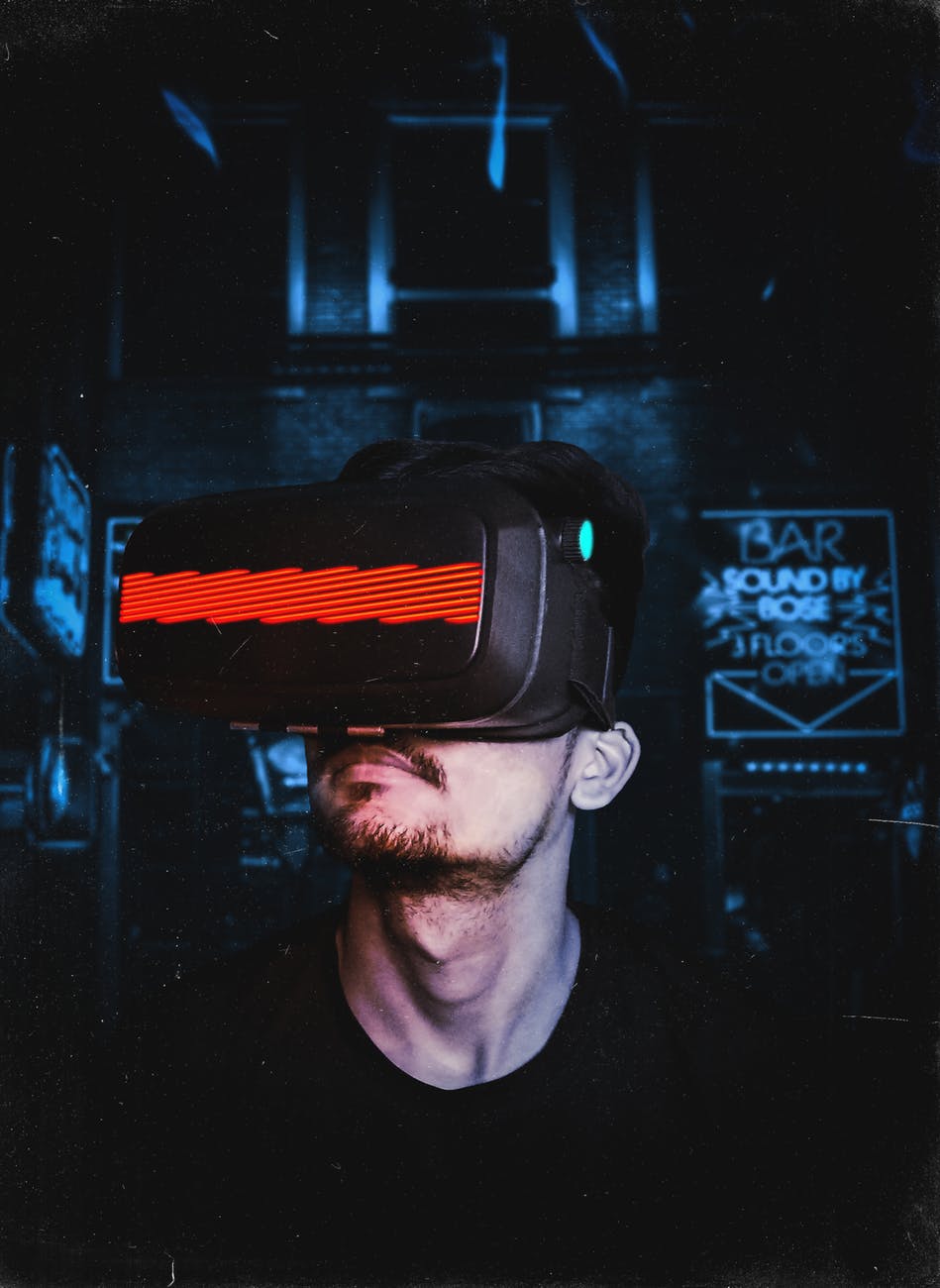
Today, head mounted display and hand controllers which influence sight, hearing and a limited amount of touch are a basic to VR.
From books and movies an idea which sits into our mind is that bodysuits and omnidirectional treadmills will become a VR necessity in the future allowing the body to move about in a virtual space just like one does in the real world.

Advanced forms of VR will most probably make use of neurohaptics and neurotech, which uses signals from the brain to replicate a virtual environment and perform certain actions without any user interface.

But simply experiencing the metaverse without actually knowing it’s importance is a waste.

Why the metaverse matters

The metaverse carries the potential to be one of the biggest and impactful technological development of the future. This virtual reality will allow infinite simulations to create anything we want, be anyone, do anything – whatever the mind desires, it can create.

It doesn’t matter what you want, you can do it in this virtual space – from buying virtual and real world objects (not to mention buying real world objects in the virtual world) to learning any skill you want, doing real world jobs in your virtual world desk/office and earning metaverse cryptocurrency and even using it in the real world – anything is possible!

Not only is the metaverse going to be a huge life changer for individuals, businesses and industries will also have mega changes thanks to the metaverse.

Companies will be creating products and services based on the consumers in the metaverse and will have entire teams and divisions just for buying/selling and building products in the virtual reality or for the real world to aid the virtual reality.

Students of the future will have virtual reality schools and universities and even jobs all dedicated to the metaverse. Kids as young as 14-15 years of age will be building the world and creating new and better faces of the virtual reality.

Some specialists even go so far as saying that the metaverse might be more transformative to the industries than the internet and could be the biggest market opportunity of the next few decades.

The metaverse is also very likely to have a big impact on the economy and even the governments of countries across the globe.

According to some sources, the metaverse could most probably add close to $3 trillion to the global GDP (with consistent evolution) within a decade.

Virtual reality will also completely change the politics game. As it can be already seen with politicians all around the world promoting their campaigns and reaching out to their people through social networking and some even highlighting important issues and making positive change through it.
With the metaverse, this could go one step further. From buying digital merch to show support to candidates to virtual embassies and even virtual ministries, the metaverse is sure to bring change and keep many people on their toes when it comes to being efficient and flawless.

However, not everything is a bed of roses and the metaverse will also have some flawes and mistakes.

Is the metaverse really all that good?

No. We really can’t expect the metaverse to be a flawless piece of human innovation which will immediately lead us to a perfect world with greatness and happiness.

As it has been made clear with all other forms of technology, everything has potential to be good and bad.
The sci-fi depiction in Ready Player One does point out that as the virtual world keeps getting bigger and better, the real world also crumbles in some ways.

The rise of metaverse and virtual reality brings out some concerns which do need to be discussed and thought of, the biggest question being – will we lose touch with reality?
As it is very obvious with smartphones – a major part of the population being addicted to screens and losing touch with their friends and family, the idea of having a perfect virtual world at everyone’s fingertips definitely raises some concerns when it comes to managing real world relationships and building healthy lives for the consumers.

The second most asked question, also one to be very concerning is – who will ‘own’ the metaverse and how does that change the lives of the people – in the real world and the virtual world? Let’s accept it, the fight for power is something that has been with us since the beginning of time and the metaverse will not be any different.
So how will we know who actually controls the metaverse? Who will be the law makers and protectors? How will our real world identities change with the virtual world? All questions that require answers.

Having read all these sides of the metaverse, what are your thoughts on it? Are you excited? Or are you unsure of it? Lets us know!

On Creativity

A ‘creative head‘ is how I’ve described myself to people for many years, since I’ve always thought of myself as someone who has a creative vision and can find odd ways of turning one thing into another and seeing things in ways which others don’t always notice or even care to look at.
But recently I’ve gotten more into asking questions about it – what does creativity mean and does it mean differently to different people? What is ‘creative vision’? And what is creativity even about?

I’ve gotten a lot into thinking about creativity and that’s what I want to talk about – let’s talk about creativity.

What does it mean to be creative?

To be creative, in the most simplest sense, means to use one’s imagination to create something. When we speak of ‘creating something’ it is often thought as creating something new and original, something that has never been made, something truly mind boggling and innovative. While all this might be true in some instances, it is not true for all creatives out there. Most creative ideas are about making new connections between old ideas in order to creating something different.

Creativity is about using old methods in newer ways to find solutions for problems or making things using new connections between old ideas.

With the ever consistent change in reality, new and improvised creative ideas are more and more welcome and we tend to see a lot of these in mainstream media too. All those ‘gadgets’ and ‘hacks’ we see around us that are bound to make life easier are all a result of somebody’s creative thoughts.
While some of these hacks and gadgets seem silly and a waste of time to most (*ahem* 5 minute crafts *ahem*), some of these do actually work – and when you do find any such hack that might actually change your life, you can thank someone’s creativity for that.

And if you’re wondering the same thing as I am..

What do I need to be creative?

It is often said that creative people are born as such and that it us something inherited. While it may hold true , there is a certain level of creativity that everyone is born with, it just needs the right push to come out fierce and strong. For each individual to show off their creative side all they need is the right guidance and the proper environment to raise that creativity to reach their true creative potential.

Know that almost everybody’s hidden creative side can be pulled out to shine in it’s own unique ways and that creativity is different for all – it comes in all different ways, shapes, sizes, qualities and quantities.

Scientifically speaking, there are a few cognitive skills that you’ll need to develop in order to have the most efficient creative thinking.

  • The ability to generate new ideas – be it original or from combining old ideas to create something better.
  • The ability to retain things in memory and easily go back to things in memory. To reach back to stored or old information – at the right place and time.
  • The ability to interpret ideas from one’s own experiences and associations by being attentive and present in each moment.
  • The ability to easily snap out of generic routines and accepting sudden change.

Now, after reading that, if you think that you have what it takes to be creative, then you might ask yourself…

Why do I need to be creative/what does creativity bring to my life?

In the most simplest way – creativity brings 2 main benefits to our lives

  • with the everyday stresses and troubles of life creativity is like a gateway to mini paradise. A place where you can be away from your problems and create things that make you happy. It allows one to step away from existing train of thought, do something different and come back to the problem with a clear head.
  • creativity allows one to look within themselves – it provides a window to peek within ourselves and find out exactly what we want and don’t want in life. It’s the best way to learn ourselves and develop a better relationship with ourselves.

Now, have I sold you on being creative? I hope I have! And if so, then allow me to introduce you to some tips on

How to be Creative

1) stop judging your own creative ideas. Give yourself the permission to do what you love and laugh off the mistakes you make along the way.

2) instead of simply brainstorming, thinking and planning your creative visions, actually make something! Put the fear of uncertainty behind you and get to work – create!

3) give yourself enough time to create something, but stick to a schedule. Letting yourself too much time for something will only lead to procrastination and delay.

4) churn out as many ideas as you can. It doesn’t matter if they’re good or bad – think of new things and don’t hesitate to put it out. Remember, the best ideas often hide between the most mediocre ones.

5) put your ideas out infront of people. It may feel daunting and scary to take that stand but showing your work infront of people holds you accountable for it and helps gain new perspective.

Besides this, there are some more things you should know as a creative.

Inspiration – You won’t always get hit by a lightning bolt and get the Eureka moment that will lead to crazy breakthroughs. Sometimes inspiration won’t hit you in the most magnificent ways, instead, it can be something as small as a ladybug on a blade of grass. You need to be able to have a broad mindset and see things differently.

Getting in flow – Creativity is not something you can randomly pick up whenever you want and drop whenever you feel like. To excel at creativity and reaching to your level best, you need to be consistent. Creativity is about constantly coming up with new ideas, improvising and re- building things. To reach a “flow” state in creativity you will have to be consistent.

Solo or team – Creativity requires the best minds and the best of minds. While being a creative does mean that collaborating with the best minds around you is essential, allowing the best of your own mind to come forward is also of equal importance. Bringing out the best in you will require solitude and being alone with your own thoughts and ideas. Remember, the best creative minds tend to be introverts and spend their time with themselves while also valuing the response and ideas from the people around them.

“Creativity involves breaking out of expected patterns in order to look at things in a different way.”

~ Edward de Bono

About Learning

As I enter my last year of highschool, the idea of “learning” holds a very important part in my life. This year is going to decide the rest of my life (according to peers and seniors) and so the idea of learning or being good at something by learning it had become more or less the focal point of my life now.
So I decided to read up a little of this subject, something which we’ve all done and we all continue doing, in different ways.

So here’s what I found from learning about learning –

Learning new things has become a skill everyone has to develop in order to thrive in the mordern world where change is an everyday occurance. In order to handle this everyday change, we need to be able to learn and unlearn just as rapidly.
With the mordern world, if you want to reach any level of success, you have to aim for being the best (it’s hard to accept it, but being average just won’t work anymore).

Every field out there is constantly changing, everything is becoming bigger and better and to keep up with the changes we have to be able to develop ourselves in such a way that we thrive, and that can only be by having the habit of learning (all the time!)

When we think of learning schools and colleges is mostly the first thing that comes to mind. For the average person going back to school/college or being in institutions isn’t always an option, that’s when ultralearning comes in.

What is ultralearning?

( Source – Ultralearning by Scott H Young )

According to the book by Scott H Young, “Ultralearning is a strategy for aggressive, self-directed learning.” Simply speaking, it is a way of dealing with the ever changing world by taking the power of effective learning into your own hands.

It’s about taking decisions concerning the idea of learning, more so, the ‘what’, ‘why’ and ‘how’ of learning. Ultralearning tends to have unusual steps/methods for the most effective learning, and these “ultralearners” are those who make/search for some of these bizarre steps for maximum learning efficiency.

Ultralearning aims to highlight some of these core points

  • Start by learning the ‘how’ of learning. To put it simply, understand how you want to learn the new skill.
  • Practice makes perfect, so try to implement what you’re learning in everyday life.
  • Your comfort zone is your biggest enemy. Step out of it when it comes to learning new things.
  • Feedback from outside can be your biggest help. Learn to take criticism and suggestions.
  • Dissolve difficult and complex tasks into smaller simpler tasks.
  • Constantly testing your knowledge helps in making an assessment of your own skills and changes you need to make.
  • Explore different concepts and ideas to widen your horizon.
  • Focus is an essential part of learning. So cut off distractions.

Speaking of distractions, which are the most common when it comes to learning?

Your Work

Some of the work that we wish to pursue can be a little too difficult, making it easier for other things to distract us, or simply seem like a “better” use of our time. That’s when the idea of breaking complex tasks into simpler task comes into play. When you try to do something complex it’s difficult for your brain to take in all the new and complex information. Breaking a difficult task/skill into smaller, more manageable chunks allows our mind to accept and process information much more easily and effectively.

Your Environment

It’s obvious enough, the things in and around your surroundings hold the power to grab your attention and distract you from the work right infront of you. Surrounding yourself with a “learner friendly” environment is essential to make the most out of your learning time.
To test out how well a work area is for you, try learning something for a set amount of time, during that timespan keep track of how many times you get distracted by something and at the end of the timespan test yourself to see how much of the information you were able to retain. Try it with a few possible options and go for what suit you best.

Your mind

The biggest distractor! If you feel constantly distracted, without it being your environment or any other external medium, it might be that it’s all internal!
The negative emotions – depressive, angry thoughts, the whirlwind of thoughts travelling in your head, the daydreamings, the million notes going through your mind – it all plays a big role in messing up with your ability to learn and have a clear head for recalling information you’ve already learnt.

With all these distractions known, it’s important to note that you can overcome these distractions with a little hard work and effort.

What is Interleaving?

Interleaving is another skill that people who are forever learning swear by, especially while learning something new.
It is all about spacing out the learning process over a long period of time, randomising the information and frequent active recalling of past information that has been already learnt.

It allows the brain to hold focus for longer periods of time and forces you to adjust yourself to probelm solving in every step, allowing the information to be stored as a long term memory rather than passively learning and re-learning the same thing with no positive result.

A few final tips for all the hungry learners

  1. To learn a concept completely, it’s important to understand it fully. And to understand something thoroughly visualising it plays a very big role.
  2. Practicing everything you learn – be it in the form of tests or quizzes or even using it in real life situations helps fixing something to your mind.
  3. Whenever you face roadblocks, take a break. Overly obsessing over a particular topic might not always help solve it, instead, taking a break and looking at the problem from a different angle can help get a better perspective.
  4. Plenty of sleep is always a key aspect of learning. Sleep not only affects your recall and memory, it also helps your mind calm down and helps functioning of your creative side.
  5. Self motivation is the most important aspect of learning something while being happy. When you learn something that you actually love and have full interest in, you feel motivated to be the best at it.

A Little More On Procrastination

I’ve spoken about being a major procrastinator many times, but it’s time to go a little deeper into it and learn more. (If you’re a procrastinator like me and you’re reading this, chances are you’re procrastinating something right now, think about what it is.)

What does it mean to be a procrastinator?

To procrastinate means to delay something that needs to be done as soon as possible and actively finding ‘better’ things to do rather than doing the things that need to be done.
It’s knowing fully well, the consequences of delaying something yet doing it only to face trouble at the end – be it by rushing through work or a project or having to listen to long lectures from seniors.

Procrastinators are these exact people!
We tend to put everything till the very last moment knowing fully well the negative outcomes of it yet focusing our attention towards things that are less attention demanding and something that can distance us from the work that needs to be done in the present.
Procrastinators tend to have a much more optimistic idea of time and tend to push everything for later thinking they’ll ‘manage’ everything just fine. (Which is mostly just putting their luck to the test)

But then why is it that people tend to procrastinate?

(According to so many different sources)

It is commonly said that procrastinators only procrastinate to distract themselves from their fears of failure or inability to commit themselves to a particular work or continuously do it for a long span of time.
They tend to procrastinate only to have more control over their emotions.

According to some studies, procrastinators don’t really have control over their habit of procrastination, for them it is a response behaviour towards extreme authoritarian lifestyle one has had in the past or even in the present.

According to some other studies, procrastinators procrastinate because they tend to prefer the “now” and value how they spend it instead of planning or worrying about the future.
They prefer having fun and enjoying the present rather than waiting for it in the future.

Some studies also claim that most of the procrastination done by the average person is unconscious and can probably be avoided if people simply focus more on their everyday life and be more organized.

There is also the final group of people that think the people who procrastinate do so because they lack the motivation to actually work and are unaware of the powers of their own emotions – of the present and the future and the role these emotions can play in getting the motivation they need for getting things done.

But what is the actual reason for procrastination? Why is it that we feel so much better just pushing things to the side and instead focusing our attention to less important, more fun tasks?
The answer to this could be absolutely anything – it would differ from individual to individual, you will just have to look within yourself for this one.

Now if you do actually realise how or more importantly why you procrastinate – is there any way to stop procrastinating?
In the most honest way – no, there isn’t something you can do that will magically change you from master level procrastinator to the diligent, hardworking, good child.

You can’t change yourself just magically, but there are some things you could do to make procrastination better for yourself.

How to use procrastination better?

-> The first and maybe most important thing is to embrace procrastination as a part of yourself. Know that you can’t change everything about yourself, so instead of finding ways to change it and look for ways that you can be yourself and still get work done while being happy.

-> The most difficult step is putting aside distractions and getting to work. It’s really easy to say “Just do it” but real life application of that is a lot more difficult.
A few steps to consider before saying “Just do it” are
1) make a to do list – preferably with more easier tasks at first and the tasks getting progressively difficult.
2) making a mental (or physical) note of each thing you have to do and alloting time to it based on how long it will take you to do that specific task, and if you can, allot yourself some extra time just incase.
3) use deadlines to your advantage – while alloting yourself time to work on something keep the deadline in mind and allot yourself a timeline which ends earlier.
4) create “punishments” for yourself for work not done (no, don’t go beating yourself with a lamp like Dobby), make the punishments something that will test your self control, for example, something like no sugar for a whole week or not going on social media for a week.
5) control the distractions around you – as much as possible. It isn’t easy to turn everything off and live like a monk, and it probably isn’t the most wise thing for many people, but try to limit the distractions around you and try to hold yourself accountable for the things around you.

-> When setting up to get into the work zone know that it takes time to get into the rhythm of work and different types of tasks tend to have a different rhythm to it. So when you place work for yourself, try to group out similar tasks together to stay within the similar rhythm and not having to switch your mind from one type to another type of task.

-> When you get into the “Just do it” mindset, remember that it won’t necessarily last for hours. So whenever possible try to write down all the things you need to get done and the possibile steps to do it and the things to keep in mind – this will be your blueprint.
So the next time you feel even the smallest bit of energy, pass a glance at this blueprint and that will give you the idea and motivation to finish the task at hand.

-> Speaking of motivation – know that simply having an idea in your mind or a goal ahead of you won’t always motivate you to stop slacking and start working. Sure, it does help to have a visual idea of what you’re working towards, but sometimes feeling instead of simply seeing can be more help.

-> Lastly, learn that overcoming procrastination and using your bad habits for your own advantage will take some time and a lot of effort and relapsing back can be completely normal but you need to be able to overcome those hurdles and not fall back.

Being Busy Is Good?

In today’s time, we as a society have glorified the idea of being ‘busy‘. People that are seen constantly stressed, buried in their work are viewed as more accomplished than someone not swamped by work and worry.

Today’s hustle cultre views these so called ‘hard-workers‘ as the image of the ‘perfect employee‘ and holds this standard of being busy on a pedestal.

Is being busy actually bad?

No, it’s hard to say that everything about hustle cultre or being busy is bad. But it’s definitely a point to note that these do glorify the idea of constantly being on the go and working and have even made it the norm for today’s generation to constantly be working and measuring their own self worth by how much they’ve accomplished.

Think about it, how many times have you criticized yourself because you didn’t do ‘enough work‘ or you didn’t ‘work harder‘?
How many times have you actually been happy on a day off and been glad that you took care of yourself?
Have you ever felt miserable for taking the weekend to rejuvenate and work on things that make you happy instead of working extra?

According to the standards we’ve created for ourselves, anyone who isn’t busy and doesn’t spend every second immersed in work simply doesn’t stand up to these standards and is just termed as ‘not hard working‘ or simply ‘lazy‘.
This outlook of society makes us judge our own self worth by the amount of work we do and the labels society puts on us.

Glorifying the idea of always being busy tends to make us much more about self and can, in a sense, make our thoughts and actions even more selfish.
We tend to get more stuck in our own little world excessively brooding about our own work and our own problems which obviously have a negative strike to our mental health but also end up in us neglecting close friends and family.
Cancelling plans last minute, not being present for special occasions and being missing from important moments tends to become ‘normal‘ for busy people.

Now, once or twice these actions may be ignored or forgiven but constant occurances tend to leave cracks in relationships which might eventually leave you feeling lonely and distant, unable to maintain those relations.

The current idea of busyness doesn’t necessarily put in ‘quality of work’ as an important factor, instead, ‘quantity of work’ becomes the deciding factor.
When we place priorities in the wrong areas it does end up being counter-productive and instead of actually getting things done we might only be wasting precious time.
It’s necessary to keep track of how and what you spend your time. Know if the time you spend on doing something is actually for something ‘productive‘ or is it just being busy.

How to know if you’re actually productive or just busy?

Being ‘busy‘ isn’t something you’re forced to do, it’s a life choice – something you make and continue.
Know that being efficient isn’t about the number of hours you spend doing something that may or may not have a positive outcome. Efficiency is about the number of positive results you get on doing things.

Think about the things you do on a daily basis that you think are ‘productive‘ – does it actually give outcomes that help you grow? Does it help with things you’re struggling with/find difficult?

Being busy is just about passing time doing things that seem productive,while actually, using time for things that support growth is real productivity.

Answering emails is one such task that might seem and feel productive but it has more cons to pros. It doesn’t matter how many times a day you check your email, you can always expect more to be there eventually. It always makes you feel productive but in reality it just gives you that extra stress that hampers with actual productivity.
It’s often advised to check your emails only once or twice a day to allow some actual productivity instead of spending hours each day in ‘pseudo-productivity‘.

But why is it that we fixate ourselves in pseudo-productive work?

When we’re constantly under stress and lose work-life balance (which is a consequence of hustle cultre) we tend to mess with our attention span, and the constant pressure from work and personal life harms the cognitive bandwidth.
Even though having narrow cognitive bandwidth might help you hyperfocus on something, it also has its cons – popularly termed as Tunneling.
Tunneling, according to dictionary.apa.org is defined as

"a psychological state, typical of people concentrating on a demanding task or operating under conditions of stress, in which a single, narrowly defined category of information is attended to and processed. "

In the most simple terms, tunneling is being extra focused on things that are right infront of us that may not be so productive, which is caused by extreme stress in our lives.

A definite point of importance is that when we become so fixated in our own lives doing ‘productive’ work, we tend to have less time for things that actually matter, like our own physical and mental health.
We tend to have less time for decisions that affect us, instead we make impulsive decisions because taking cautious, calculative steps isn’t an option anymore.

So how can we get rid of busyness and make time for things that actually matter?

• It might make us feel important to be constantly busy and get that validation from society. But remember that the same busyness has long term effects on your health.
These long hours of stress and lack of sleep and completely ignoring self-health can lead to problems like headaches, insomnia, fatigue, seizures, etc. When you make changes in busyness, you will only have positive changes in your physical and mental health and will improve relationships with people you’ve been pushing away.

• Take a deep dive into the work you’re always busy doing – then think if spending all that time and resources is actually a wise decision. Spend time doing things that you actually find valuable – does it feel productive?

• Learn to ignore the voices, views and opinions of society that promotes hustle cultre and being busy. Keep in mind the actual goal you have, that which you strive for. (I know it’s so much more easier said than done, but give it a shot!) Challenge the idea of being busy and go for what you believe you want to do.

• Understand the importance of saying no to things that don’t serve purpose to your life, instead, spend that time on things that drive you and things you find yourself excited to do.

• Sometimes you can find true satisfaction in doing less. You could do hundreds of tasks a day but they won’t necessarily bring you happiness, but even doing one task that drives you can be the source of your happiness.

• Encourage yourself and people around you to get the image of being busy out of their mind and instead set being productive as the idealistic mindset.

Unlearning

The 21st century has been the time of great discoveries, inventions and learning. With all this learning comes even more new things and concepts that might seem strange to some, but it is absolutely necessary for us to learn these to move forward.

One such concept is “Unlearning”.

But an important question to ask would be

What is unlearning?

When you remove something from your memory, you lose it and never think about it again and eventually it fades away from your mind leaving space for new, important information – that is unlearning.
Living in today’s day and age, it is a necessary skill to have.

Unlearning old activities/skills that once seemed useful and productive and replacing it with skills much more valuable, new skills that can help you get ahead and take your community forward – this is a very important skill, one which might seem really difficult (and even is, if we’re being honest) but is necessary nonetheless.

As it is a fairly new concept, it might be difficult to fully grasp it and more importantly, to understand it’s purpose.

Why is unlearning necessary ?

As said before, people need to develop unlearning to move forward and carry society forward side by side, to have better work ethic and overall have a new, fresh outlook towards all aspects of life.

The concept of unlearning forces the mind to constantly learn, re-learn and discard old learnings ; keeping the mind fresh, agile and sharp.

It isn’t necessarily important that everything you learnt or the skills you developed in the past have to be useful to you in the present or in the foreseeable future.
Unlearning is all about removing the unimportant/useless skills/information from your mind and clearing up space for much more productive and useful things.

There is also a high chance that whatever you re-learn isn’t the complete opposite of what you had previously learnt, instead, it could just be a modification of the old information/skills, morphed to suit you better.
But this requires expanding your mindspace to allow more and new information, which will definitely require you to get rid of the old clutter occupying your mind.

Also, if you’re someone who likes to constantly change things up, especially when it comes to professions and/or hobbies or if you’re simply looking into jobs, unlearning can be a great skill to have as many new, up-and-coming businesses and workspaces prefer having employees who can manage many skills and are easily adaptable to new and sudden changes.

Someone who is constantly unlearning and developing themselves is seen as a risk taker and someone who isn’t afraid to make changes, no matter how sudden or random they seem, which is another great impression to keep of yourself.

Now, to some people, the concept of sudden changes of learning and re-learning and even constant changes in life might seem strange, difficult and even scary.

How to develop unlearning ?

1) When you make the decision to develop unlearning in your skill set, it would mean you have found previous knowledge/skills inadequate to help you hustle through some important tasks and projects or maybe you simply wish to make room in your head for things that align with your present day priorities.
Either way, seeking new knowledge should be the very first step of your unlearning journey.

Only when you gain all that new knowledge will you be able to replace the old information with it or add more to your skill sets. So make it a point to constantly read and surf the net on subjects that you find interesting and constantly update yourself on new changes happening in that field.

2) Another way to gather more information and learning more is by talking to more people .
Build the habit of going outside of your social circle and meet new people and try to start intelligent, insightful conversations.

Try to talk to people having the same interests as you to learn more about your present day interests and priorities, but if you’re trying to learn new skills or trying to find even more skills, talk to people having complete different interests and educate yourself about their field of work and interests.

3) It is very easy to be in our own bubble of comfort and enjoy the safety of everything that we know. But to develop unlearning, one must venture out of this comfort zone and experiment in life.

If you can, travel and experience different places, cultures and people. Or simply make bold choices in life, choices you may not make in the safety and security of your comfort zone.
Go beyond what feels normal and ‘okay’, go for what makes your heart race with excitement.

4) When you experience new people and places, you clear your head of useless clutter in your mind.
Then comes the best and difficult part – relearning.

It’s the best thing because relearning allows you to use those new experiences and process them in your mind to update your existing knowledge about something or learn new things and improve yourself.
At the same time, it’s difficult. You need to be open to new and different perspectives and opinions and learn to accept ideas and concepts that go against your general/old understanding.
It’s also difficult to create an environment, both physically and mentally, that allows easy relearning.

5) When you’re able to reach a place where you’ve discarded information not useful for you and updated it with new and advanced learnings – you reach the finishing point.

You reach a stage where you’re a little more knowledgeable and a little more advanced, but don’t think this to be the end. It is merely another phase of the unlearning journey, because unlearning is a forever cycle.

Even we know all this, but surely there must be something that might just make the process a little easier…

Things to keep in mind

  • Instead of completely flipping your life around and making drastic, dramatic changes, start off slow. Make small changes in your life to replace previous habits/tasks and work your way up to more difficult tasks.
  • To begin unlearning you need to learn that your past tactics won’t be useful forever. It’s about making that realisation that change is the need of the hour.
  • It’s necessary to have a constant look at your life, especially a view from outside, to be self aware. When you have that vision you’ll be able to predict which skills will and will not help you thrive in the future and that allows you to make changes to things that no longer serve a good purpose in your life.

Unlearning is something we all can benefit from, so whatever phase of life you’re in – consider giving unlearning a chance in your life and see how much it changes things.